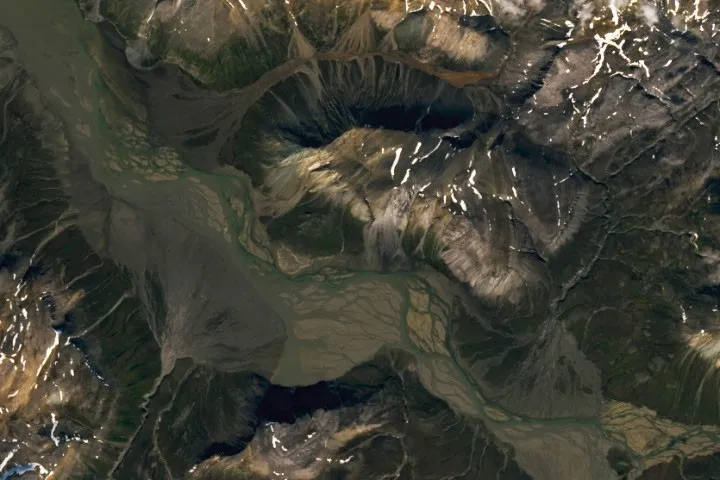
Imagine a truly enormous, uninhabited island in the Arctic, mostly covered in ice. Now imagine that island is quietly, diligently, building its own massive, cone-shaped sand sculptures. That's Severny Island, part of Russia's Novaya Zemlya archipelago, and its latest art project is called an 'alluvial fan.'
These aren't your average beach sandcastles. We're talking about vast, fan-shaped deposits of sediment, often appearing in opposing directions next to a braided river. Think of it as nature's very own, highly organized, sediment-dumping operation.
The Arctic's Unsung Builders
Severny Island is a mountainous, remote place where some glaciers plunge into the sea, while others gracefully terminate on land. It's these land-terminating glaciers that are the unsung heroes of our story, feeding streams with meltwater that's absolutely packed with sediment.
We're a new kind of news feed.
Regular news is designed to drain you. We're a non-profit built to restore you. Every story we publish is scored for impact, progress, and hope.
Start Your News DetoxWhen these sediment-laden streams hit flatter ground at the base of a steep mountain, they slow down, spread out into smaller channels, and drop their heavy load. Over time, these channels shift, building up those distinctive fan shapes. It's an impressive feat of geological engineering, especially when you consider how many opposing fans line the island's valleys.
So, what's fueling all this construction? Seasonal snowmelt and glacial runoff, naturally. Warmer months mean higher river flows, which means more sediment gets dragged down from the mountains. And glaciers, as they slowly grind their way downhill, are essentially giant rock-eroding machines, producing a continuous supply of material.
Here's the kicker: smaller, land-terminating mountain glaciers, like those on Severny Island, are particularly prone to melting as the atmosphere warms. While Severny's ice isn't exactly a popular study spot due to its 'remote location' (understatement of the year), satellite observations are helping scientists keep tabs. Recent analyses show that these glaciers across the Novaya Zemlya archipelago thinned significantly throughout the 2000s and 2010s, especially at lower elevations. More melt, more sediment, more fans. It's a geological feedback loop, and it's happening right now, in a place most of us will never see.