You know how you mostly use your right hand, unless you're a cockatoo, in which case you're probably a lefty? Well, it turns out our ancient ancestors might have had a preferred side too. Even without hands. Or feet. Or much of a brain, really.
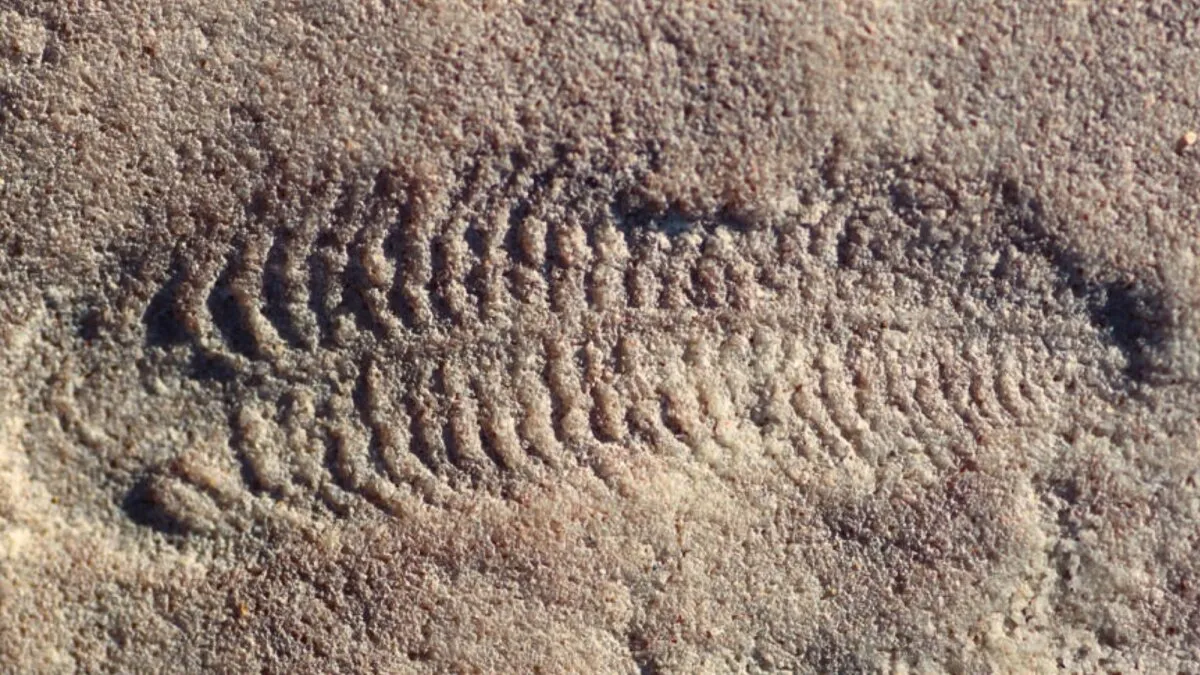
Scientists have been poking around 76 fossils of an ancient marine creature called Spriggina floundersi from South Australia. This little inch-long marvel, which looks a bit like a segmented oval with a head, appeared over half a billion years ago during the Ediacaran period. This was a time when complex life was just starting to figure itself out, and Spriggina was one of the OG bilaterians – meaning it had a body that could be divided into two mirror-image halves, like us.
What did the scientists find? This tiny pioneer of complex life likely had a dominant side, a preference for turning right. This wasn't some geological fluke or a fossilization quirk; it seems to be an early, early sign of what we now call handedness.
We're a new kind of news feed.
Regular news is designed to drain you. We're a non-profit built to restore you. Every story we publish is scored for impact, progress, and hope.
Start Your News DetoxScott Evans, lead author and a curator at the American Museum of Natural History, clarified that "handedness" isn't just about gripping a pencil. It's a fundamental behavioral bias. And to find it in an animal that was basically a glorified marine worm, 500 million years ago, is pretty wild.
The Clues Are in the Contortions
The researchers didn't exactly watch these creatures swim. Instead, they studied the subtle contortions in the fossilized bodies. Out of 100 specimens, 76 were detailed enough to analyze. About 70% of those showed a clear bend. Here's the kicker: there were twice as many left bends as right bends. Since these fossils are mirror images, that means individual Spriggina were actually preferring to turn right.
Today, many animals show a side preference, often linked to how their complex brains divvy up tasks. Finding this trait in Spriggina floundersi suggests that even its rudimentary nervous system might have had a similar kind of organization. Which, if you think about it, is both impressive and slightly terrifying. Our common quirks go way back.
As Mary Droser, a paleontologist at the University of California, put it, this discovery is a solid reminder of just how ancient some of our most basic biological traits truly are. So, next time you instinctively reach for that coffee cup with your right hand, spare a thought for a little inch-long wiggle from 500 million years ago, doing its own right-turning thing.