Just when you thought you had a handle on the universe's rules, scientists go and add another cosmic speed bump. For decades, Werner Heisenberg's Uncertainty Principle was the ultimate buzzkill for quantum mechanics enthusiasts, declaring you can't really know both a particle's position and its momentum at the same time. Now, a team has found a similar, equally frustrating limit, but this time for an electron's position and time.
Researchers at the Regensburg Center for Ultrafast Nanoscopy (RUN) and the Max Planck Institute in Hamburg have observed a new "space-time limit" for how electrons zip around. The takeaway? The more precisely you try to nail down when an electron moves, the more its quantum wave packet decides to just spread out in space. Because apparently, electrons are just as dramatic as teenagers when you try to pin them down.
Why We Care About Zippy Electrons
Understanding these tiny, elusive electrons isn't just for physics nerds with too much time on their hands. It's crucial for pretty much all future tech. Think faster computer chips, quantum computers that actually work, better materials for energy, and chemical reactions so precise they'd make a surgeon jealous. All of this hinges on knowing what electrons are doing at incredibly short distances and even shorter times.
We're a new kind of news feed.
Regular news is designed to drain you. We're a non-profit built to restore you. Every story we publish is scored for impact, progress, and hope.
Start Your News DetoxRegular microscopes are great for seeing stuff, but they're useless for watching an electron's moment-to-moment tango. You need a super-fast movie camera, one where each frame lasts only an attosecond. For context, an attosecond is a billionth of a billionth of a second. At that speed, electrons can cover atomic distances and react to light before even the atoms have time to yawn.
The RUN team had previously managed to track a single molecule, but electrons are a whole different beast. They're about a thousand times faster than atoms or molecules at these scales. Talk about a need for speed.
Filming the Unfilmable
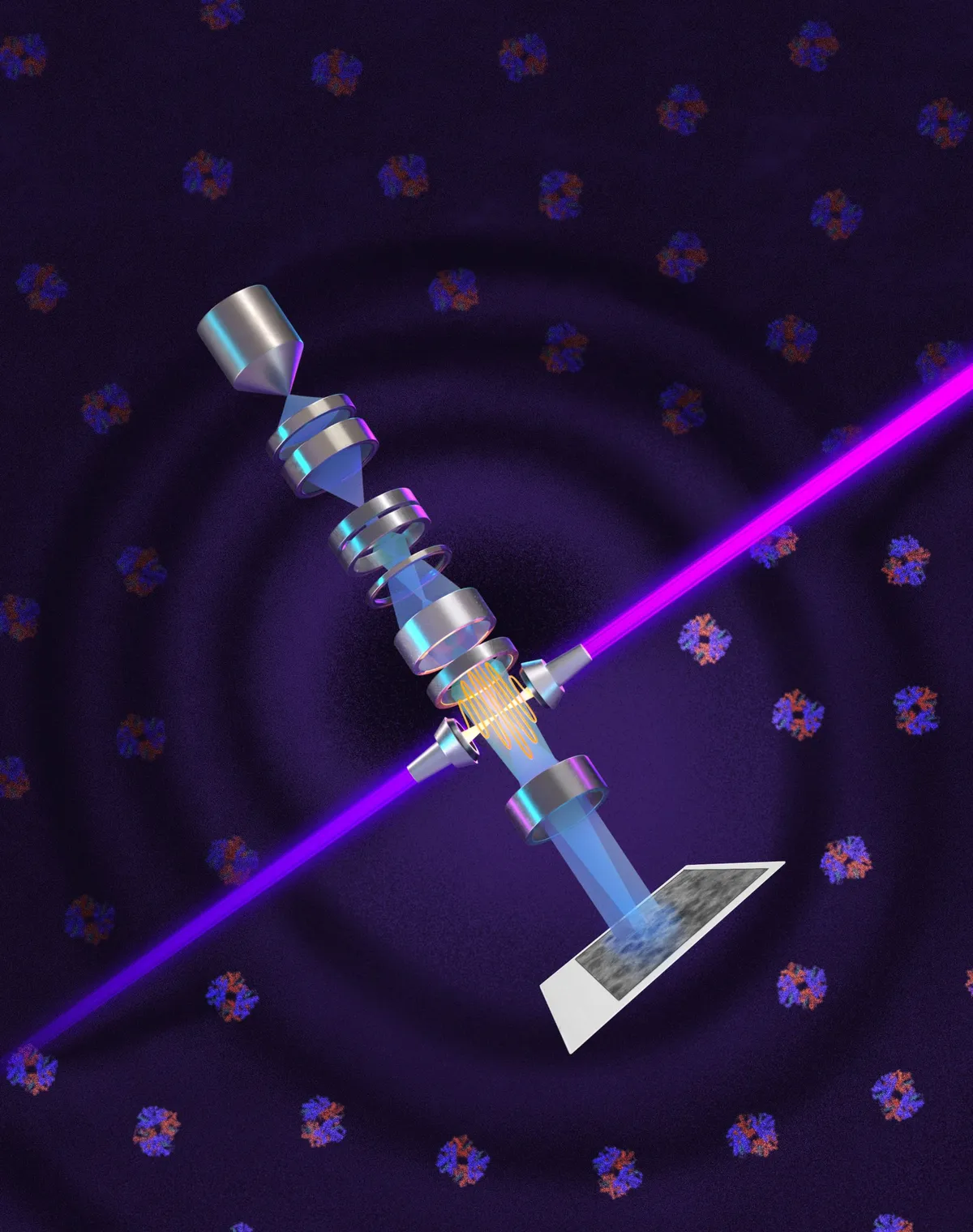
To catch these tiny sprinters, the team built a new laser system that could fire perfectly timed light pulses. These pulses essentially herded electrons between a super-sharp metal tip and a silver surface, a gap just a few atomic diameters wide. The moving electrons created a measurable current, and by tweaking the delay between two light pulses, the researchers could pinpoint when the transfer happened.
Lead author Simon Maier noted, "By varying the time interval between the two laser pulses, we can directly observe how the electrons respond." What they saw confirmed that electrons aren't just tiny billiard balls on predictable paths; they're more like quantum mechanical waves doing their own thing.
These electrons weren't just crossing the gap; they were quantum tunneling – a bizarre process where particles can pass through an energy barrier they shouldn't be able to. It's like walking through a wall, if you're an electron. And the team could tell when this tunneling happened with attosecond accuracy. Doctoral researcher Katharina Glöckl described it perfectly: "Our measurement can be understood as a high-speed camera for the electron wave packets, since you can see at what point in time the tunneling process takes place."
Computer simulations backed up the findings, even showing a tiny delay of about 500 attoseconds before electrons reacted to the laser. So, even light isn't instantly instant at these scales.
The Inescapable Trade-Off
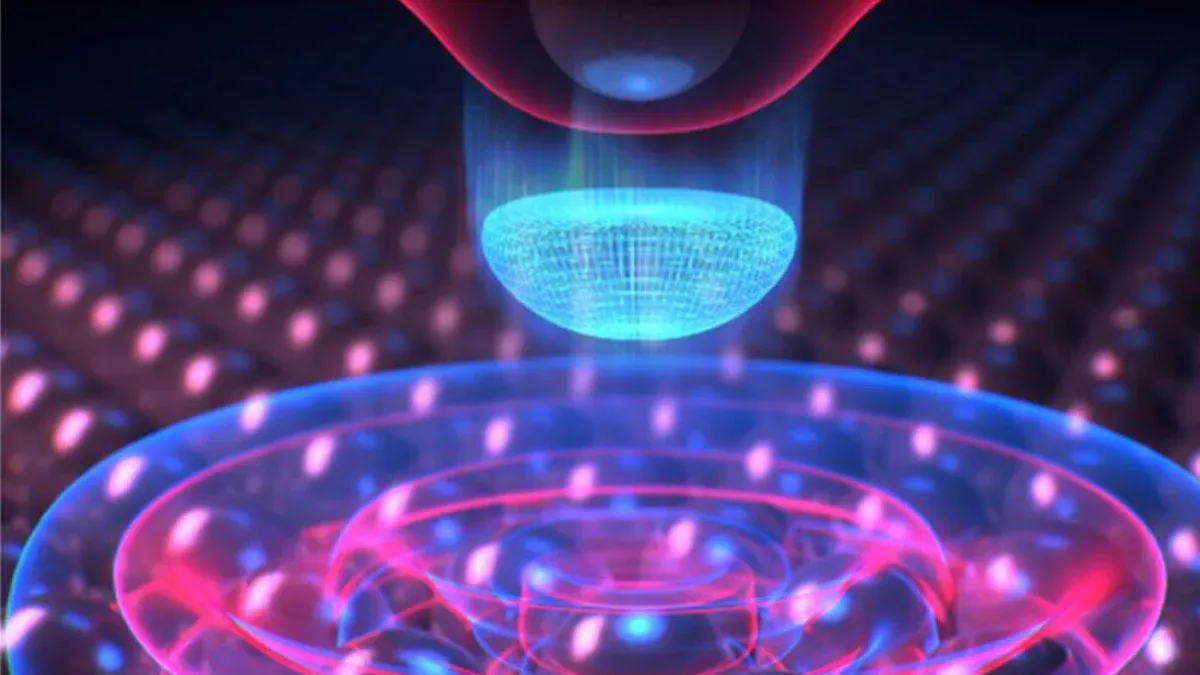
The big reveal? The more precisely the team tried to time the electron transfer, the more energy they needed. And that extra energy made the electron's wave packet spread out more in space. "The more precisely we want to pin down the electron’s position in time, the more energy we need to provide. And as a result, the electron wave packet spreads out more spatially," explained co-author Raffael Spachtholz. It's a classic quantum Catch-22.
To measure this relationship, they even put a single atom on the surface to briefly hold the electron wave packet, acting like a tiny spatial bouncer. This allowed them to compare how tightly the electron was confined in space versus how precisely its movement could be measured in time.
This isn't just theoretical navel-gazing. This work turns a theoretical boundary into something we can actually test. Researchers can now study how the timing of electron motion changes an electron's wave function, which is basically its quantum identity.
The Future, Faster Than Ever
Beyond just making physicists nod knowingly, this discovery could revolutionize how we do, well, everything. Moving a single electron onto a molecule is the smallest possible charge transfer. If that happens in a tiny space and time, you get incredibly high current densities.
These super-concentrated electron pulses could be a game-changer for chemical reactions. Instead of heating an entire material or blasting it with long radiation, scientists could direct energy to a specific bond at an exact moment. Imagine being able to snip or alter chemical bonds with attosecond precision. Professor Jascha Repp is already dreaming of using these wave packets "to specifically trigger chemical reactions."
Professor Rupert Huber thinks these insights could also make electronics and quantum information processing hundreds of thousands of times faster than current tech, operating at the electron's own speed limit. So, while the universe keeps throwing up new quantum limits, it seems we're getting better at finding them – and then figuring out how to work around them to make everything ridiculously, mind-bendingly fast.