You know that slightly blurry photo you took? The one where your phone camera just couldn't quite nail it? Or maybe you've squinted through a microscope, wishing for just a little more clarity. Turns out, blurry light from imperfect lenses is a universal optical headache, from the fanciest lab equipment to the phone in your pocket.
But engineers at UC San Diego just cooked up a solution that sounds like something out of a sci-fi flick: a minuscule, specially designed optical element paired with artificial intelligence. This dynamic duo can spot and fix light distortions from a single image. The upshot? Sharper images, smaller devices, and a much easier time for advanced optical systems everywhere.
Abdoulaye Ndao, a senior author on the project, put it rather succinctly: they used "physics, nanofabrication, and machine learning to make hidden distortions easier to find and fix." And the best part? The whole setup is about the size of a postage stamp (one by one centimeter) and half a millimeter thick. So, no bulky attachments needed, just a tiny optical wizard.
We're a new kind of news feed.
Regular news is designed to drain you. We're a non-profit built to restore you. Every story we publish is scored for impact, progress, and hope.
Start Your News DetoxThe Magic Behind the Mini-Fix
Most existing methods for correcting light distortions are a bit… extra. They need multiple measurements, a bunch of added hardware, or endless calculations. All of which makes optical systems bigger, slower, and generally less inclined to fit into your sleek new smartphone.
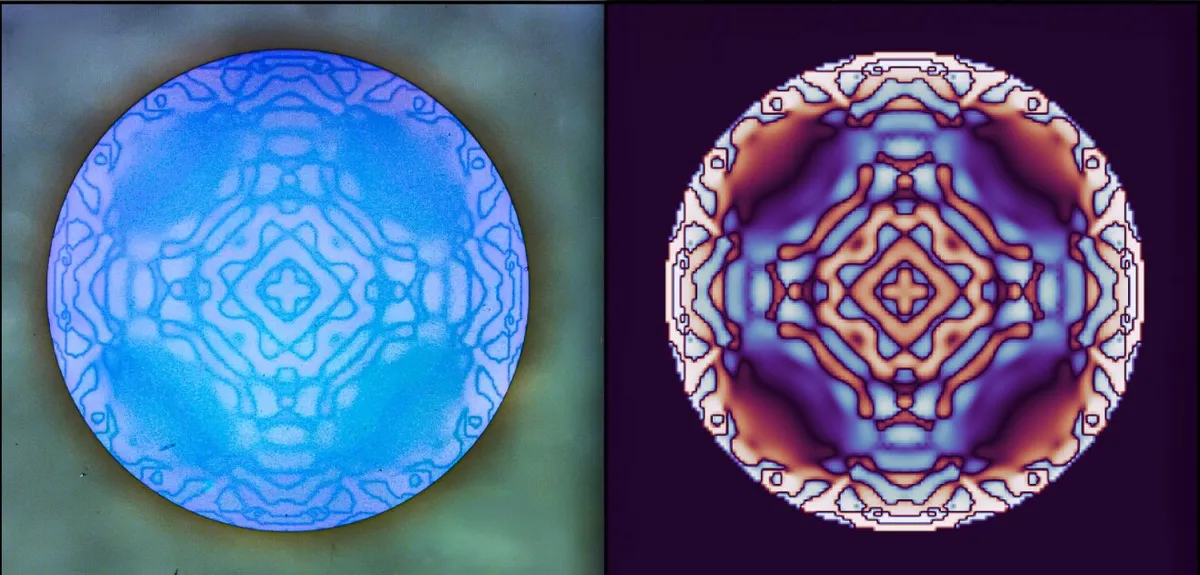
The UC San Diego team, however, decided to get clever. They combined an AI-designed optical element with an AI-powered analysis system. This combo gives each optical distortion its own unique "signature" – think of it as a blurry fingerprint. Then, a deep neural network (a fancy type of machine learning) reads that signature from a single image, instantly telling the system how to correct the distortion.
They started by proving it worked for one type of light, then scaled it up to handle multiple wavelengths, noisy environments, and even complex beam shapes. And no, this wasn't just a theoretical exercise. They actually fabricated the optical device and various surfaces in a cleanroom, then put their method through its paces in real-world scenarios. Because science, but make it practical.
This patent-pending approach could mean real-time distortion correction for everything from biological imaging and astronomical observations to manufacturing processes. Which, if you think about it, is both impressive and slightly terrifying for anyone who ever blamed a bad photo on a faulty lens. Because apparently, that excuse is about to expire.