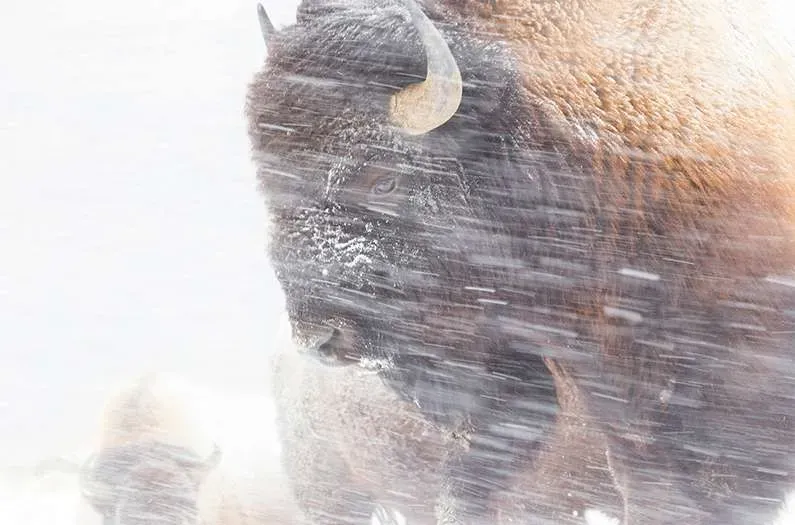
North American plains bison symbolize both historical devastation and the possibility of species recovery. New research in Science shows how the DNA of these animals tells the story of their past and offers a path for their future.
Beth Shapiro, a researcher at the University of California Santa Cruz and the study's lead author, noted that ancient DNA is changing how we understand bison conservation. The findings reveal what the 19th-century collapse did to bison genetics and suggest a smarter way forward.
For thousands of years, millions of bison roamed North America, shaping ecosystems and Indigenous cultures. By the early 1900s, only a few hundred remained. This decline was due to overhunting, habitat loss, and government-sanctioned slaughter aimed at subjugating bison-dependent tribes.
We're a new kind of news feed.
Regular news is designed to drain you. We're a non-profit built to restore you. Every story we publish is scored for impact, progress, and hope.
Start Your News DetoxSince then, conservation efforts, often led by Indigenous tribes, have helped bison numbers recover. Today, over 20,000 wild bison live in protected areas like Yellowstone National Park. Another 400,000 are raised for commercial purposes.
Unraveling Bison Genetics
The recovery has raised questions. With such a small founding population, have bison lost genetic diversity or become inbred? Did attempts to breed bison with cattle permanently alter their genes? Also, did moving plains bison into wood bison territory break down genetic barriers between these related species?
To find answers, Shapiro and her team used advanced scientific tools. They collected DNA samples from 115 ancient bison, some up to 20,000 years old, and others from about 100 years ago. They also sampled 45 modern bison.
The genetic sequencing offered both good news and important lessons for current conservation efforts.
A Roadmap for Future Conservation
The ancient plains bison samples showed similar genetics across different locations. This suggests that bison genes once flowed freely across the landscape. In contrast, today's wild plains bison live in small, isolated groups, with at least four distinct genetic fingerprints.
The study suggests that remaining bison should be managed more like a single, connected herd. Given current geographic barriers, this could involve using modern reproductive techniques, like artificial insemination, to mix the DNA of different herds.
While traditional management methods pose risks, the findings also offer hope. Despite modern herds being distinct, their combined genetic diversity is similar to that of their ancestors.
Concerns about cattle DNA contamination also appear less severe than thought. About one-third of modern bison genomes showed traces of livestock DNA, but this represented less than 2% of their total genome. The majority of bison were unaffected.
The situation is a bit more complex for wood bison, a larger relative living in Canada's boreal forest. In the 1920s, the Canadian government moved about 7,000 plains bison into Wood Buffalo National Park, which was home to the last 1,500 wood bison.
This historical transplant still affects wood bison today. The study confirmed that wood bison are genetically distinct, having separated from plains bison about 3,000 years ago. However, today's wood bison carry significant plains bison DNA, ranging from 7% to 64% in individual genomes.
Despite this mixing, the results show that "wood and plains bison are substantially distinct and should continue to be managed separately," said Greg Wilson, a Parks Canada bison ecologist and co-author.
Thanks to this DNA research, bison managers now have a clearer roadmap. They have the tools to make informed decisions and ensure they stay on track.
Shapiro noted that managers previously lacked a genetic baseline for healthy bison diversity before the 20th-century collapse. This new study is a great example of using ancient DNA to guide current management decisions.
Deep Dive & References
Paleogenomic insight into the collapse, recovery, and management of American bison - Science, 2026