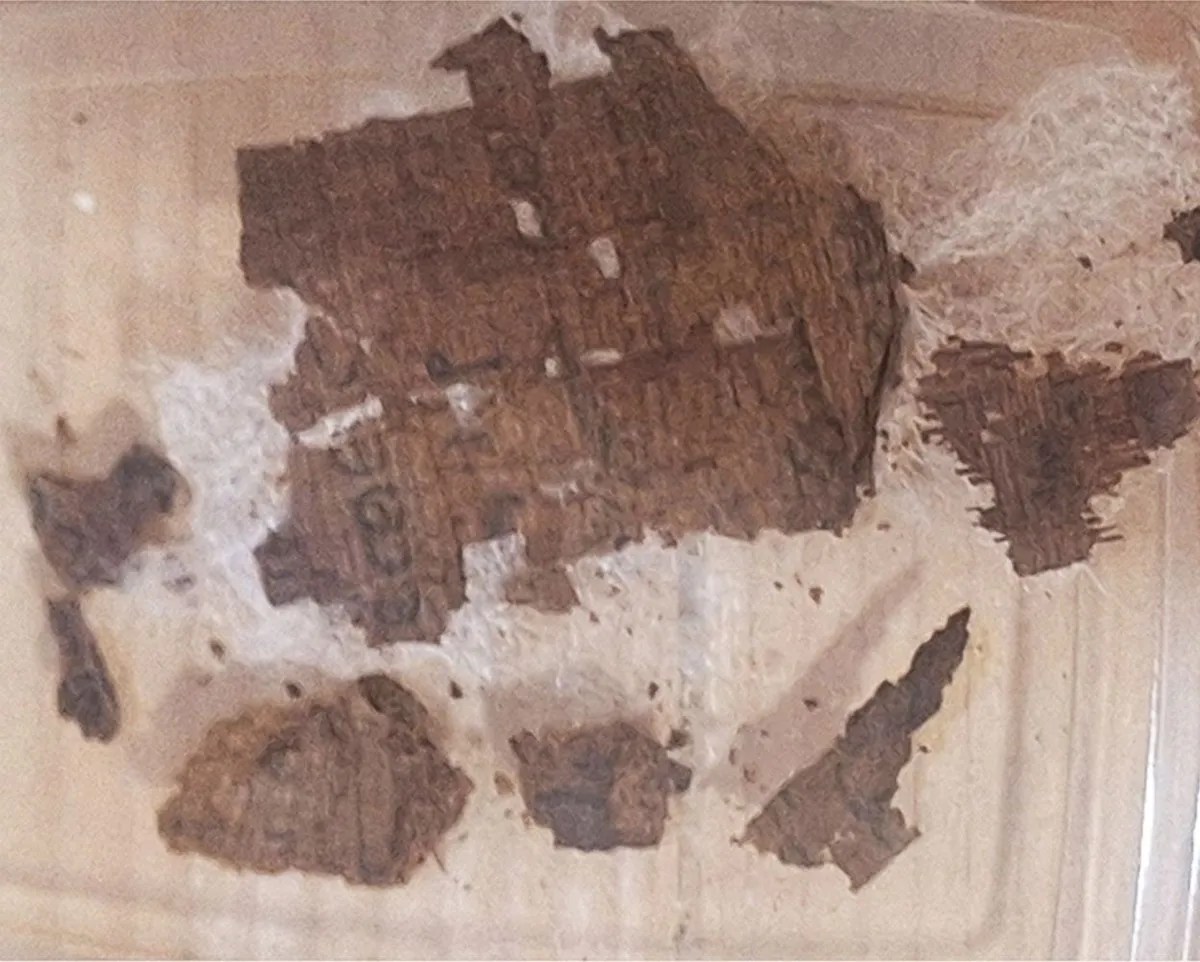
Archaeologists in Egypt recently found a 1,600-year-old papyrus fragment from Homer’s Iliad. It was tucked inside the wrappings of an Egyptian mummy. This discovery happened in the ancient city of Oxyrhynchus.
The fragment contains a famous part of the Iliad called the "catalog of ships." This section lists the Greek forces that sailed to Troy during the Trojan War.
A Unique Discovery
Maite Mascort and Esther Pons, who lead the Oxyrhynchus Archaeological Mission, called the find "truly novel." They are currently studying it and exploring different ideas about its meaning.
We're a new kind of news feed.
Regular news is designed to drain you. We're a non-profit built to restore you. Every story we publish is scored for impact, progress, and hope.
Start Your News DetoxThe passage comes from Book II of the Iliad, an epic poem over 2,700 years old. It describes the Greek leaders and their ships. For example, Guneus arrived with 22 ships, and Tlepolemus, son of Hercules, brought nine ships from Rhodes.
Researchers found this artifact in Tomb 65 of Sector 22 during excavations in late 2025. It is the first known Greek literary text "deliberately incorporated into the mummification process."
Ignasi-Xavier Adiego, a philologist who studied the fragment, noted that many papyri have been found at Oxyrhynchus since the late 19th century. However, finding a literary papyrus in a burial context is a new development.
Oxyrhynchus: A Treasure Trove of Papyri
The ruins of Oxyrhynchus were first documented in 1798 by Vivant Denon, a French scholar with Napoleon. A century later, British archaeologists excavated the site, about 100 miles south of Cairo. They uncovered tens of thousands of ancient papyri in the city’s garbage dump.
This collection included literary texts, government records, religious documents, leases, wills, horoscopes, and private letters. It's often compared to finding the Library of Alexandria in a landfill.
In the early 20th century, a papyrus copy of Trackers, a play by the Greek dramatist Sophocles, was found at Oxyrhynchus. Scholars had thought most of this play was lost.
Archaeologists have also found papyrus texts in other Roman-era mummies. However, these usually contained magical or ritualistic content. Maite Mascort and Esther Pons believe these were for protection, often folded, tied, and sealed.
Greek Influence in Ancient Egypt
Ancient Egyptian culture was greatly influenced by Greek and Roman traditions. When Alexander the Great took control of Egypt in 332 B.C.E., Greek became the main language for government documents. Egypt then became a Roman province in 30 B.C.E.
Leah Mascia, a papyrologist, explained that finding the Iliad in Oxyrhynchus is not unusual. During the Greco-Roman period, texts like the Iliad were common throughout Egypt. They were used in schools, and private citizens owned copies.
Hisham El-Leithy, acting secretary-general of Egypt’s Supreme Council of Antiquities, said this discovery offers new insights into the city’s funerary practices during the Greek and Roman eras.
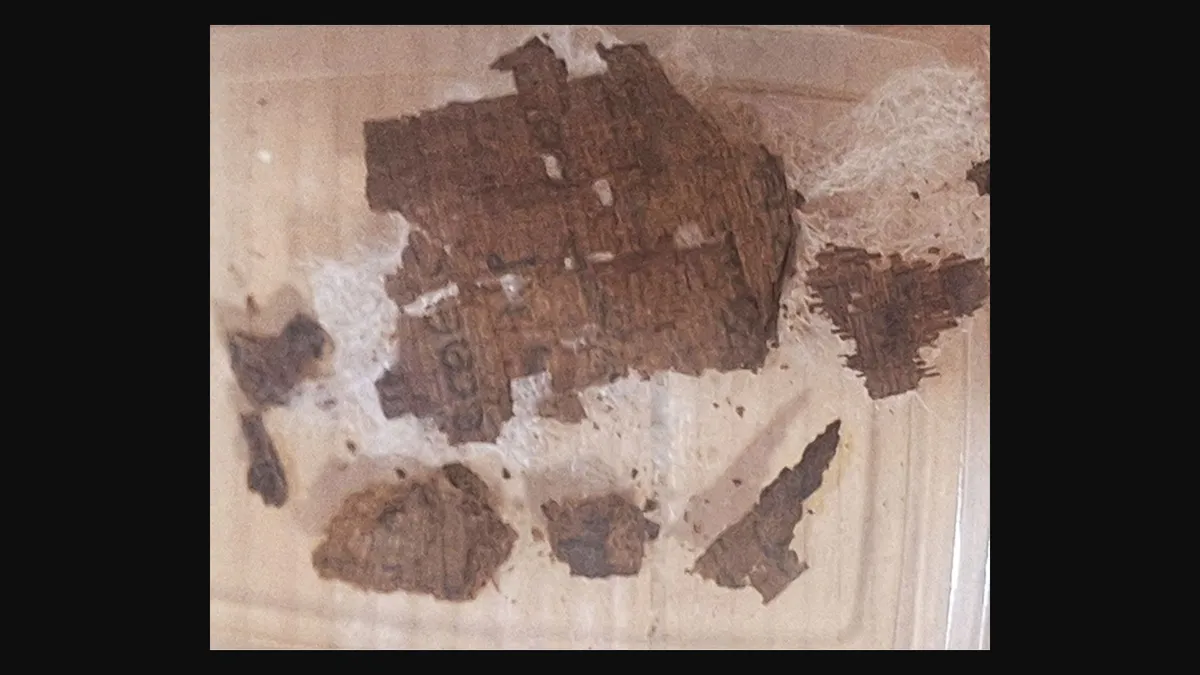
Other items found in Tomb 65 include mummies with golden and copper tongues. Golden tongues were sometimes placed in mummies to allow the deceased to speak to the god Osiris in the afterlife. Similar finds have been made elsewhere in Egypt.
The Iliad fragment was in poor condition, so researchers used noninvasive techniques to study it in a lab. Many other papyri are still being restored. Researchers hope more literary texts might appear.