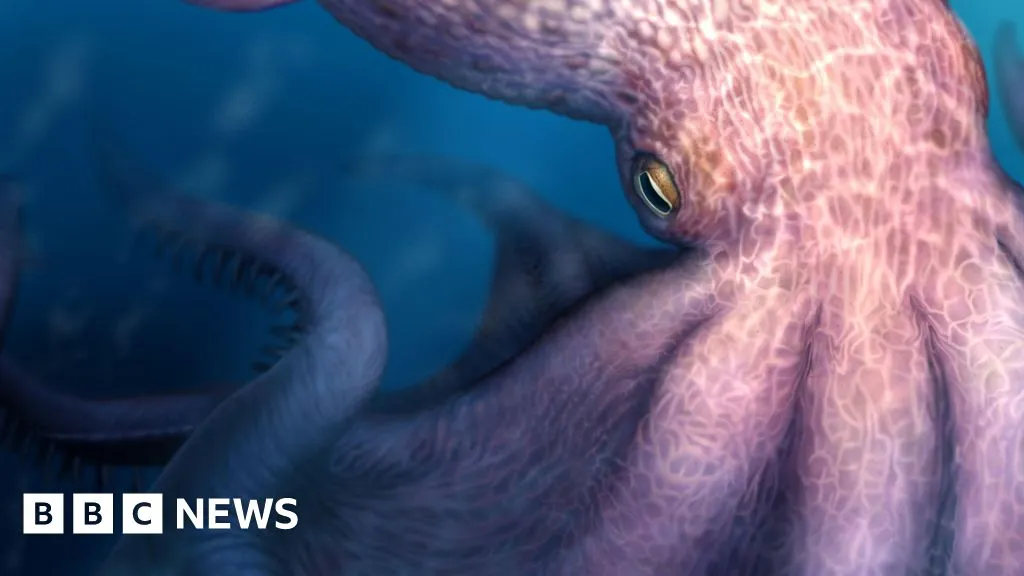
Giant octopuses might have ruled ancient oceans 100 million years ago, when dinosaurs were alive. New research suggests some early octopuses were powerful hunters. They had strong arms to grab prey and beak-like jaws to crush shells and bones.
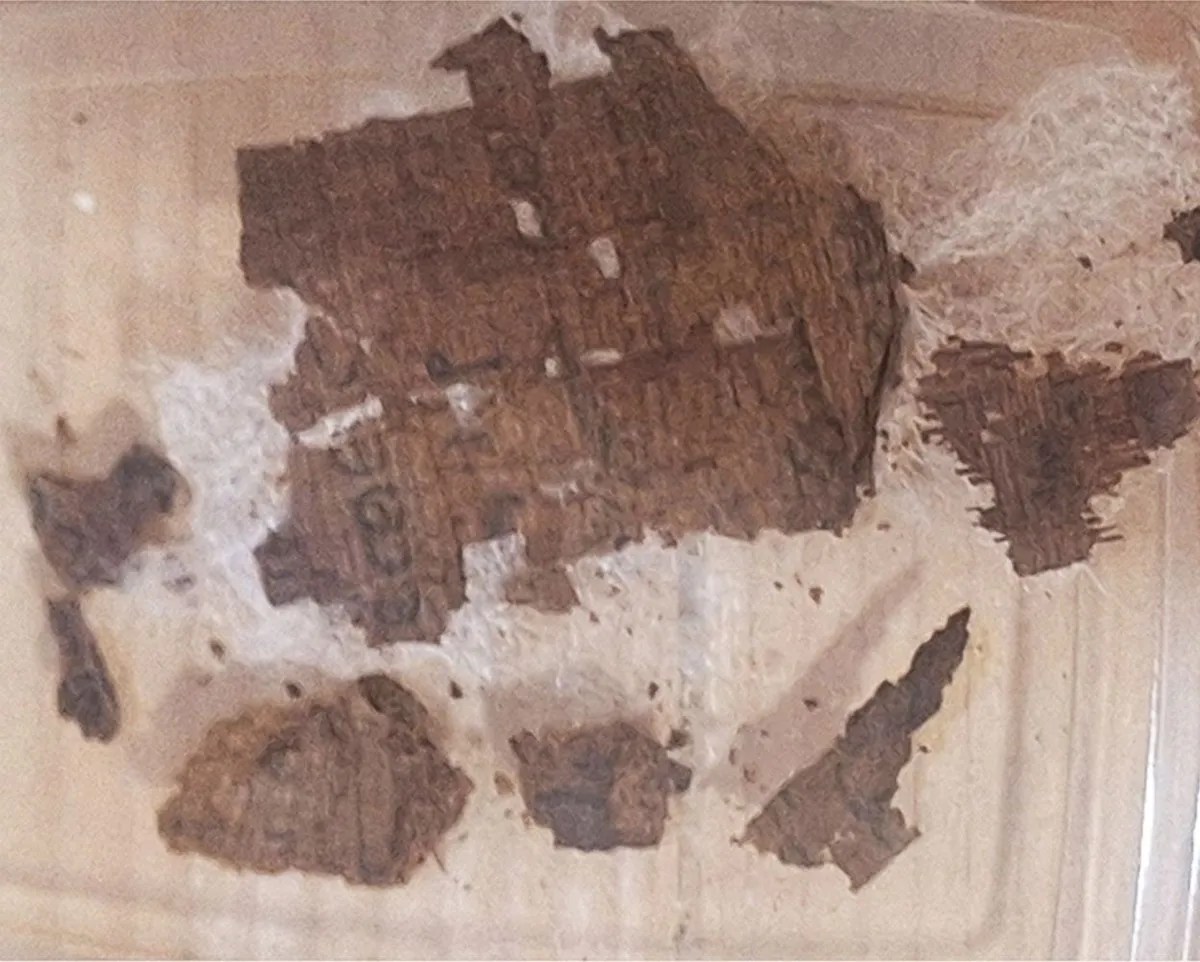
A new study looked at well-preserved fossil jaws. It suggests these octopuses could reach up to 19 meters long. This might make them the largest invertebrates ever known.
Challenging Old Ideas
For many years, scientists thought the biggest ocean predators were vertebrates, like fish and reptiles. Invertebrates, such as octopuses and squid, were thought to play smaller roles.
We're a new kind of news feed.
Regular news is designed to drain you. We're a non-profit built to restore you. Every story we publish is scored for impact, progress, and hope.
Start Your News DetoxScientists from Hokkaido University in Japan are now challenging this idea. Their study of fossil jaws suggests giant octopuses moved through the oceans. They could chew through the hard shells and skeletons of large fish and marine reptiles.
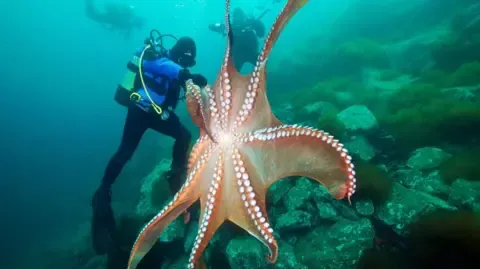
The study estimates these octopuses had a body length of about 1.5 to 4.5 meters. When their long arms are added, their total length could be about 7 to 19 meters. Even at the smaller end, this animal would have been huge compared to today's creatures.
Signs of Intelligence
The fossilized jaws show uneven wear from left to right. This suggests the animals might have preferred one side when eating. In living animals, favoring one side of the body is linked to advanced brain function.
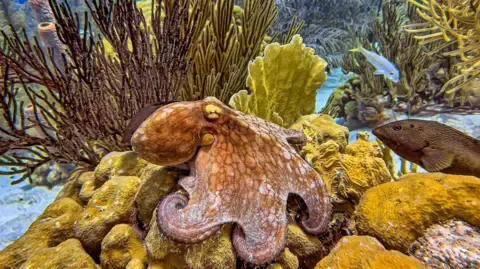
Modern octopuses are known for being very smart. They can solve problems and use complex hunting methods. The Giant Pacific Octopus, the largest living species today, can have an arm span of over 5.5 meters. Videos show these animals attacking sharks more than a meter long.
Christian Klug, a paleontologist at the University of Zurich, reviewed the research. He noted that with their tentacles and suckers, these ancient octopuses could have held onto prey with no escape.
Remaining Mysteries
Many questions about these ancient octopuses are still unanswered. Scientists can only guess their exact shape, fin size, or how fast they could swim. No fossil has been found with stomach contents to show what they ate.
Dr. Nick Longrich, a paleontologist at the University of Bath, believes they mainly hunted ammonites. However, like modern octopuses, they were likely opportunistic and fierce predators. They would have eaten other prey if they had the chance.
The fossils offer an exciting look at a giant of the deep. This creature may have roamed ancient seas with a powerful jaw, strong arms, and a brain that helped it compete with other top predators.
Deep Dive & References
Science - Science