Tiny cone ants in Arizona have been seen cleaning much larger harvester ants. They even clean inside the harvester ants' open jaws. This unusual behavior may benefit both species and has never been recorded before.
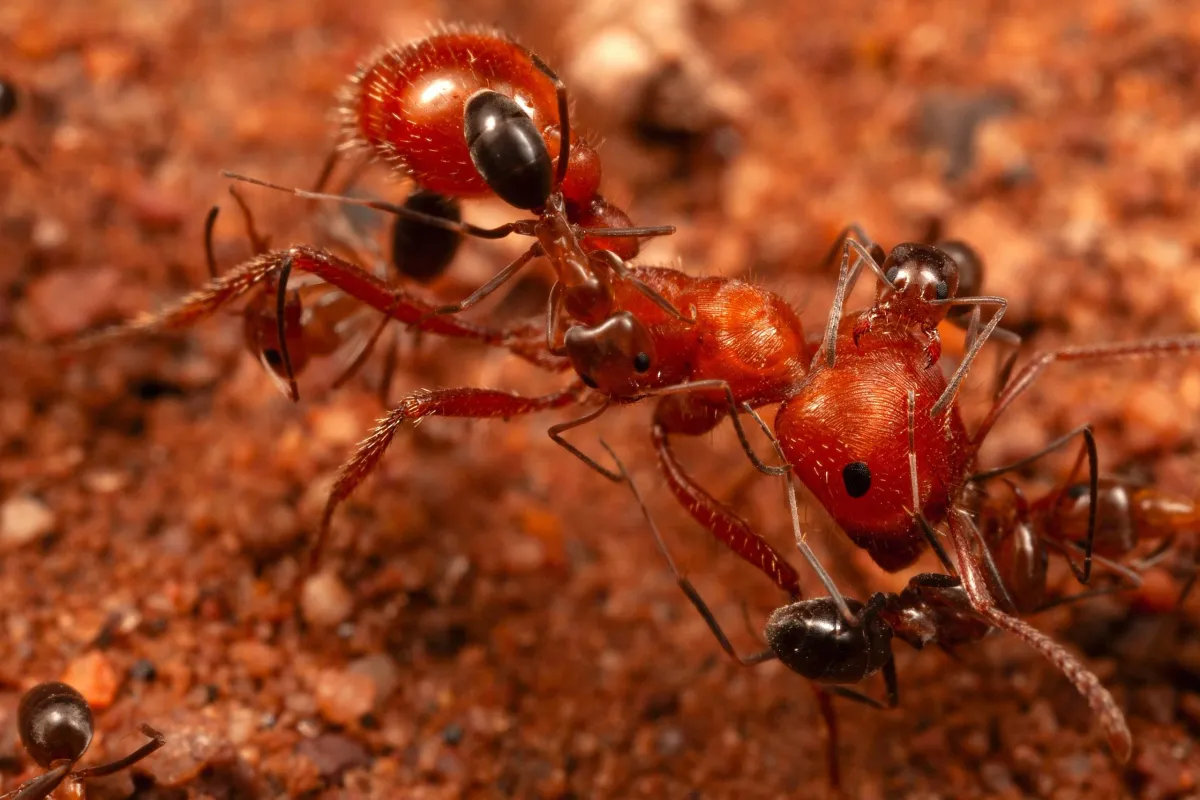
Researchers observed this interaction in the deserts of southeastern Arizona. Large harvester ants gather outside the nests of much smaller cone ants. They hold their serrated jaws open. The smaller ants then climb onto the larger ones. They lick and nibble their bodies, even sensitive areas. Scientists say this is the first time one ant species has been seen cleaning a much larger ant.
How This Unique Behavior Was Discovered
Entomologist Mark Moffett documented this behavior. He is a research associate at the Smithsonian’s National Museum of Natural History. He first noticed it while visiting a research station in Arizona’s Chiricahua Mountains.
We're a new kind of news feed.
Regular news is designed to drain you. We're a non-profit built to restore you. Every story we publish is scored for impact, progress, and hope.
Start Your News DetoxMoffett studies the social behavior of ants. One morning, he watched harvester ants (Pogonomyrmex barbatus) leave their nests to collect seeds. He saw some ants standing completely still, which was unusual.
Looking closer, he saw these ants were covered with tiny cone ants. "Given the usual tendencies of ants, I first assumed that I was observing aggression," Moffett said. "But the larger ants seemed to seek the attention of the smaller ants." They would visit the cone ant nests and then let the small ants lick and nibble all over them.
Moffett compares this discovery to marine "cleaner fish." These fish remove parasites and debris from larger fish. They even clean species that could easily eat them. "This new ant species is the insect equivalent of cleaner fish in the ocean," Moffett noted.
The Ant Cleaning Process
Over several days, Moffett recorded at least 90 harvester ants interacting with the smaller cone ants. These cone ants are an undescribed species in the genus Dorymyrmex. He photographed many encounters to document the process.
A harvester ant usually approaches a cone ant nest. She stands upright with her mandibles open. All worker ants are female. Within about a minute, a cone ant emerges and climbs onto the larger ant. Sometimes, up to five cone ants gather and begin grooming.
The interactions can last from less than 15 seconds to over five minutes. The cone ants use their tongue-like mouthparts to clean the harvester ant’s body. They even reach inside the open jaws. The larger ant stays still and does not attack. When the cleaning ends, the harvester ant shakes off the smaller ants. She sometimes flips onto her back before moving away.
Why Do They Do It?
Scientists are still trying to understand why this behavior happens. Moffett suggests the cone ants might be feeding on tiny particles they remove from the harvester ants. These could be small, energy-rich fragments, possibly from the seeds the larger ants collect. The cone ants only interacted with living harvester ants, ignoring dead ones.
There may also be benefits for the harvester ants. They already groom each other to remove debris, spores, and parasites. However, the smaller cone ants might be able to clean hard-to-reach areas. Future research could show if this behavior reduces infections or affects the microbiome of either species.
This discovery shows how much we can still learn by observing animals in their natural environments. "All kinds of amazing discoveries are still there to be made outside of the lab," Moffett said. "Finding new species and behaviors in nature often requires us to pay close attention to the small things—including the ants."
Deep Dive & References
The First Cleaner Ant? A Novel Partnership in the Arizona Desert - Ecology and Evolution, 2026