For over a century, scientists have been scratching their heads about one of modern life's most ubiquitous materials: reinforced rubber. You know, the stuff that keeps your car on the road, your airplane in the sky, and your medical devices, well, medical. It’s a $260 billion global industry, and yet, nobody really understood why adding tiny particles of carbon black turned flimsy rubber into something so incredibly durable.
Turns out, it’s not magic. It’s just really clever physics, finally explained.
The Secret Life of a Tire
David Simmons, an engineering professor at the University of South Florida, led the team that finally cracked the code. Their findings, published in Proceedings of the National Academy of Sciences, reveal exactly how those soot-like carbon black particles transform soft rubber into a material tough enough for a loaded jet. Because, apparently, knowing how your tires actually work is a good thing.
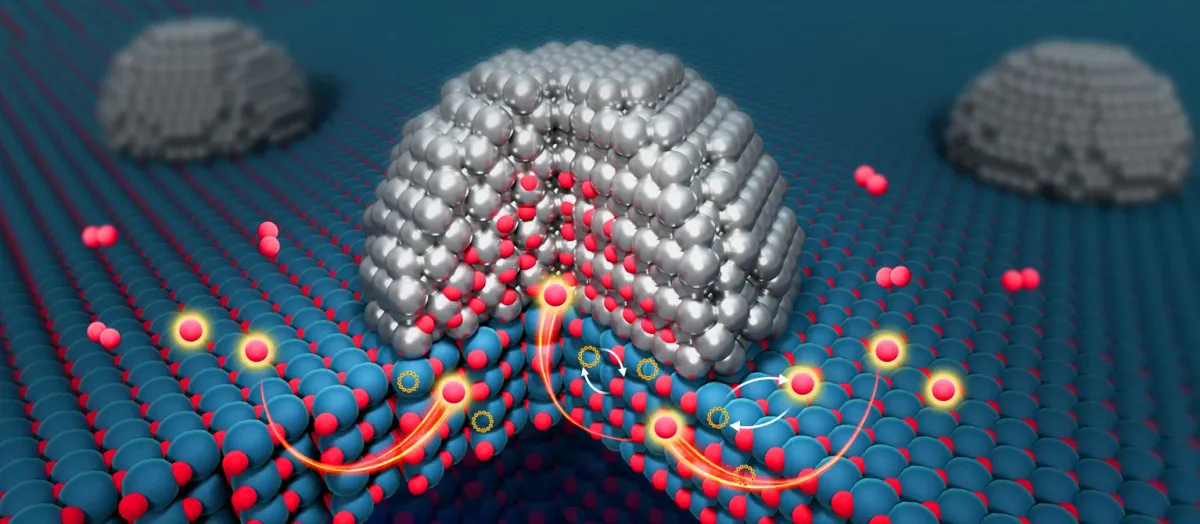
For nearly 100 years, tire companies have been essentially playing a very expensive game of trial and error, guessing which grades of carbon black would work best. Simmons’ team decided to stop guessing and start simulating. They ran 1,500 molecular dynamics simulations—which, if you’re curious, is roughly 15 years of computing time, though spread across a very large cluster, not one very tired laptop.
We're a new kind of news feed.
Regular news is designed to drain you. We're a non-profit built to restore you. Every story we publish is scored for impact, progress, and hope.
Start Your News DetoxTheir big revelation? It all comes down to something called Poisson’s ratio mismatch. Which sounds complicated, but really just means the rubber really doesn't like changing its volume.
Rubber's Inner Struggle
Imagine pulling the plunger on a syringe filled with water. The water resists compression, right? Rubber, it turns out, is a bit like that. When you stretch a normal rubber band, it gets longer and thinner, but its overall volume stays pretty consistent.
Now, add those carbon black particles. They act like tiny internal supports. When you stretch the reinforced rubber, these supports prevent it from thinning out as much as it normally would. So, the material is forced to expand in volume, which, as we now know, rubber hates. It basically starts fighting against itself, making it much stronger and stiffer.
This new understanding doesn’t throw out all the old theories about particle networks or adhesive interactions. Instead, it brings them together, showing they’re all contributing to this fundamental resistance to volume change. It's like finding out all the ingredients in a secret sauce were always there, but you just needed the right recipe to understand why it tasted so good.
Beyond the Tread
This isn't just about making tires that last longer (though that's a nice perk). Tire design has always been a “Magic Triangle” challenge: you can improve fuel efficiency, traction, or durability, but usually, you sacrifice one for the others. With this new insight, engineers can design materials with far more precision. Hello, better wet-weather performance and better gas mileage.
The implications stretch far beyond the road. Reinforced rubber is in power plants, aerospace components, and countless other critical systems where failure isn't an option. Remember the Space Shuttle Challenger disaster? It was caused by a rubber gasket that got too cold. A better understanding of these materials means fewer catastrophic failures and, hopefully, a lot less trial-and-error in places where lives depend on it. Because knowing why something works is always better than just knowing that it does.