Chemical reactions are essential for life. They power cells, help proteins work, and change DNA. But these reactions happen so fast and are so tiny that they are hard to see with experiments.
For years, scientists have used computer simulations to study molecules. However, these simulations often left out a key detail: chemical bonds breaking or forming. This was done to keep the simulations manageable for supercomputers.
New Software Visualizes Living Chemistry
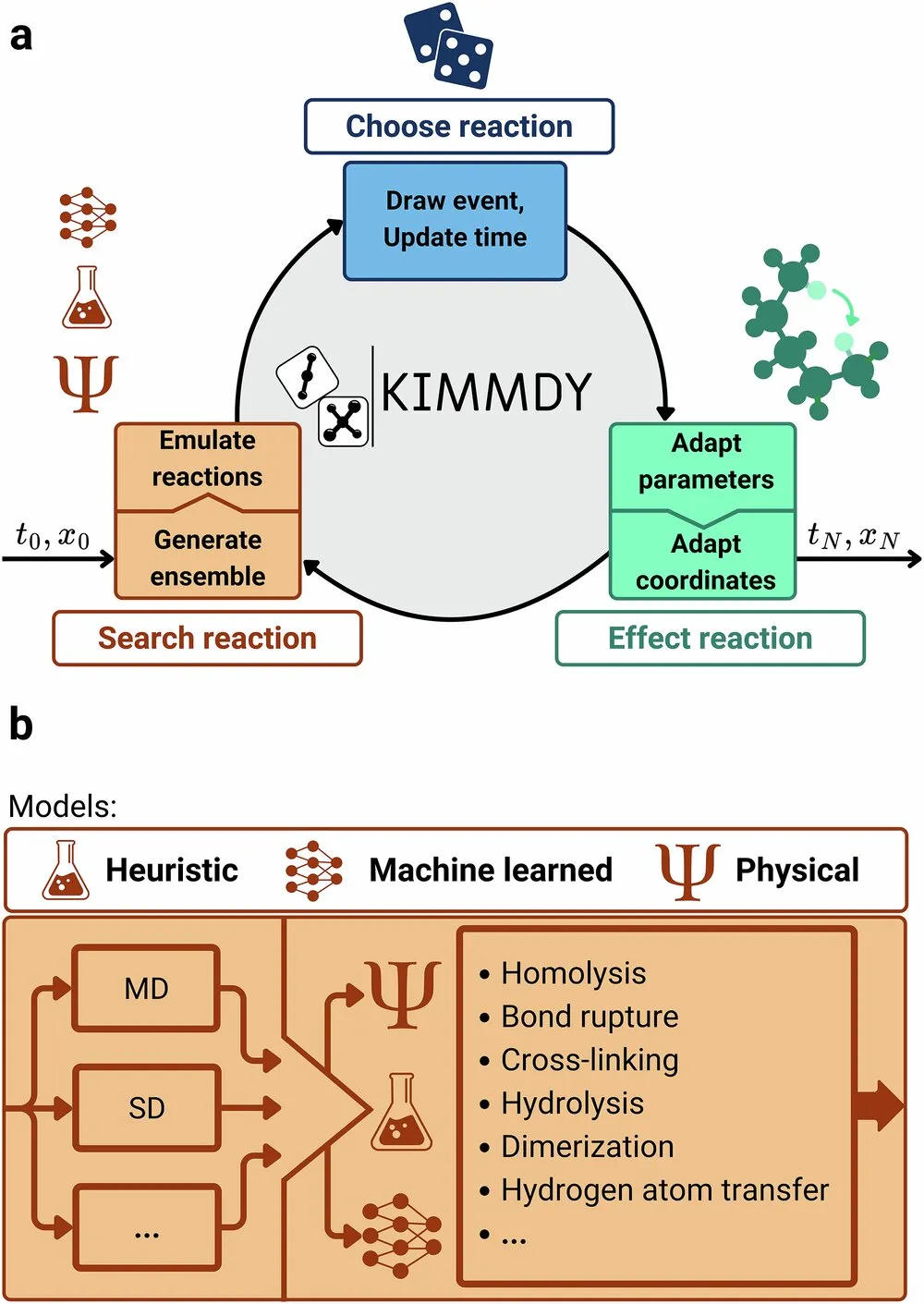
Researchers at the Max Planck Institute for Polymer Research (MPI-P) in Mainz have now found a way around this problem. They developed new software called KIMMDY, which stands for KInetic Monte Carlo Molecular DYnamics. This software combines different computing methods and uses machine learning to figure out when and where chemical reactions happen.
We're a new kind of news feed.
Regular news is designed to drain you. We're a non-profit built to restore you. Every story we publish is scored for impact, progress, and hope.
Start Your News DetoxProfessor Frauke Gräter, who leads the "Biomolecular Mechanics" department at MPI-P, explained that this software lets them track not just how molecules move, but also how they react with each other. This opens up new ways to study complex biological processes using computers.
Simulating Complex Biological Processes
The new method can simulate very large molecular systems. This includes proteins or DNA in their natural settings. It can also track reaction chains where one chemical step leads to the next. These types of processes are important in many biological situations, like when biomolecules get damaged or when proteins or DNA undergo chemical changes.
To show what the method can do, the researchers looked at several biological examples. They simulated collagen, a protein vital for skin, bone, and connective tissue. The simulations showed how reactive molecular pieces move through the protein and gather at specific spots. The software can also investigate DNA damage, such as that caused by UV radiation.
KIMMDY is special because it can calculate systems with millions of atoms more efficiently than other methods. This means it could help us better understand biological and chemical processes in the future. It also offers new ways to understand experimental results and plan new experiments.
Deep Dive & References
KIMMDY: a biomolecular reaction emulator - Nature Communications, 2026