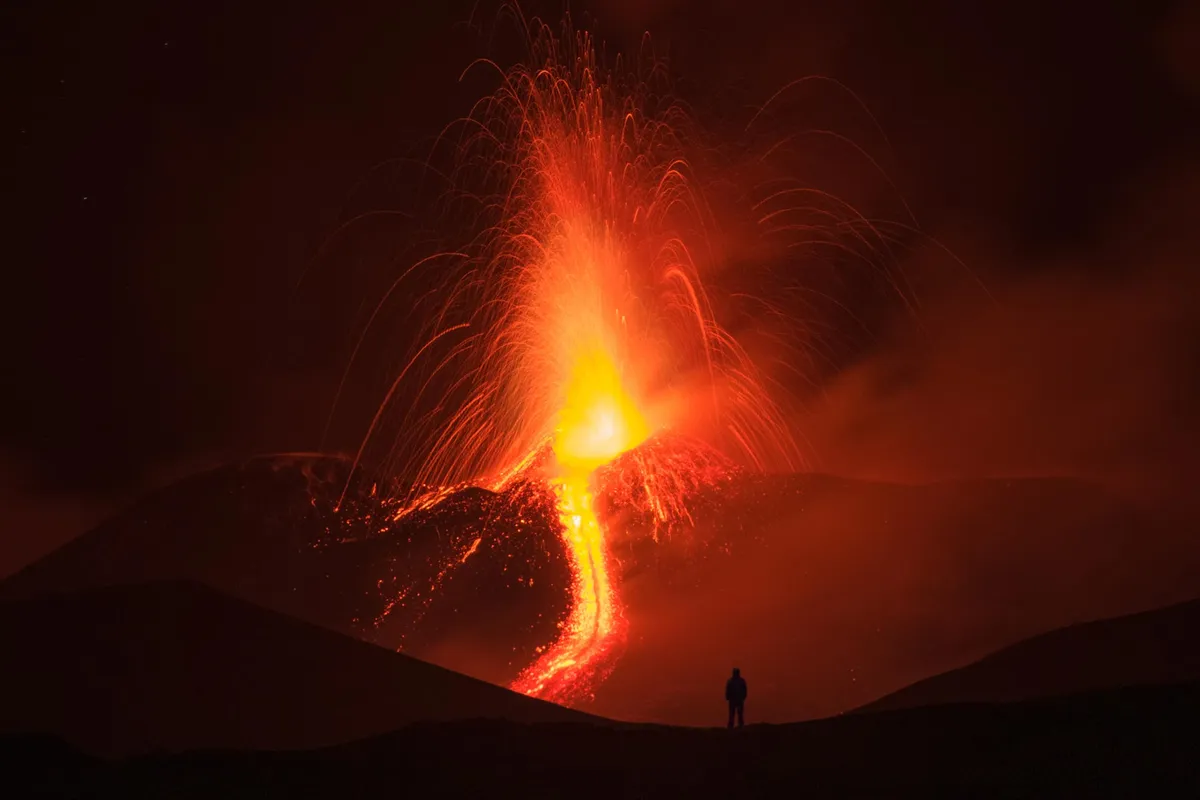
Mount Etna in Sicily is Europe's most active volcano. Scientists have long been puzzled by how it formed. No existing geological model fully explains its origin.
New research from the University of Lausanne (UNIL) offers a fresh idea. It suggests Etna might be unlike any other volcano on Earth.
The volcano is over 500,000 years old. It rises more than 3,000 meters (about 9,800 feet) above sea level. It erupts multiple times each year. This makes it one of the most studied volcanoes globally.
We're a new kind of news feed.
Regular news is designed to drain you. We're a non-profit built to restore you. Every story we publish is scored for impact, progress, and hope.
Start Your News DetoxScientists from the University of Lausanne worked with Anna Rosa Corsaro. She is from the Istituto Nazionale di Geofisica e Vulcanologia in Catania. They published their findings in the Journal of Geophysical Research—Solid Earth. Their new idea explains Etna's formation and frequent eruptions. It could also help improve volcanic hazard assessments.
How Volcanoes Usually Form
Volcanoes typically form when rock in the Earth’s mantle melts into magma. This magma then rises to the surface and hardens. Scientists have identified three main ways this happens.
One way is at tectonic plate boundaries. Here, plates move apart. This allows mantle material to rise and melt, creating new ocean floor.
Another way is in subduction zones. One tectonic plate slides beneath another. Water carried down by the descending plate lowers the mantle's melting point. This often creates explosive volcanoes, like Mount Fuji in Japan.
The third way happens within tectonic plates. Unusually hot mantle material rises in what is called a hotspot. This process forms volcanic island chains like Hawaii.
Why Mount Etna is Different
Mount Etna does not fit neatly into these categories. It is near a subduction zone. However, its chemical makeup is similar to hotspot volcanoes. But there is no hotspot nearby.
The new study suggests Etna is different because its magma does not form just before eruptions. Instead, it comes from small amounts of magma already in the upper mantle. This is about 80 kilometers (roughly 50 miles) below the surface.
This magma moves upward in bursts. It is driven by complex tectonic forces. These forces are linked to the collision of the African and Eurasian plates. The tectonic plate bends near the subduction zone. This opens fractures, allowing magma to rise. It is like liquid being squeezed from a sponge.
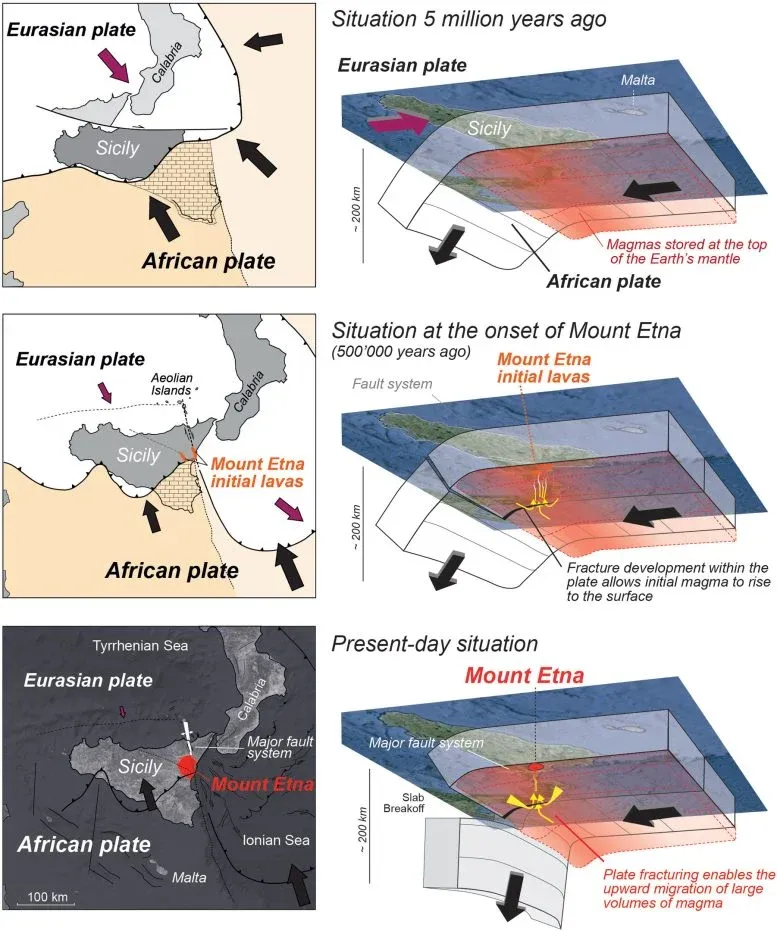
Researchers think Mount Etna might be a "petit-spot" volcano. Japanese scientists first identified these small submarine volcanoes in 2006. They show that magma pockets exist near the top of the mantle. This idea was proposed decades ago. It also shows that this magma can form volcanoes under the right conditions.
Sébastien Pilet is a Professor at the University of Lausanne. He is the lead author of the study. He explained that Etna may have formed through a similar mechanism. This is unexpected because petit-spot processes were only seen in very small volcanic structures. Mount Etna is a large stratovolcano. Its activity began about 500,000 years ago. It now towers over 3,000 meters above sea level.
What This Means for Volcanoes Worldwide
These findings offer a new way to understand how volcanoes can form. This applies to different tectonic settings around the world.
Scientists analyzed rock samples from Mount Etna. They traced how its lava chemistry changed over about 500,000 years. The results show that Etna’s magma composition has stayed stable over time. This is true even as tectonic conditions changed.
These observations suggest that the magma feeding Mount Etna has been in the upper mantle for a long time. Variations in eruption volume are mainly driven by plate movements. This supports the idea that Etna’s activity is linked to the "petit-spot" mechanism.
Deep Dive & References
Mount Etna as a Leaking Pipe of Magmas From the Low Velocity Zone - Journal of Geophysical Research: Solid Earth, 2026