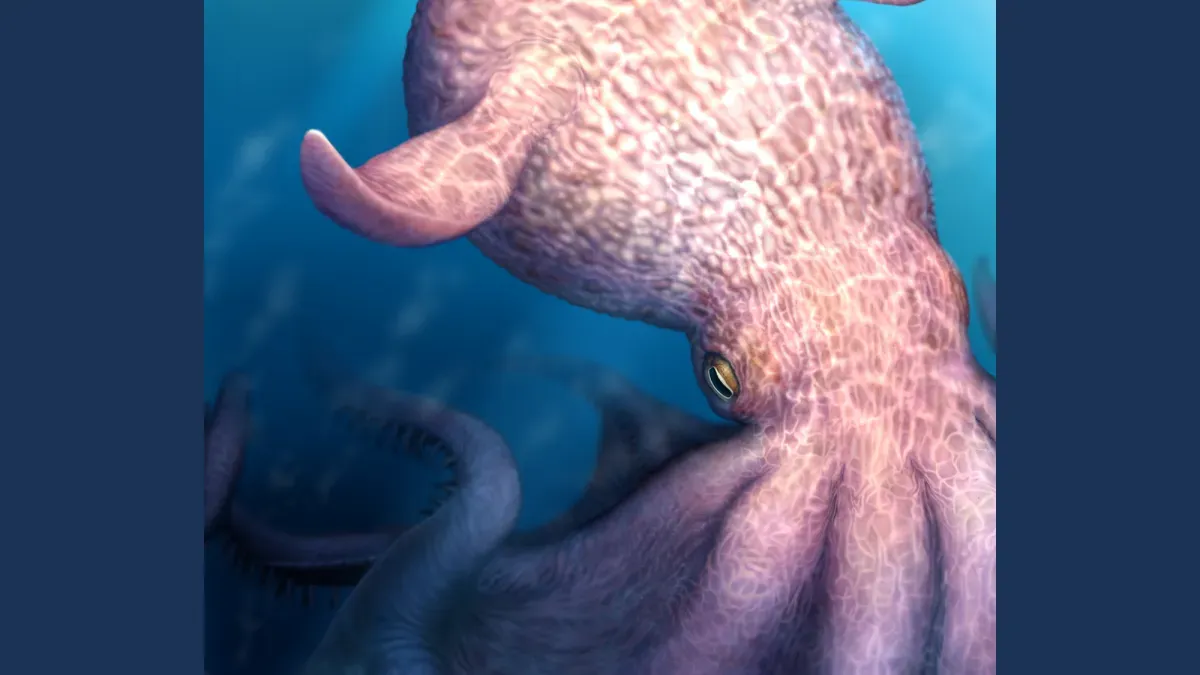
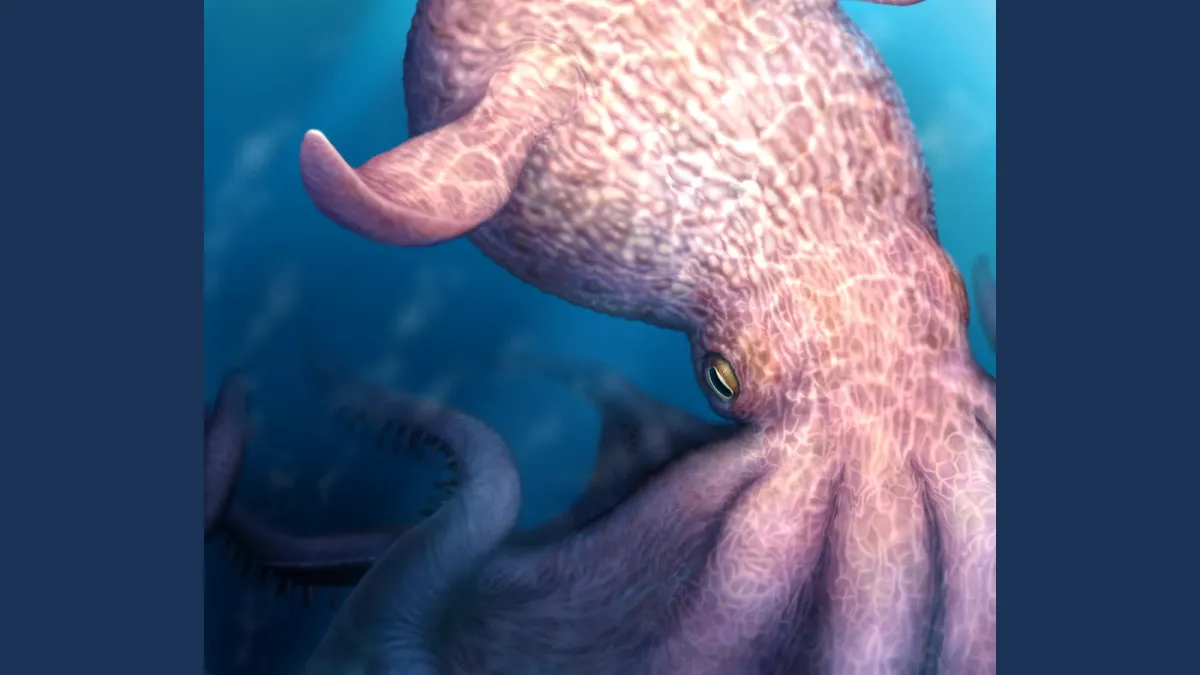
Picture this: 100 million years ago, a creature the length of a school bus, all tentacles and beak, glided through the prehistoric oceans. This wasn't some B-movie monster; it was an actual, honest-to-goodness giant octopus, and a new study suggests they weren't just big — they were apex predators, running the underwater show.
Marine paleontologist Yasuhiro Iba and his team found that some of the earliest known octopuses stretched nearly 65 feet long. That’s big enough to make a great white shark look like a guppy. And apparently, these cephalopods might have even dwarfed the giant marine reptiles swimming alongside them. Talk about an unexpected king of the deep.
The Case of the Missing Bones
Finding fossils of soft-bodied creatures like octopuses is usually a fool's errand. There’s just not much left to fossilize after a few million years. But, much like their modern descendants, these ancient kraken had powerful, beak-like jaws. These jaws, used for crunching prey, were often tough enough to fossilize nicely on the calm ocean floor.
We're a new kind of news feed.
Regular news is designed to drain you. We're a non-profit built to restore you. Every story we publish is scored for impact, progress, and hope.
Start Your News DetoxIba’s team got their hands on some of these prehistoric chompers, belonging to the Cirrata group (finned octopuses that still exist today). They pulled rock samples from Japan and Vancouver Island, Canada, which sounds like an epic scavenger hunt across tectonic plates.
Using a fancy technique called high-resolution grinding tomography — which is exactly what it sounds like, but for science — they scanned each sample. Then, because we live in the future, a machine learning program helped them sketch out what these colossal creatures likely looked like.
Smart, Aggressive, and Surprisingly Right-Handed
The results were a paleontological mic drop. The dating of these jaws pushed back the fossil record for giant finned octopuses by a cool 15 million years. It also extended the overall octopus timeline by 5 million years, meaning these invertebrates first popped up around 100 million years ago during the Late Cretaceous period.
But wait, there's more. The jaws revealed another wild detail: in both species studied, one side of the jaw was often more worn down than the other. This suggests these octopuses showed lateralization — basically, they had a preferred side, much like humans are left- or right-handed. This behavior is linked to highly developed brains, hinting that octopuses have been smart for a very, very long time. Perhaps they were even debating philosophy between meals.
That wear and tear also hinted that these octopuses weren't exactly hunting jellyfish. Some adult octopuses had lost about 10% of their jaw tips, which Iba explained points to “repeated, forceful interactions with their prey” and an “unexpectedly aggressive feeding strategy.” So, not only were they huge and smart, but they were also the aquatic equivalent of a bar brawler.

These discoveries completely upend the old notion that vertebrates always sat at the top of the ocean food chain. Turns out, you don't need a backbone to be a terrifying, intelligent hunter. Just a massive beak, a lot of tentacles, and a surprisingly strong preference for one side. Which, if you think about it, is both impressive and slightly terrifying.