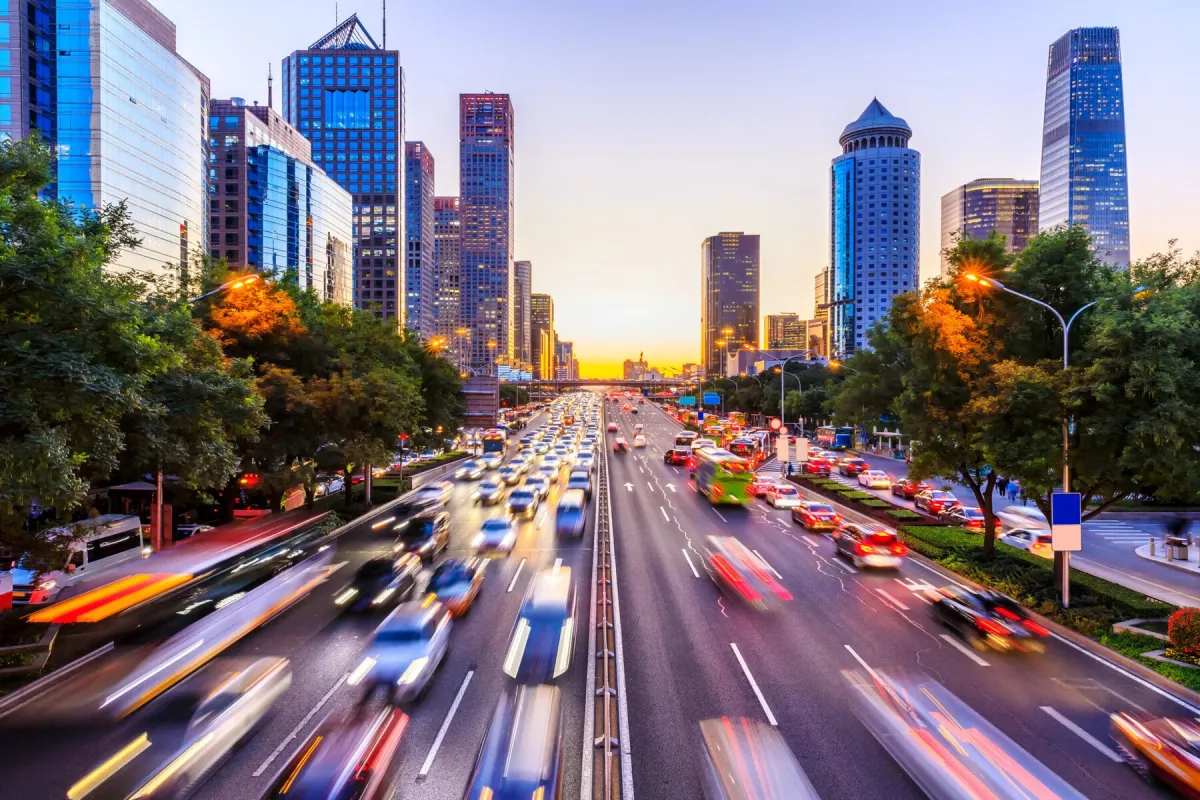
At the turn of the century, Beijing had one million vehicles. Just ten years later, by 2010, this number had grown five times. This huge increase in fossil fuel cars led to massive exhaust fumes and traffic jams.
In October 2010, a thick smog covered the city. It was linked to vehicle emissions and coal factories. This smog caused a rise in breathing problems. Visibility was so bad that it caused traffic accidents, killing at least 32 people in China's northeast. In November, tiny particles called PM2.5, from combustion engines, were 20 times higher than World Health Organization guidelines. The U.S. Embassy in Beijing famously called the air quality "crazy bad."
That year, air pollution contributed to over 1.2 million early deaths in China, many in Beijing. Beijing was then one of the world's most polluted cities. Breathing polluted air can cause many health issues. These include lower birth weights, higher chronic disease risk in babies, childhood asthma, cancer, strokes, and heart diseases in adults.
We're a new kind of news feed.
Regular news is designed to drain you. We're a non-profit built to restore you. Every story we publish is scored for impact, progress, and hope.
Start Your News DetoxWang Jue, a senior campaign specialist at Greenpeace East Asia in Beijing, remembers, "You got up in the morning, and you’d see this smoggy, yellowish, dark thing." She felt "super depressed and helpless" and called air pollution a "humanitarian problem."
Beijing's Blue Skies Return
Today, Beijing's skies are often blue and look completely different. The city has over 22 million residents. According to the IQAir World Air Quality Report 2025, Beijing has dropped to the 589th city globally for air pollution. This is despite being the world's fifth most populated city. Another study of nearly 100 cities found that Beijing's PM2.5 levels fell by 48% between 2010 and 2024. This was the biggest drop of any city studied.
This change is a huge, world-leading turnaround. Electric vehicles (EVs) have partly driven it. New research shows that more EVs mean cleaner city air. Electrifying cars and other vehicles is not only slowing global warming but also making urban air easier to breathe.
China clearly shows this trend. It leads the world in making and selling EVs. In 2025, more than half of all cars sold in China were electric.
A study in Nature Health in May found that China's move to electric cars has prevented hundreds of thousands of deaths. Researchers used satellite data and machine learning to track air pollution in 150 Chinese cities. They found that "new energy vehicles" (battery-electric, hybrid, and hydrogen cars) led to much cleaner air. Between 2013 and 2023, PM2.5 pollution dropped by 23.8%. PM10 fell by 15.06%, and carbon monoxide by 23.8%. This was compared to a scenario where all vehicles still used traditional engines. Researchers estimate this prevented about 337,000 non-accidental deaths.
Globally, outdoor air pollution causes over four million early deaths each year. This shows a clear public health reason to adopt EVs.
Meng Gao, a professor at Hong Kong Baptist University and an author of the Nature Health paper, says their research is the first to show real-world evidence of EVs' positive impact on air quality. Gao's team had access to Chinese vehicle registration records and high-resolution satellite images. This gave them more accurate data than previous studies.
EVs Clean Air Beyond China
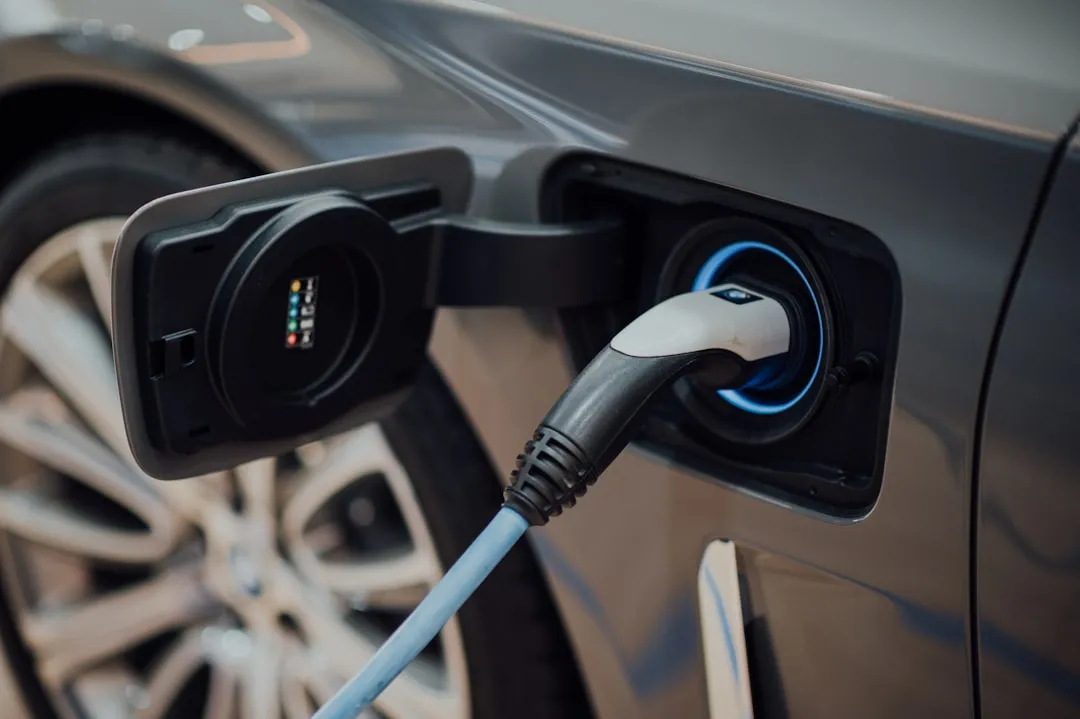
China is not the only place benefiting from cleaner air due to EVs. In California, the U.S. leader for EVs, rapid adoption has also improved air quality. A recent study in The Lancet Planetary Health found that in 1,700 residential areas in California, for every 200 new "zero-emission vehicle" registrations between 2019 and 2023, nitrogen dioxide levels fell by 1.1% on average. In some areas, they dropped up to 4%.
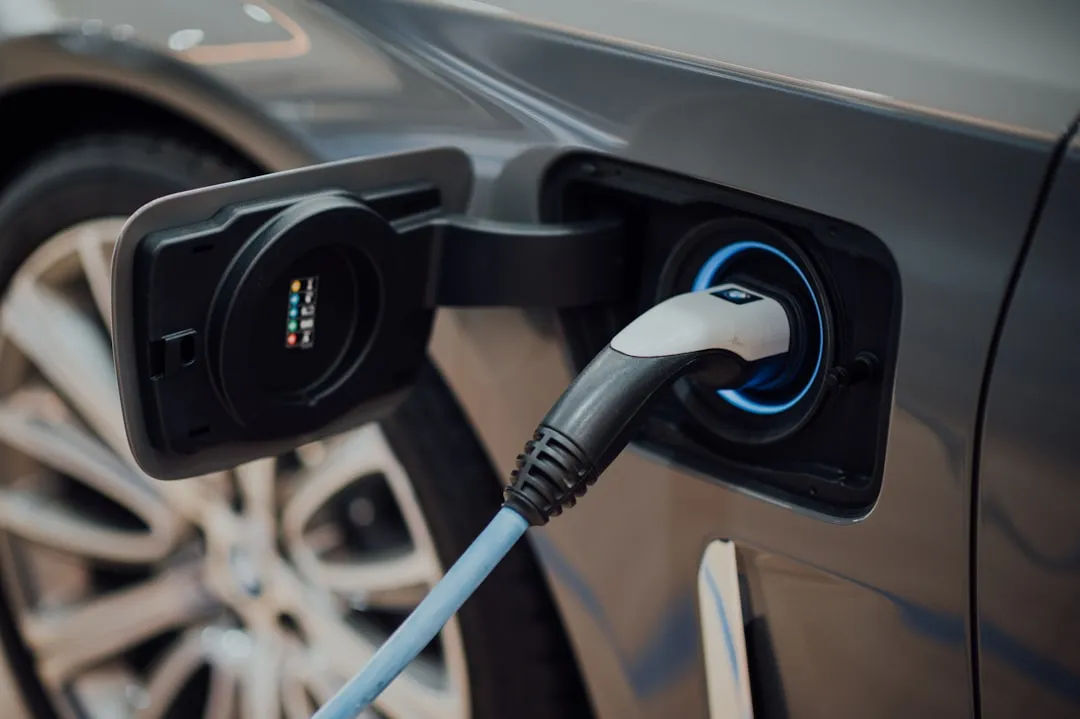
Sandrah Proctor Eckel, a study author and associate professor at the University of Southern California, said, "It’s an exciting time for us researchers." She added, "We’re seeing that there really could be an end to tailpipe pollution [thanks to EVs]. It could really make a difference for our health, the health of our kids." Eckel noted that her study data only went up to 2023, when EVs were 5% of registered vehicles in California. Today, that number is about 7.5%.
Public health experts believe that cleaner air from "zero-emissions" vehicles could greatly boost the U.S. economy. A 2022 report by the American Lung Association estimated that if all passenger vehicles sold by 2035 and all medium- and heavy-duty trucks by 2040 were zero-emission, it would create over $1.2 trillion in public health benefits between 2020 and 2050. This shift would prevent over 13 million lost workdays, nearly three million asthma attacks, and 110,000 early deaths.
Laura Kate Bender, vice president at the American Lung Association, stated, "Clean air impacts people’s health, and we found that the cumulative health benefits are enormous."
Challenges and Solutions
Bender warns that EV progress has faced recent challenges in California. The state had waivers allowing it to set stricter rules on gasoline cars than federal regulations. However, Congress has reportedly taken away California's power to ban traditional gasoline cars after 2035. Bender emphasized, "We know that these policies matter."
The American Lung Association has long pushed for federal investment in EV charging stations. This includes stations for trucks, which would build the necessary infrastructure for long-term EV adoption.
In China, experts agree that huge improvements in air quality also come from ongoing political efforts and investment in EVs and infrastructure. Beijing has built thousands of public EV charging stations, with nearly five million nationwide. In 2017, Shenzhen became the first major city to electrify its entire bus fleet of 16,359 buses. Both cities offer EV subsidies and restrictions, like long wait times for license plates for gasoline cars. The Chinese government spent an estimated $29 billion on EV subsidies and tax breaks between 2009 and 2022.
Professor Gao noted, "If we want to replace our old vehicle, we need to spend money." He added that government policy is crucial for compensating these costs.
Other policies in Beijing have also helped clean the air. These include strict emission controls on coal power plants, a sophisticated air quality monitoring network, and new public transit systems.
Researcher Eckel also pointed out, "While electrifying vehicles is one part of the solution, it is important to keep in mind active transport options which likely have even more benefits for reducing air pollution and improving health."
However, there are some concerns about EVs. There have been reports of environmental damage and human rights abuses in EV supply chains. This is especially true in mining minerals for batteries and at manufacturing sites. Also, China's electricity grid still heavily relies on coal. This means EVs aren't always powered by green energy, even if they cut local pollution.
Gao's research found that the "largest improvements in air quality and health were concentrated in economically developed cities." Less developed, lower-income regions have seen slower progress. Jue added, "Outside Beijing, in the provinces, the progress has been slower."
But this might change soon. Globally, over 20 million EVs were sold in 2025, a 20% increase from the previous year. As more vehicles worldwide become electric, like in Beijing, the air will get cleaner, and bluer skies are likely ahead.
Jue concluded, "I have witnessed the change in my lifetime. And I am very proud that I am part of it."
Deep Dive & References
- China’s electric vehicle uptake has substantially improved urban air quality and public health - Nature Health, 2024
- Association of zero-emission vehicle adoption with ambient nitrogen dioxide concentrations in California: a cross-sectional study - The Lancet Planetary Health, 2024
- Driving to Cleaner Air - American Lung Association, 2022