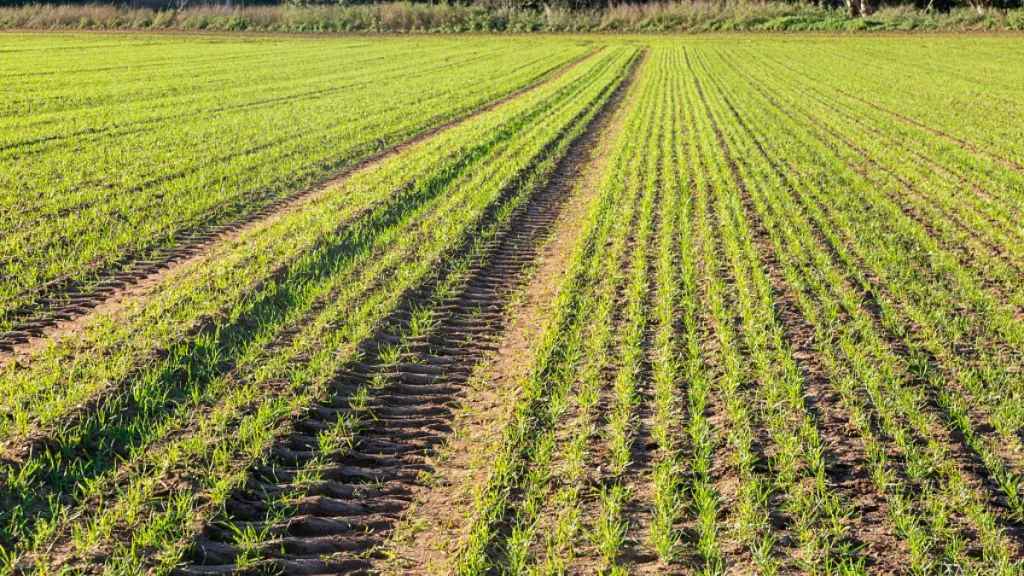
Spanish artist Almudena Romera plants wheat in patterns that only make sense from above. By spring, a two-hectare field becomes a photograph—not printed or projected, but grown. Different wheat varieties reach different heights and shades of green. From a drone's perspective, they compose a single image: this year, an eye staring up at the sky.
Romera calls these "farming photographs," and they exist at the intersection of art and agriculture. She's working with the French National Research Institute for Agriculture, Food, and Environment (INRAE) to pull it off. The process strips away everything industrial about photography—no darkroom chemicals, no paper, no ink. Instead, light and plant growth do the work.
"Coming from a family of sustainable orange farmers in Valencia, I have always been aware of the importance of how we do things as much as what we do," Romera told Positive News. "With Farming Photographs, I feel I have come full circle, making my photographic practice more sustainable by allowing images to emerge through light and plant growth."
We're a new kind of news feed.
Regular news is designed to drain you. We're a non-profit built to restore you. Every story we publish is scored for impact, progress, and hope.
Start Your News DetoxThis isn't her first experiment with living materials. She's printed photographs onto delicate leaves, used only light to expose plant surfaces, let flora become both canvas and medium. But the wheat fields are different—they're scaled up, slower, more collaborative with the seasons. "I wanted to see what photography could become if it worked with living systems rather than industrial processes," she said. "The landscape becomes both the medium and the message."
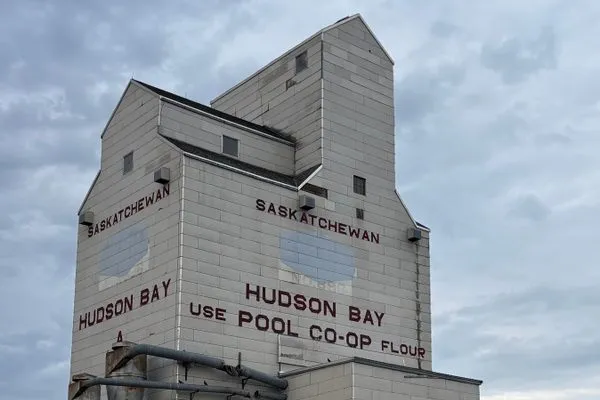
What happens next is the part that closes the circle. Once the eye is fully grown and documented, it gets harvested. The wheat is milled into flour. Art becomes sustenance. INRAE researcher Claire Manceau describes it as "a meeting of art and ecology that shows how creativity can reconnect us with the land"—a moment where the image you grew feeds people, where the artistic gesture becomes genuinely useful.
It's a small but deliberate pushback against the idea that art and agriculture are separate worlds. They're not. They never were.