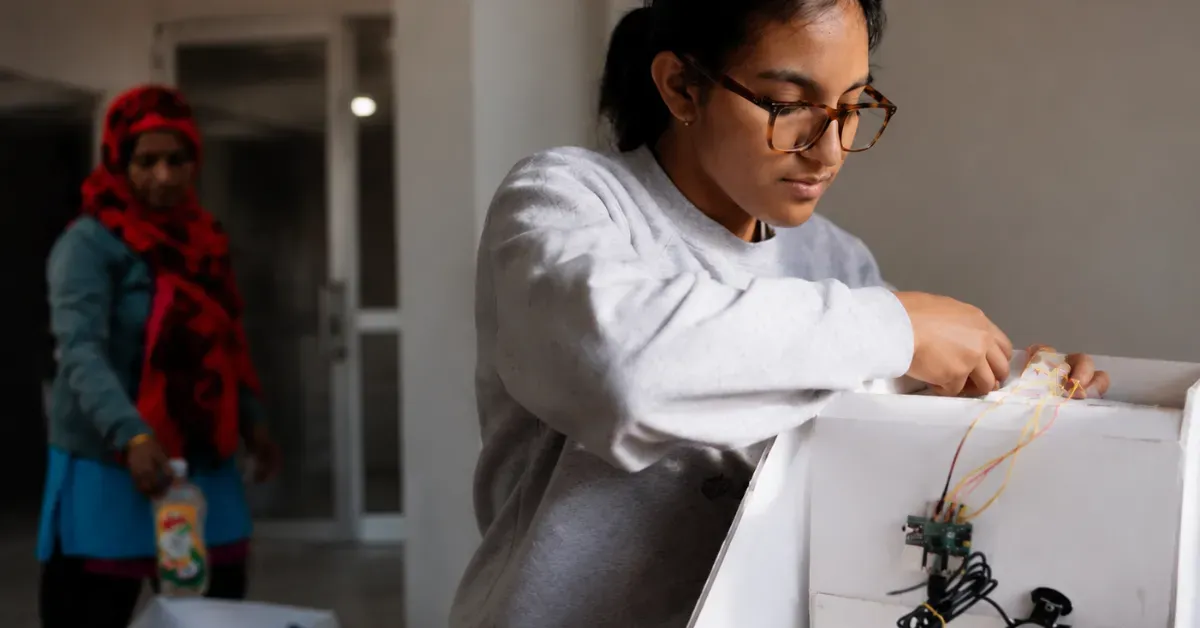
You know that moment when you see a perfectly good trash can, and yet, the ground around it looks like a rebel art installation of discarded coffee cups and rogue wrappers? Mahi Malhani, then 17, saw it too, while visiting Delhi's Sundar Nursery in 2023. And instead of just sighing, she decided to build a robot.
Because apparently, when you're a coding prodigy in India, a country that churns out 170,338 tons of solid waste daily, a trash-strewn path isn't just an eyesore – it's a call to action for a smart, autonomous cleaning companion.
Meet TRASHbot: Your New Favorite Janitor
Mahi, who'd been fluent in Python, C++, and JavaScript since most of us were still mastering Instagram filters, envisioned a machine that could not only pick up waste but sort it. The kind of thing that makes you wonder what you were doing at 17 (probably not building AI-powered robots, if we're being honest).
We're a new kind of news feed.
Regular news is designed to drain you. We're a non-profit built to restore you. Every story we publish is scored for impact, progress, and hope.
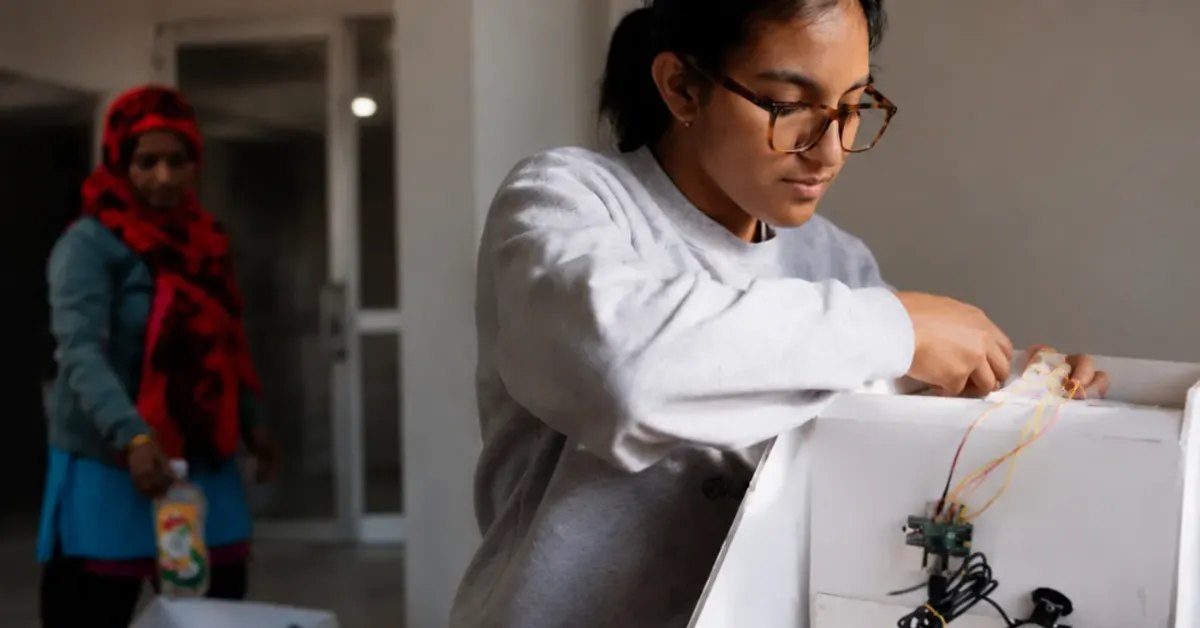
Start Your News DetoxShe sketched, she coded, she consulted with the robotics gurus at IIT Delhi's Rancho Labs, and even got a nod from her computer teacher. The result? TRASHbot. A mobile, waste-detecting, and surprisingly charming robot designed to be a "companion in cleanliness."
So, how does this mechanical marvel work? TRASHbot can either be guided by a smartphone app (because everything needs an app now) or roam free, dodging obstacles with ultrasonic sensors that are probably more reliable than your car's parking assist.
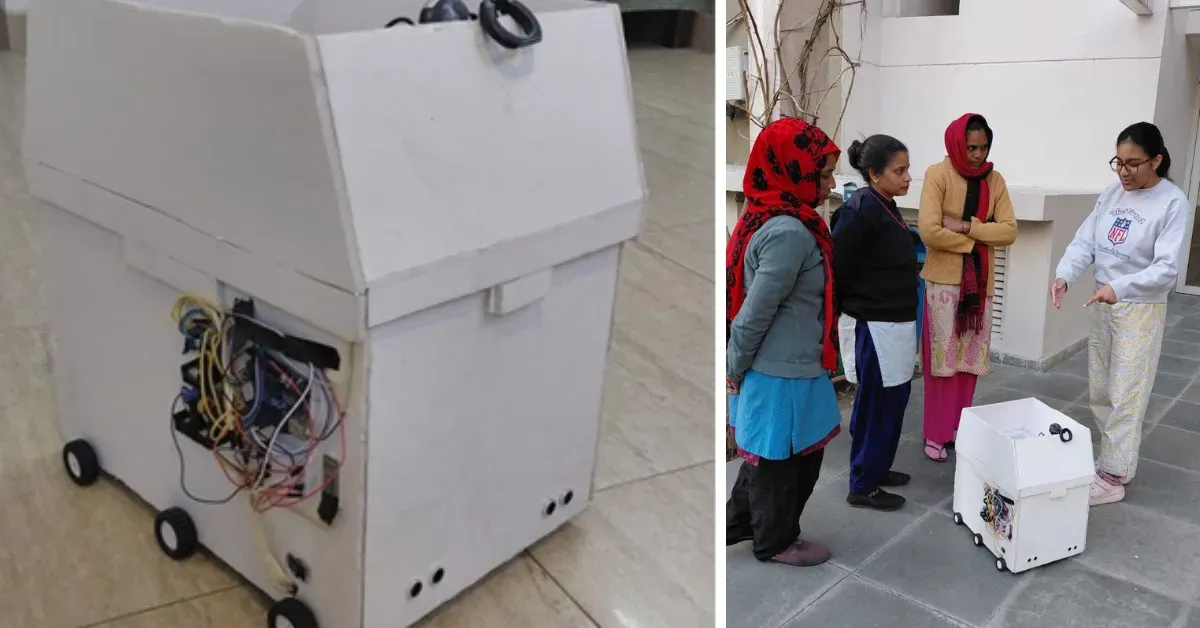
Its real magic, though, is in the sorting. It uses a camera and an AI model called YOLOv3 (yes, really) to snap a picture of an item, cross-reference it with its internal database, and then decide: biodegradable or non-biodegradable? Tiny motors then tilt the correct compartment, dropping the offending item into its rightful place. Mahi notes it sorts "faster, and without mistakes from carelessness." Which, if you think about it, is a pretty low bar for humans, but an impressive feat for a robot.
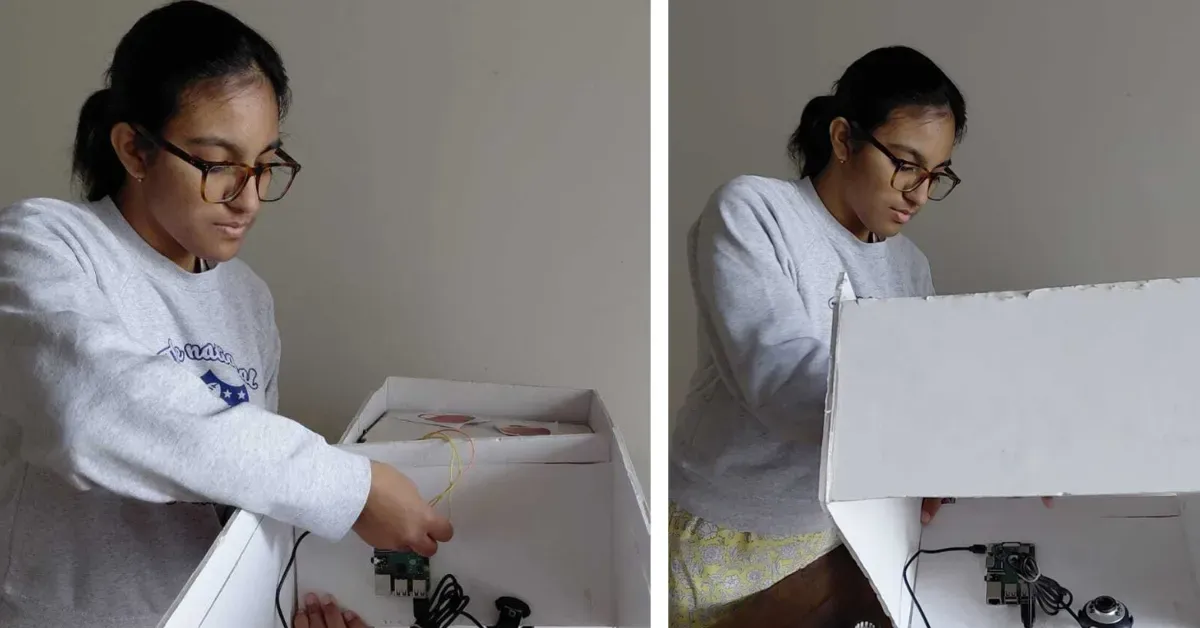
Inside, a Raspberry Pi handles the brainy image processing, while an Arduino Uno takes care of the muscle, controlling six rolling motors and two tilting motors.
From Cafeteria to Corporation
TRASHbot didn't just stay in Mahi's garage. It graduated from home testing to her school cafeteria, where it reportedly captivated students. Then came residential societies, where residents found it surprisingly convenient, especially during events that tend to leave a confetti of trash in their wake.
Since March 2025, TRASHbot has been deployed in two residential societies in Noida and even partnered with a municipal corporation in Udaipur. Its stats are pretty solid: 85% waste identification, 90% correct sorting, and a near-perfect 98% obstacle avoidance. All on a single charge that lasts about two and a half hours.
Of course, building a robot isn't without its glitches. Early versions had power issues and communication woes. The initial cost was nearly ₹20,000, which Mahi, ever the pragmatist, whittled down to ₹7,000, with an eye on further reductions. Uneven surfaces and crowds also demanded some sensor tweaks, but Mahi saw every problem as a chance to level up her robot.
Her efforts didn't go unnoticed. In 2025, she snagged first place in Delhi and second in India at the World Robot Olympiad virtual championship. TRASHbot also landed a spot in the top 50 AI projects at the India AI Impact Summit. Not bad for something that started because of a little litter.
What's next? Mahi plans to expand TRASHbot's sorting prowess to five categories (plastic, metal, glass, biodegradable, non-biodegradable), add Wi-Fi for remote monitoring, and even solar panels for extended battery life. Because why just pick up trash when you can also be eco-friendly about it? It seems a simple observation about waste can, with enough ingenuity, lead to a very smart solution indeed.