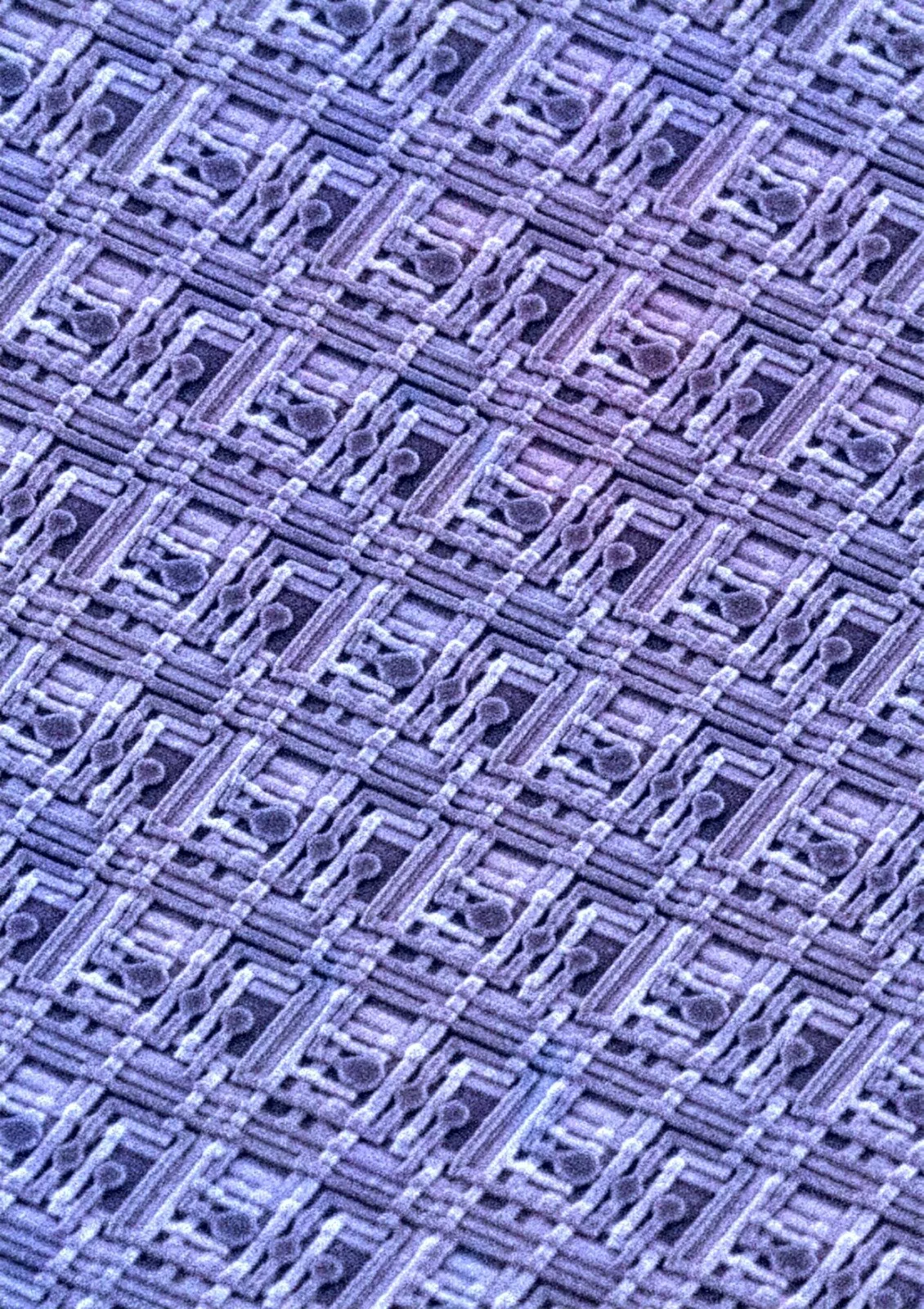
Physicists have figured out how to engineer magnetic materials with properties that don't exist in nature — by intentionally creating structural conflict at the atomic level.
Researchers at Florida State University combined two chemically similar compounds with completely different crystal structures. When these mismatched materials cooled and fused together, something unexpected happened: the atomic spins organized into complex, swirling patterns never seen in either original material. The findings, published in the Journal of the American Chemical Society, suggest a new way to design advanced materials rather than simply searching for them in nature.
How Atomic Spins Create Magnetism
Magnetism starts small. Every atom in a magnetic material acts like a tiny bar magnet because of a property called atomic spin — think of it as a directional arrow showing where that atom's magnetic field points. When billions of these spins line up neatly in the same direction, they create the familiar magnetic forces that power everything from smartphone screens to hard drives.
We're a new kind of news feed.
Regular news is designed to drain you. We're a non-profit built to restore you. Every story we publish is scored for impact, progress, and hope.
Start Your News DetoxBut the FSU team's new material behaves differently. Instead of lining up in orderly rows, the atomic spins twisted into repeating circular patterns called skyrmion-like spin textures. These swirling arrangements have become a major focus in physics research because they could unlock entirely new technologies.
The key to creating these patterns was deliberate mismatch. The researchers combined manganese-cobalt-germanium with manganese-cobalt-arsenic — compounds that sit next to each other on the periodic table, making them chemically almost identical but structurally incompatible. When the mixture crystallized, neither structure could dominate. This incompatibility, which scientists call structural "frustration," forced the atomic spins to twist into complex patterns.
"We thought that maybe this structural frustration would translate into magnetic frustration," said Michael Shatruk, a chemistry professor at FSU. "If the structures are in competition, maybe that will cause the spins to twist."
To confirm the swirling patterns existed, the team used neutron diffraction measurements at Oak Ridge National Laboratory's Spallation Neutron Source — essentially taking a detailed X-ray image of the material's magnetic structure.
Why This Matters for Technology
Materials with these skyrmion patterns could transform computing. They can store far more data in the same physical space than conventional magnetic materials, and they move through a material using remarkably little energy. In large data centers where thousands of processors run simultaneously, even small efficiency gains translate into significant electricity and cooling savings.
The patterns may also help build quantum computers that actually work reliably. Quantum systems are fragile — they lose their computational power when disturbed by noise or errors. Materials with these specific magnetic textures could help protect quantum information from degrading.
But perhaps the biggest shift is in how researchers approach material design. Traditionally, physicists have hunted through existing materials, testing each one to see if it has the magnetic properties they need. This study flipped that approach. Rather than searching, the FSU team designed a material from first principles, using structural frustration as a deliberate tool to create specific magnetic behavior.
"The idea is to be able to predict where these complex spin textures will appear," said Ian Campbell, a graduate student on the project. "Traditionally, physicists will hunt for known materials. But that limits the range of possibilities. We're trying to develop a predictive ability to say, 'If we add these two things together, we'll form a completely new material with these desired properties.'"
This predictive approach could make advanced magnetic materials cheaper and easier to manufacture. Instead of relying on rare elements or difficult-to-source materials, researchers might eventually use more common ingredients, strengthening supply chains and lowering costs for technologies that depend on these materials.
The next step is moving from designing individual materials to predicting exactly where complex spin textures will form before the material is even made. If scientists can crack that code, they'll have a playbook for engineering entirely new classes of materials tailored to specific technological problems.