A bacterial strain frozen in Romanian cave ice for 5,000 years carries resistance to some of our most widely used antibiotics—a discovery that cuts both ways: a warning about how resistance spreads, and a potential source of entirely new medicines.
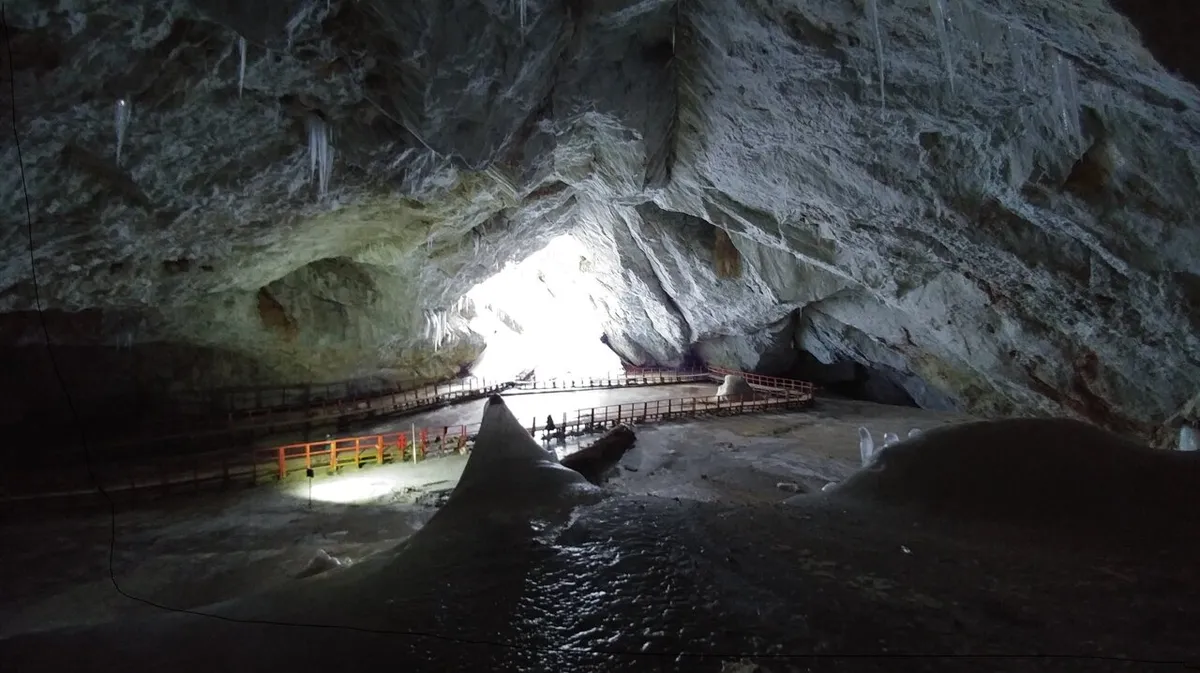
Researchers drilled deep into Scarisoara Ice Cave and isolated a strain called Psychrobacter SC65A.3 from a layer of ancient ice. When they sequenced its genome, they found it resisted 10 antibiotics commonly prescribed for serious infections like tuberculosis, urinary tract infections, and colitis. The strain carried over 100 genes related to antibiotic resistance.
"The Psychrobacter SC65A.3 bacterial strain shows resistance to multiple modern antibiotics and carries over 100 resistance-related genes," said Dr. Cristina Purcarea, one of the study's authors. But that's only part of the picture.
We're a new kind of news feed.
Regular news is designed to drain you. We're a non-profit built to restore you. Every story we publish is scored for impact, progress, and hope.
Start Your News DetoxWhat frozen microbes reveal
The ice core the team extracted was 25 meters long, giving them access to 13,000 years of microbial history locked in ice. Testing the strain against 28 different antibiotics from 10 classes showed resistance to drugs like vancomycin, rifampicin, and ciprofloxacin—some of medicine's heaviest hitters. The finding suggests that ancient microbes in extreme cold environments may act as natural reservoirs where resistance genes accumulate over millennia.
This matters because it rewrites how we think about antibiotic resistance. We've long assumed it's a modern problem born from overuse of antibiotics in hospitals and agriculture. But this 5,000-year-old bacterium proves resistance evolved long before penicillin was discovered. If melting ice releases these ancient microbes into modern environments, their resistance genes could transfer to contemporary bacteria, worsening a crisis that already kills hundreds of thousands of people annually.
Yet the same genome that carries all that resistance also holds something unexpected: nearly 600 genes with unknown functions. Among them, the researchers identified 11 genes capable of killing or inhibiting other bacteria, fungi, and viruses. This ancient strain, in other words, may be a blueprint for novel antibiotics we haven't yet imagined.
"These ancient bacteria are essential for science and medicine," Purcarea said, "but careful handling and safety measures in the lab are essential to mitigate the risk of uncontrolled spread."
The work underscores a tension at the heart of climate science: as ice melts and releases what's been frozen for millennia, we gain access to genetic material that could revolutionize medicine. The challenge is studying it safely, extracting its promise without releasing its risks.