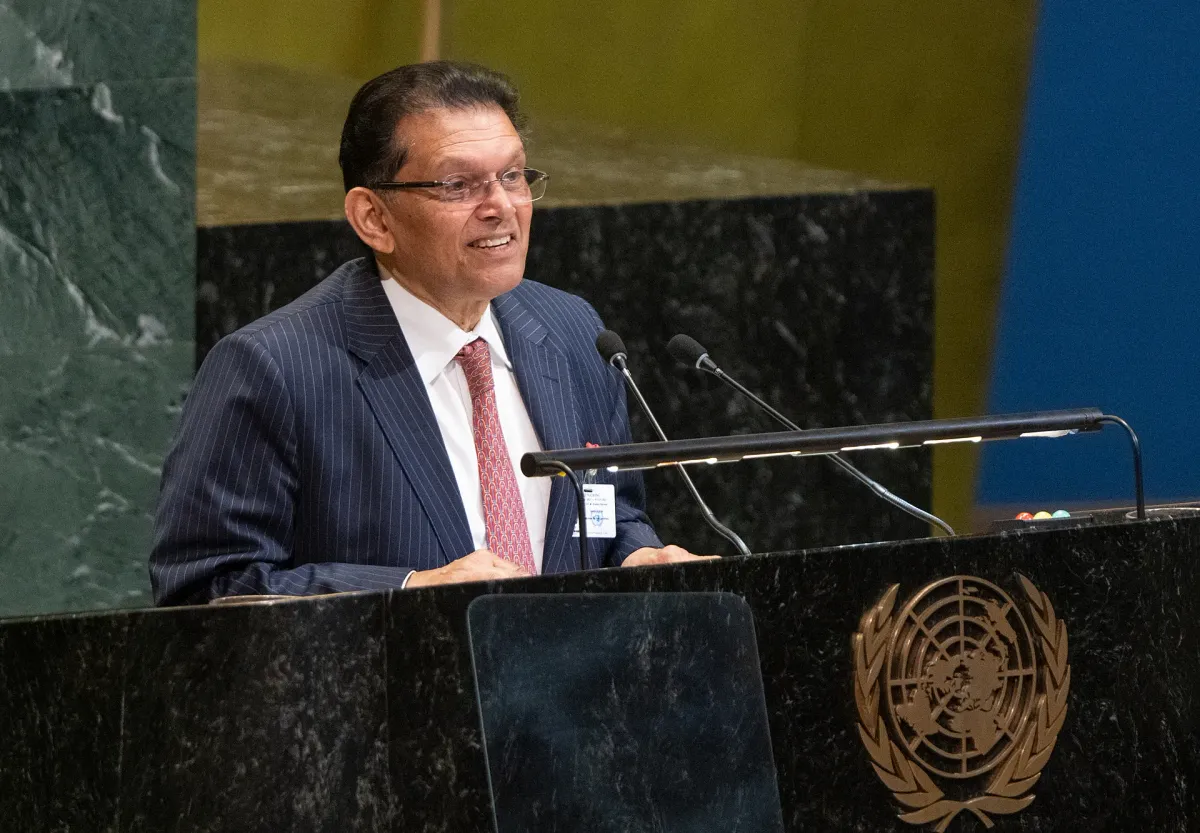
In news that probably had some diplomats on the edge of their very uncomfortable seats, Bangladesh's Foreign Minister Khalilur Rahman just snagged the presidency of the 81st session of the UN General Assembly. He beat Cyprus's Ambassador Andreas Kakouris in a race so tight, you could practically hear the collective sigh of relief (or dismay, depending on your delegation). Rahman will now lead the world's premier diplomatic body, which, let's be honest, has seen better days in terms of global harmony.
The Numbers Game
How close was it? In a secret ballot, Rahman pulled in 99 votes to Kakouris's 91. Out of 190 votes cast, not a single one was invalid or an abstention. Let that satisfying number sink in. The presidency rotates among the UN's five regional groups, and this session was Asia Pacific's turn. Rahman's one-year term kicks off on September 8th, and it's going to be a big one. Why? Because his to-do list includes selecting the next Secretary-General, as current chief Antonio Guterres's term is wrapping up this year. No pressure.
Before taking on the foreign minister gig in February, Rahman was Bangladesh's national security adviser and even a high representative for the Rohingya issue. He joined the foreign service back in '79, a career diplomat through and through, with stints in New York and Geneva for the UN. So, he knows his way around the building.
We're a new kind of news feed.
Regular news is designed to drain you. We're a non-profit built to restore you. Every story we publish is scored for impact, progress, and hope.
Start Your News DetoxUpon accepting the role, Rahman noted that trust in the UN is, shall we say, a bit wobbly. He pointed out that current global challenges are making people doubt whether the UN can actually deliver on its promises. And he's not wrong. Outgoing UNGA President Annalena Baerbock, Germany's foreign minister, echoed the sentiment, stating that reaching global agreement is harder than ever. Apparently, everyone's feeling the strain.
So, What Does the UNGA Actually Do?
Think of the General Assembly as the UN's grand town hall. Every single one of the 193 Member States gets a seat and one vote. Its annual September meeting in New York is the only place where all world leaders can stand up and have their say. While its decisions aren't typically legally binding – more like very strong suggestions – it's crucial for global discussions on everything from security to human rights. It's where global opinion gets a voice, for better or worse.
Beyond the talking, the UNGA also handles some serious housekeeping. It appoints the secretary-general (with a nod from the Security Council), elects non-permanent members of said Security Council, and approves the UN's budget. Which, if you think about it, is both impressive and slightly terrifying given the current climate. The next session begins September 8th, so mark your calendars for some high-stakes diplomacy.