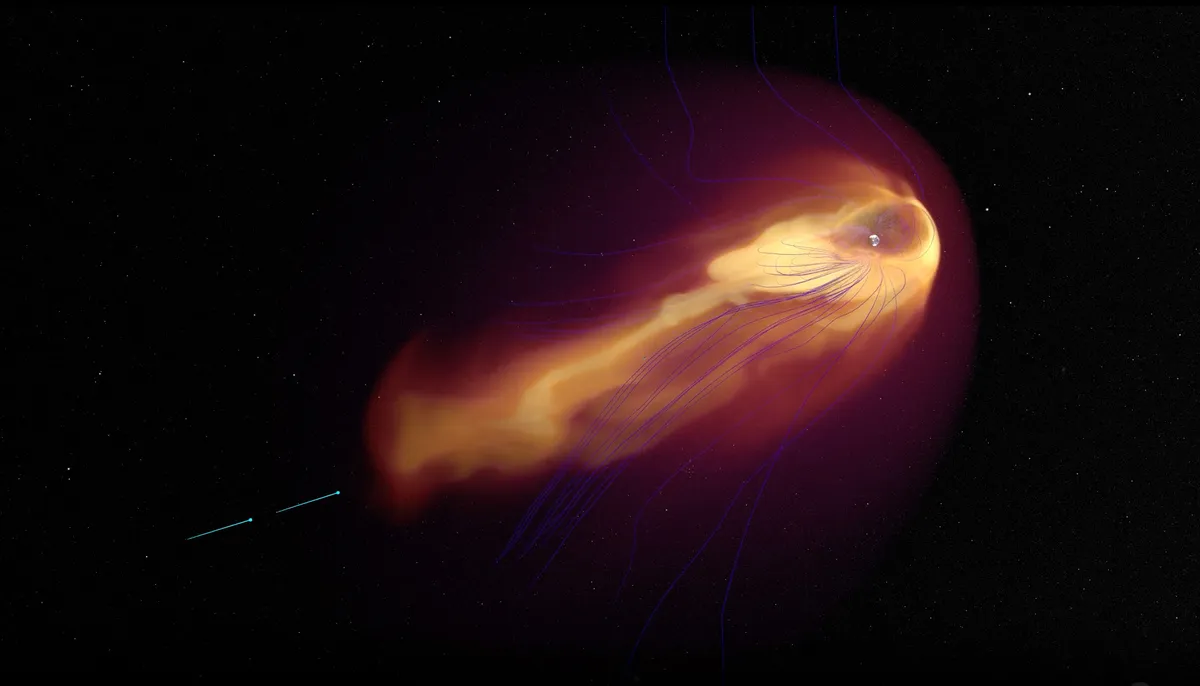
Two small satellites built at UC Berkeley just flew through a region of space that no spacecraft has ever visited: the distant magnetotail, a vast magnetic wake that stretches more than a million miles behind Earth as the solar wind sweeps past our planet.
NASA's ESCAPADE mission—short for Escape and Plasma Acceleration and Dynamics Explorers—launched these twin satellites, nicknamed Blue and Gold, in November 2025 with a destination of Mars. But first, they're taking a detour through Earth's magnetic neighborhood, using the journey as a chance to test their instruments and study a phenomenon that shapes the auroras dancing across our skies.
"This is a great opportunity for us to test the operation of the ESCAPADE instruments and explore a brand-new region of space," said Rob Lillis, the mission's principal investigator at UC Berkeley's Space Sciences Laboratory. On March 4, the satellites plowed through the magnetotail for 10 days, collecting data on magnetic reconnection—the process where oppositely directed magnetic fields collide, snap back, and accelerate plasma toward Earth. This same process is one of the engines behind the Northern and Southern lights.
We're a new kind of news feed.
Regular news is designed to drain you. We're a non-profit built to restore you. Every story we publish is scored for impact, progress, and hope.
Start Your News DetoxWhat makes this mission distinctive is the questions it's designed to answer about planetary atmospheres. The real goal is Mars: understanding how the solar wind—a constant stream of charged particles from the sun—strips away a planet's atmosphere. Mars lost most of its magnetic field billions of years ago, leaving its atmosphere vulnerable to the solar wind's assault. By studying how Earth's magnetotail responds to solar wind pressure, scientists can better understand what happened to Mars and what might happen to other planets as their stars age.
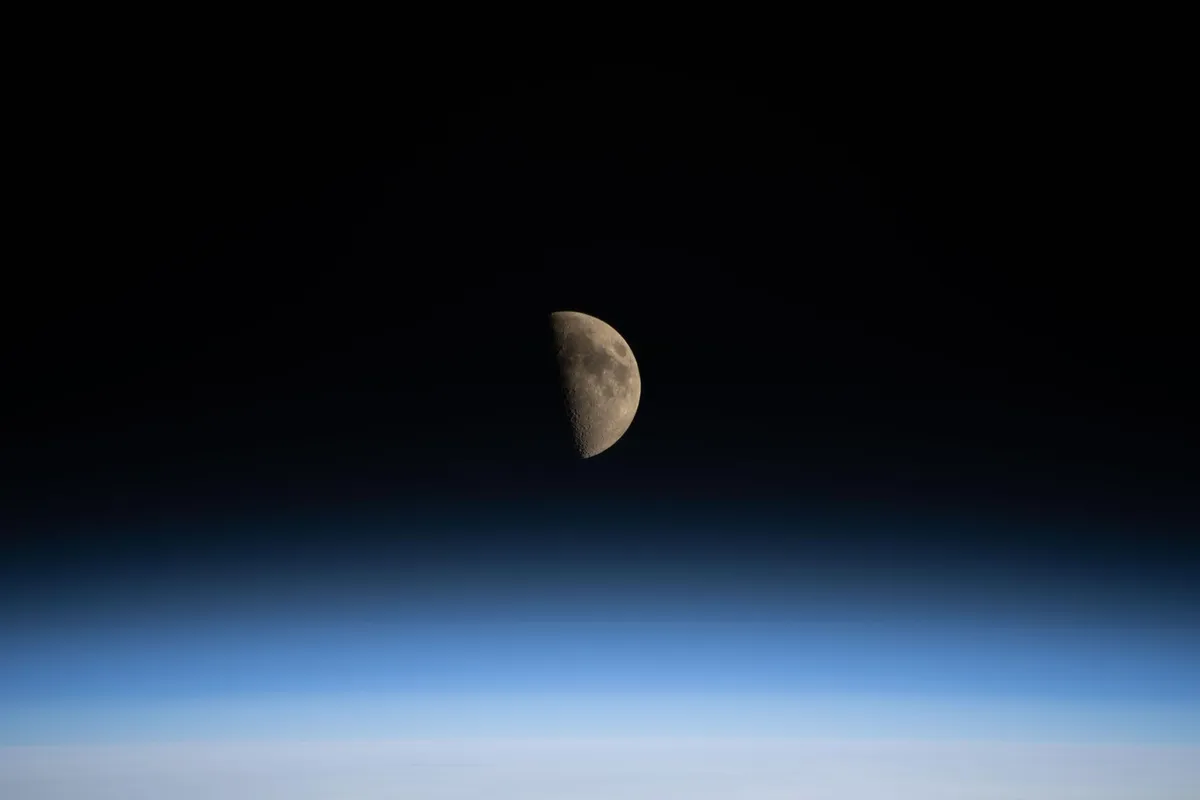
The magnetotail itself is a strange corner of space. It's created when the solar wind crashes into Earth's magnetic field like a river hitting a boulder, pushing the field into an elongated teardrop shape that stretches away from the sun. The tail is so vast that it extends past the moon's orbit—a region so distant and complex that no one has ever sampled it directly until now. The ESCAPADE satellites are small enough to maneuver through this region where larger spacecraft would struggle, giving them access to measurements that have only been theorized before.
After this first pass through the magnetotail, Blue and Gold will swing around Earth one more time in early November before leaving on their final trajectory toward Mars, where they'll arrive in fall 2027. By then, they'll have gathered baseline data on how Earth's magnetic environment works—knowledge that will sharpen their observations of Mars' dying magnetosphere and help explain one of the solar system's great mysteries: how a planet loses its air.