A microbe that's already survived radiation, freezing, and desiccation just proved it can handle something else: being blasted into space.
Researchers at the University of Arizona subjected Deinococcus radiodurans—a bacterium famous for its ability to shrug off conditions that would obliterate most life—to pressures equivalent to those generated during a massive asteroid impact. Using a steel plate sandwich and a striking hammer, they compressed the cells to 3 gigapascals (30,000 times Earth's atmospheric pressure). The result: 60% of the microbes survived intact.
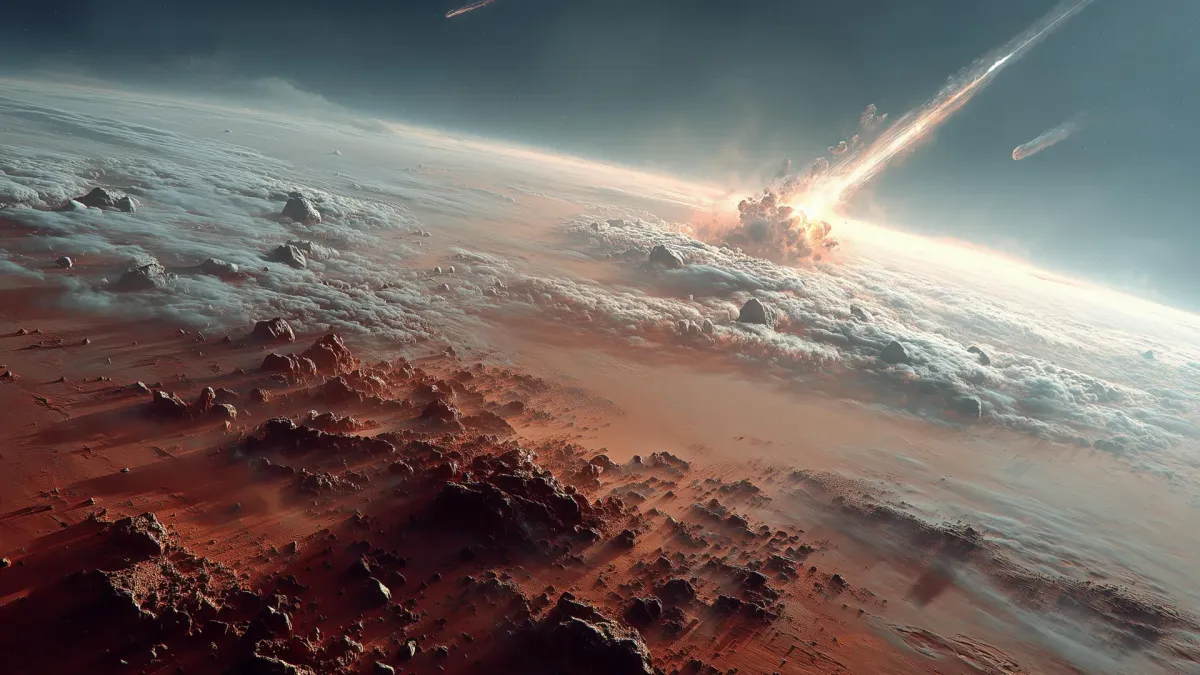
This matters because Mars and the Moon are covered in impact craters. When a large asteroid hits a planet, it doesn't just create a hole—it generates shock waves powerful enough to launch chunks of rock and soil into space. If those chunks contain microbes, and if those microbes can survive the journey, life could theoretically hitchhike between planets. Scientists call this panspermia, and it's been a hypothesis for decades. This experiment gives it real teeth.
We're a new kind of news feed.
Regular news is designed to drain you. We're a non-profit built to restore you. Every story we publish is scored for impact, progress, and hope.
Start Your News DetoxWhy this bacterium is different
What makes Deinococcus radiodurans special isn't just toughness—it's how tough it is. The bacterium can survive radiation doses 3,000 times higher than what would kill a human. It can dry out completely and revive. Its cell envelope (the outer membrane) is structured in a way that resists rupture, which explains why even at crushing pressures, most cells held together.
When researchers analyzed which genes the bacteria switched on after exposure to pressure, they found something telling: the cells immediately activated repair mechanisms. Rather than just passively surviving, the microbes were actively fixing damage. This suggests they have molecular tools specifically evolved to handle extreme stress—which makes sense if you're a bacterium that's spent millions of years in Earth's harshest environments.
The broader implication is that we may have been underestimating microbial resilience. Life on Earth has had billions of years to develop survival strategies. Some of those strategies—like the ones Deinococcus radiodurans uses—might be robust enough to survive not just local catastrophes, but the violence of space travel itself.
This doesn't mean microbes are definitely bouncing between planets right now. But it does mean that if they ever did, they'd have the biological toolkit to survive the trip. It also raises a quiet question about Earth's own past: if life can travel between planets, did some of Earth's earliest microbes hitch a ride from somewhere else? We don't know. But we just proved it's physically possible.