NASA just made a counterintuitive choice: slow down the path to the moon to actually get there more reliably. Artemis 3, originally planned as humanity's return to the lunar surface, is now a test flight in 2027. The actual landing—Artemis 4—moves to 2028. It sounds like a setback. It's not.
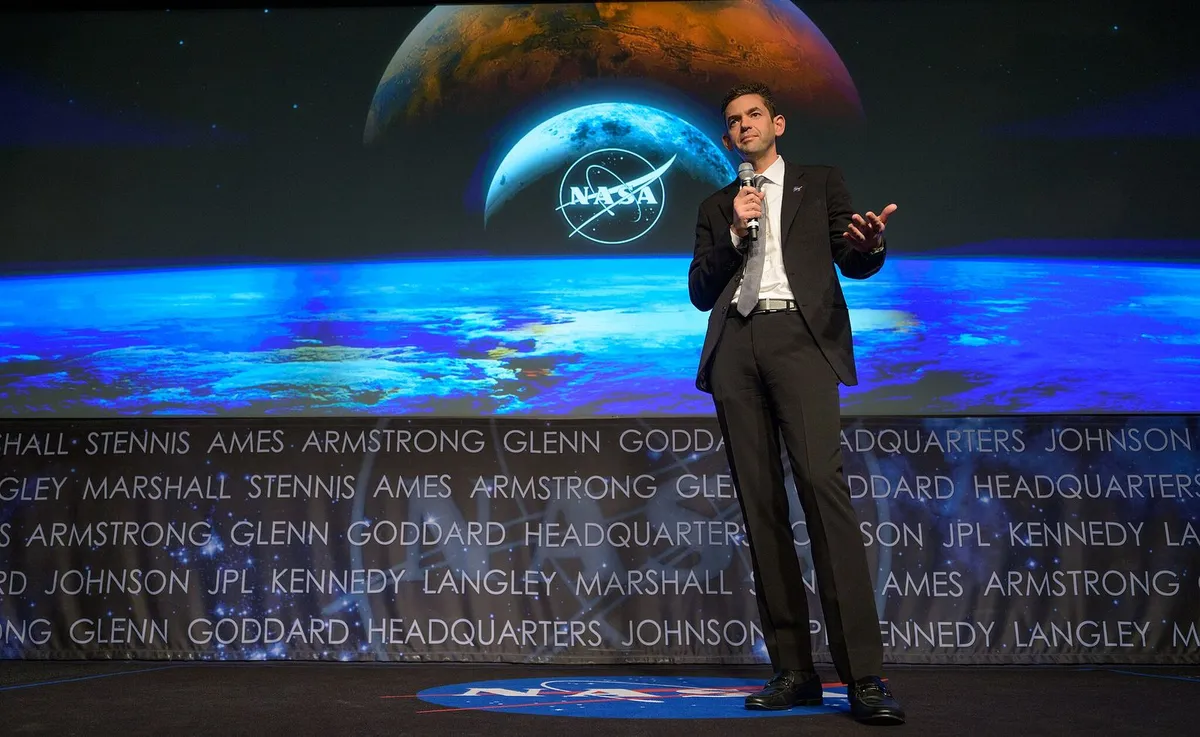
The shift reflects a fundamental rethinking about how to sustain complex spaceflight. NASA Administrator Jared Isaacman put it plainly: "When you are launching every three years, your skills atrophy, you lose muscle memory." The agency is restructuring to launch every ten months instead—a pace that mirrors the Apollo program's rhythm of roughly three months between missions. That cadence, it turns out, is what builds institutional knowledge and catches problems before they become disasters.
Artemis 3 will now focus on what matters most: practicing the rendezvous between the Orion crew capsule and lunar landers being built by SpaceX and Blue Origin, while astronauts test new spacesuits in lunar orbit. It's unglamorous work—the engineering equivalent of rehearsal before opening night. But it's the work that Apollo did, and Apollo succeeded.
We're a new kind of news feed.
Regular news is designed to drain you. We're a non-profit built to restore you. Every story we publish is scored for impact, progress, and hope.
Start Your News DetoxThe Apollo Playbook
Here's what NASA learned from 1961 to 1969. The agency didn't jump straight to the moon. Mercury put the first American in space in May 1961, then flew five more crewed missions within two years. Gemini followed with 12 missions between 1964 and 1966, testing equipment and procedures in Earth orbit. Only then did Apollo begin its own stepping-stone approach: Apollo 7 checked spacecraft systems, Apollo 8 flew around the moon, Apollo 9 tested the lunar module in orbit, Apollo 10 descended close to the surface. Apollo 11 landed.
"Right now, the Artemis program is essentially set up with Apollo 8 and then going right to the moon," Isaacman said. "And that is not a pathway to success." The new plan restores that methodical progression.
What's striking is that this restructuring contradicts the pressure NASA has faced for years to deliver a lunar landing on an accelerated timeline. The original Artemis 3 plan was politically ambitious—a single shot at returning humans to the moon. The revised approach is technically honest: it acknowledges that rushing complex spaceflight kills people or missions, and that the only way to move faster is to move steadily.
What Changes Beyond the Calendar
The restructuring goes deeper than mission dates. NASA plans to standardize the Space Launch System rocket rather than pursue planned upgrades, and to expand its civil servant workforce. Currently, 75 percent of NASA's workforce consists of contractors. Isaacman signaled that many of these roles should shift to civil servants to build in-house technical capability—a recognition that institutional knowledge can't be outsourced.
Space policy experts have backed the shift. James Muncy, founder of the space policy consultancy PoliSpace, called the revised approach "easier, less risky, and just more serious." Jack Kiraly, director of government relations for the Planetary Society, noted that focusing on technical and engineering challenges rather than political and budgetary pressures allows problems to be solved more effectively. This matters because the NASA Aerospace Safety Advisory Panel's 2025 report identified "several significant risks at the mission level" for the original Artemis 3 plan.
NASA Associate Administrator Amit Kshatriya explained the philosophy: "What we're trying to do is put objectives into manageable chunks so we can actually fly more quickly, because that pace, that cadence is what really will lead to reliability and safety." It's a quiet acknowledgment that the path to the moon runs through patience, not haste.
Artemis 2, the crewed lunar flyby, remains on track for as early as April 2025, though recent tests have revealed hydrogen fuel leaks and helium flow problems—issues that also appeared during the uncrewed Artemis I mission in 2022. Those problems are exactly why the slower cadence matters. They give engineers time to understand and fix them properly.