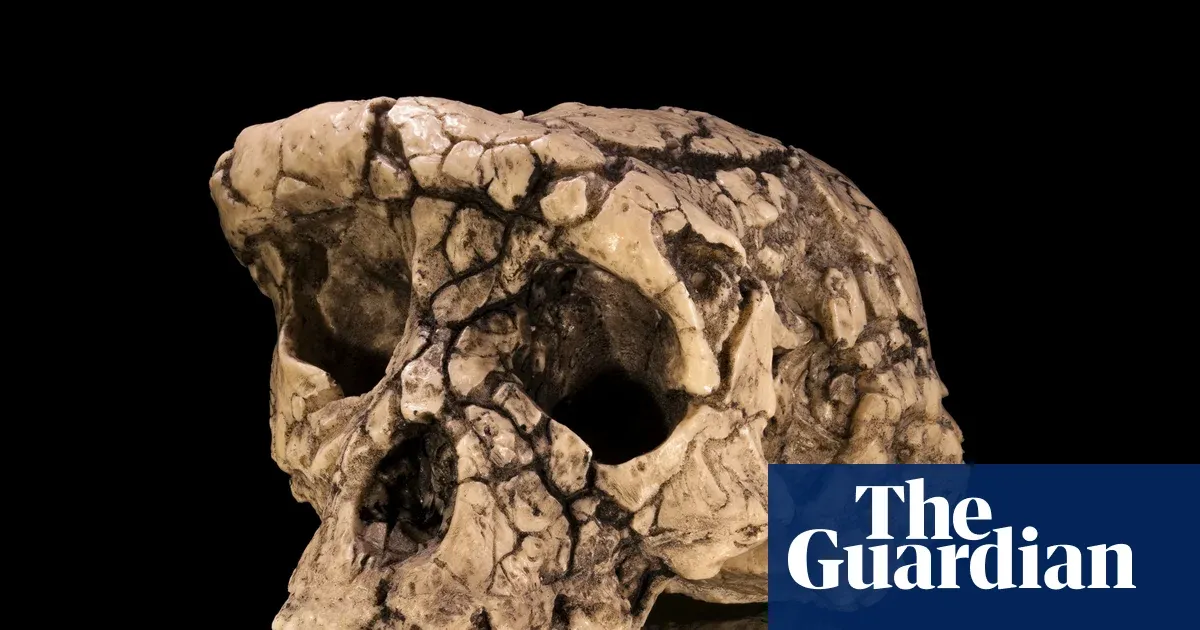
Seven million years ago in what is now Chad, an ape-like creature took a step that would eventually lead to you reading this on a screen. It stood up on two legs. We don't know why — maybe the trees were getting sparse, maybe it helped spot predators — but that shift from knuckle-walking to bipedalism became the hinge on which our entire story turns.
Now scientists think they've found the fossil evidence of that pivotal moment. After analyzing bones from a species called Sahelanthropus tchadensis, researchers argue this is the earliest known member of the human lineage, the best candidate yet for the ancestor that made the leap.
The Bones Tell a Story
The analysis is straightforward but compelling. The thigh bone shows the natural twist that helps a biped's leg point forward when walking. The hip structure reveals buttock muscles adapted for standing, walking, and running — features you'd never need if you were content shuffling on your knuckles. There's also a small bump on the femur called the femoral tubercle, which Dr. Scott Williams of New York University describes as "the attachment point for the largest and most powerful ligament in our bodies" and "a really important adaptation for bipedal walking."
We're a new kind of news feed.
Regular news is designed to drain you. We're a non-profit built to restore you. Every story we publish is scored for impact, progress, and hope.
Start Your News DetoxPut together, these features paint a picture of a creature that looked chimpanzee-like but moved differently — upright, deliberate, committed to two feet.
"Based on the features we've found, this would have looked like a bipedal ape, most similar to a chimpanzee or bonobo," Williams said. The difference matters. Chimps and bonobos can rear up and walk on two legs for brief stretches, but Sahelanthropus appears built for it.
Yet the scientific world isn't unified. Since the first Sahelanthropus fossils were unearthed in Chad's Djurab desert in 2001, debate has simmered. Some researchers question whether the evidence is solid. Dr. Marine Cazenave of the Max Planck Institute finds the femoral tubercle "unconvincing" and "very faint" in what she describes as a "highly damaged" bone. Others, like Dr. Rhianna Drummond-Clarke, see merit in parts of the analysis but want clarity on whether this creature walked upright on the ground or in trees — a crucial distinction.
The researchers who've long championed Sahelanthropus as bipedal, including Dr. Guillaume Daver at the University of Poitiers, welcome the new analysis but acknowledge the obvious: more fossils would settle the argument. A Chadian-French team plans to return to the site this year to search.
As Williams put it with scientist's honesty: "I think it's a case of too few fossils and too many researchers." The search for humanity's first upright ancestor continues, one bone at a time.