The race to beam electricity from space is accelerating. US startup Overview Energy just demonstrated laser power transmission from an aircraft and plans an orbital test by 2028. China is targeting a megawatt-scale system by 2030. But there's a problem: the sky is getting crowded, and stray laser beams could damage the very satellites they're meant to help.
Space-based solar power isn't new. Czech-American engineer Peter Glaser proposed it in 1968 — collect sunlight in orbit where clouds never form, convert it to energy, and send it down to Earth continuously. For decades it stayed theoretical. Now it's becoming real, and the shift from microwave to laser transmission makes it cleaner (no massive ground infrastructure needed) and closer to deployment.
But researchers at Beijing's Institute of Satellite Environment Engineering ran the numbers and found a genuine risk. They fired ultra-short laser pulses at solar panel samples in the lab and watched what happened. The beams triggered electrical discharges — brief but sharp spikes of current that could fry sensitive electronics or force emergency shutdowns on nearby satellites. A tracking error or system malfunction (not uncommon in space operations) could turn a power beam into a weapon.
We're a new kind of news feed.
Regular news is designed to drain you. We're a non-profit built to restore you. Every story we publish is scored for impact, progress, and hope.
Start Your News DetoxThe Congestion Problem
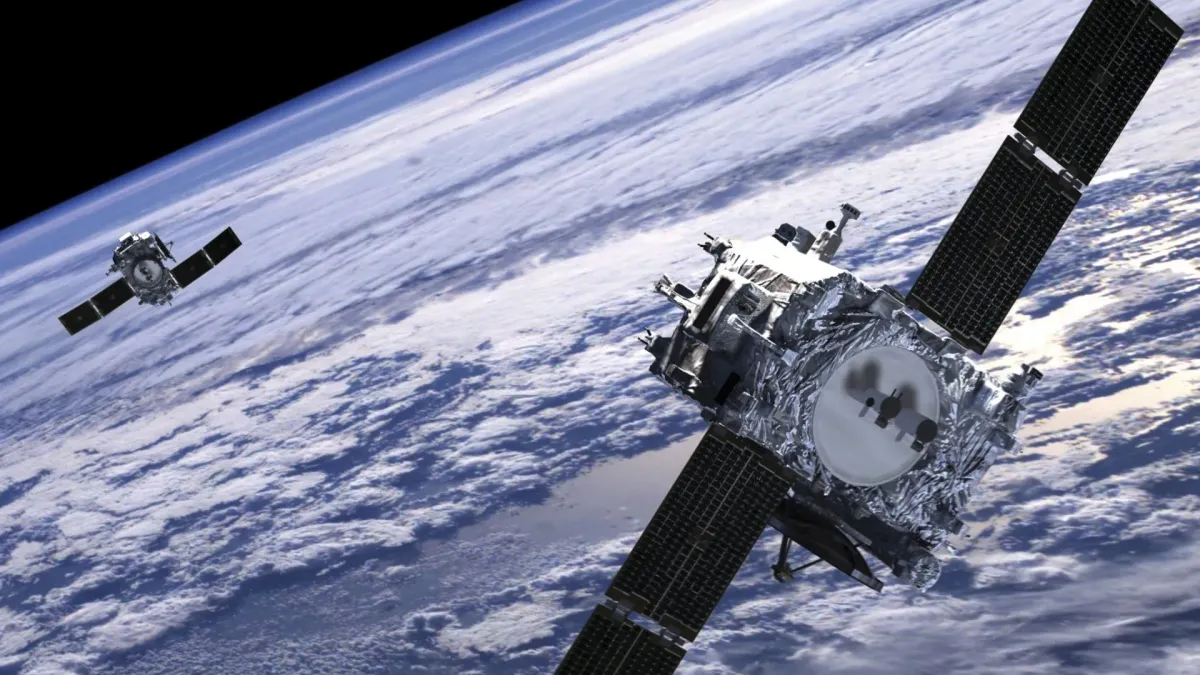
The danger grows with each new satellite launched. Most space-based solar concepts target geosynchronous orbit — a high, stable zone 36,000 kilometers up where communications and weather satellites already live. Low Earth orbit, where most new mega-constellations operate, is already packed. As the orbital population swells, the odds of a stray beam hitting something valuable increase.
The Beijing team's paper, published in High Power Laser and Particle Beams, doesn't say the technology is impossible. Instead, it maps the boundaries: safer laser parameters, protective coatings for satellite arrays, better tracking systems. It's the kind of engineering work that happens before things go wrong.
Overview Energy and China's space agencies know this is coming. The real test starts in the late 2020s when prototype satellites actually fly. By then, we'll know whether the promise of 24/7 clean power from space can coexist with thousands of other machines already up there.