The number of billionaires crossed 3,000 for the first time in 2025, their combined wealth reaching $18.3 trillion. Since 2020, that wealth grew by 81%—$8.2 trillion in five years. Oxfam's latest inequality report frames this as a crisis. But the more revealing story isn't the wealth itself. It's what's happening in response.
Wanjira Wanjiru works in Mathare, a slum in Nairobi where many people lack clean water. Across the fence, a golf club runs sprinklers constantly to keep the greens perfect. She's watched her government impose austerity on education and healthcare while handing tax exemptions to businesses. It's the everyday texture of inequality—the absurdity made visible.
Yet Wanjiru remains genuinely hopeful. "When people are oppressed, they always rebel," she said. And across Africa, Asia, and Latin America over the past year, they have been.
We're a new kind of news feed.
Regular news is designed to drain you. We're a non-profit built to restore you. Every story we publish is scored for impact, progress, and hope.
Start Your News DetoxThe Backlash Is Real
Nepal offers the clearest example. In September 2025, protests over corruption and political capture escalated into something larger. Binod Chaudhary, Nepal's only billionaire and a sitting MP, became a focal point. His businesses and properties were burned. The government fell. Pradip Gyawali, a political consultant who participated, described it as more than local anger: "This is a new revolution... that the youth should have their say and some power in politics."
Kenya saw similar youth-led uprisings in 2024 and 2025. In country after country—from Kenya to Sudan to Bangladesh—young people have taken to streets over austerity, unemployment, and the simple fact that life is becoming unaffordable. Governments have mostly responded with repression rather than redistribution.
The wealth concentration itself is staggering by the numbers. Billionaires are 4,000 times more likely than ordinary people to hold political office. They own more than half the world's media companies and nine of the top ten social media platforms. US research shows that when the wealthy support a policy, it has a 45% chance of adoption. When they oppose it, that drops to 18%.
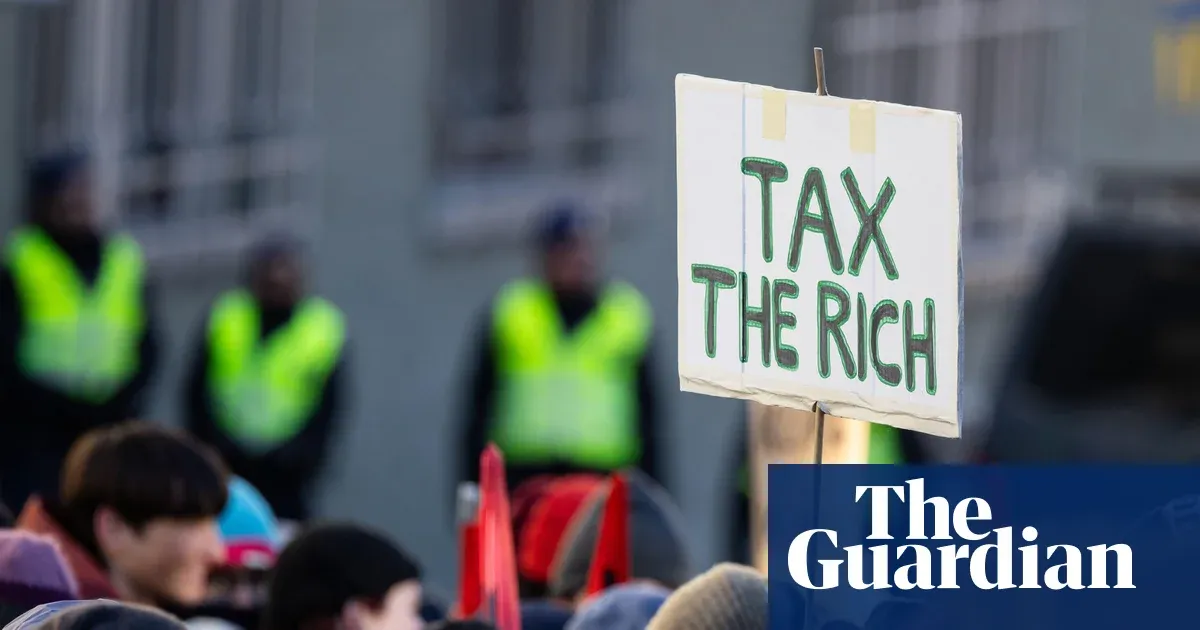
But here's what Oxfam's report actually captures: the moment when that imbalance becomes visible enough that people refuse it. Youth movements in developing countries are explicitly naming the problem—not as abstract inequality, but as a rigged system where their governments choose the rich over their own citizens. They're not asking permission. They're forcing change.
The question now is whether these uprisings can sustain momentum and whether other governments will respond with actual redistribution rather than crackdowns. Wanjiru's optimism rests on something older than statistics: the historical pattern that when pressure builds long enough, systems shift.