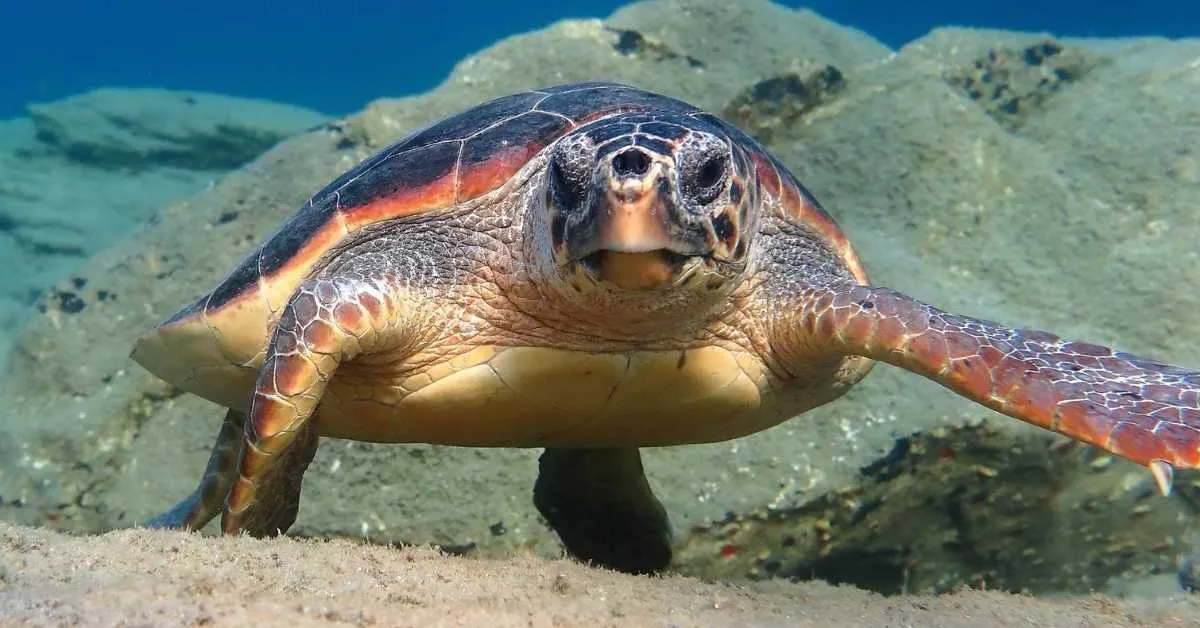
In 2018, night patrol teams on Boa Vista, Cabo Verde, noticed a big change. Loggerhead turtles were showing up in much larger numbers on the beaches.
Before, teams from the conservation group Cabo Verde Natura 2000 (CVN2) would see five to ten female turtles (Caretta caretta) each night. But then, they started seeing 20 to 30 females nightly. By 2021, this number grew to 30 to 40.
A new study in Biological Conservation confirms this trend. It shows an 80-fold increase in loggerhead turtles nesting on three of Boa Vista's beaches over 27 years, from 1998 to 2024.
We're a new kind of news feed.
Regular news is designed to drain you. We're a non-profit built to restore you. Every story we publish is scored for impact, progress, and hope.
Start Your News DetoxThe study's authors say this amazing recovery is due to decades of conservation work. This work happened at both local and national levels.
Loggerheads live long lives and mature slowly. They can live 80 years or more. Females take decades to be old enough to reproduce. These turtles mostly live in the Pacific, Atlantic, and Indian oceans, and the Mediterranean Sea.
Globally, the loggerhead population has dropped by 47% in the last three generations. The IUCN Red List calls them a 'vulnerable' species. This decline is mainly because of human activities. These include losing habitats, ocean pollution, getting caught in fishing nets, poaching, and climate change.
The numbers on Boa Vista are very impressive compared to other loggerhead nesting sites. Some places in Florida and Oman have up to 600 nests per kilometer. These are sites with over 10,000 nesting females each year. But the new study found that Boa Vista's three biggest nesting sites had a huge 22,000 nests per kilometer in 2021.
Since loggerhead nesters were first recorded on Boa Vista in 1997, many efforts have helped. These include protecting habitats, enforcing anti-poaching laws, running hatchery programs, and increasing local involvement. Beach patrols and turtle watching have also helped protect nesting sites.
These activities, along with careful data collection by CVN2 and other groups, are helping loggerheads recover in Cabo Verde.
Carlos Angulo-Preckler, a study co-author, noted that this study shows how long-term conservation data can become scientific proof. This proof supports local conservation and helps us understand sea turtle recovery worldwide.
 Cabo Verde Natura 2000 staff learn how to correctly excavate loggerhead turtle (Caretta caretta) nests so they can accurately count recently hatched eggs. From the left: Fabio Texeira, Helga David, Maximiliano Lopes, Carlos Soares, Diego Santos and Patricia Mayo. Image courtesy of Cabo Verde Natura 2000.
Counting Eggs and Future Threats
During nesting season, which starts in June, CVN2 and volunteers patrol nightly. They find new nests and count every egg. Then, they erase the turtle's tracks to avoid counting them twice.
By October, they check the nests again to see how many eggs hatched. This adds to a growing collection of data. Spanish zoologist L.F. Lopez-Jurado started CVN2 in 1998.
CVN2, with 90% Cabo Verdean staff, realized they needed help analyzing decades of nesting data. So, in 2024, they teamed up with the marine studies team from KAUST.
Jeanette Wynecken, a sea turtle biologist not involved in the study, said this research is important. It shows how long-term conservation efforts affect loggerhead populations.
She explained that sea turtles age slowly and mature late. So, studying them over a long time is key to understanding conservation's impact. Turtles born at the start of the study only became old enough to mate around 2013-2014.
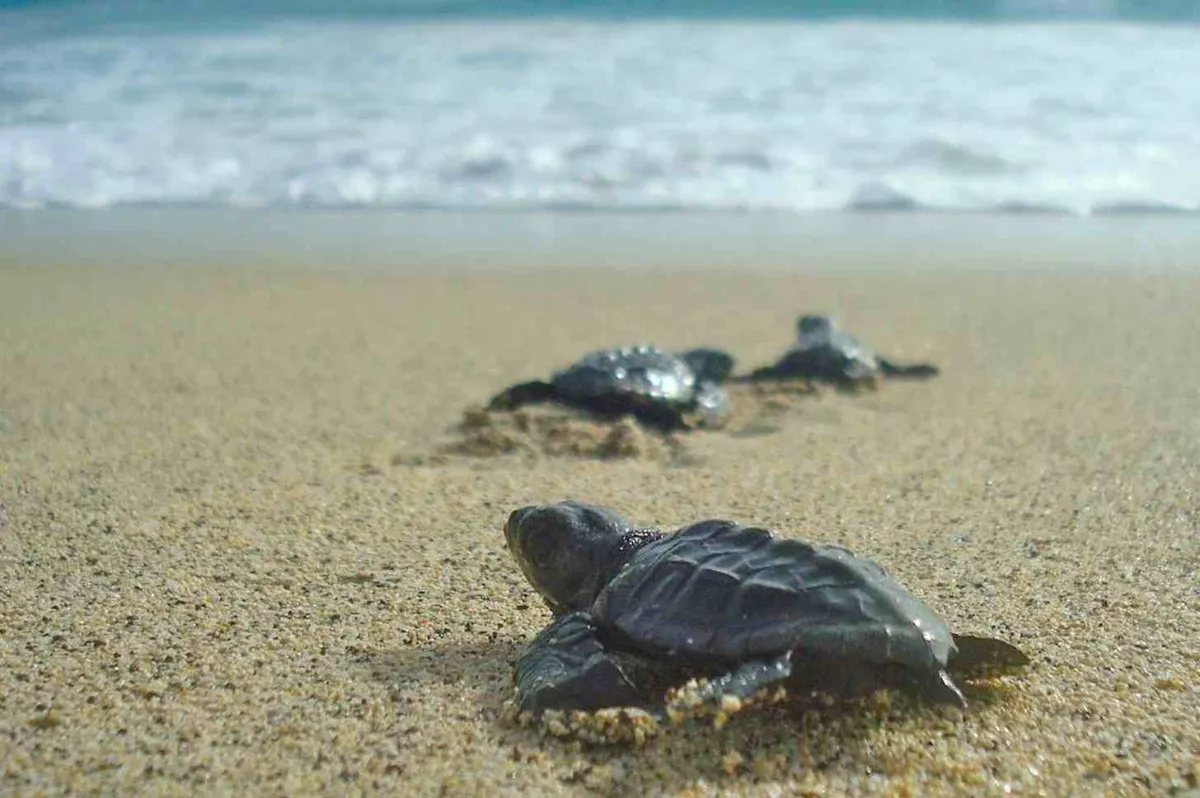 Loggerhead sea turtle hatchlings. Image by © Eliane Küpfer via iNaturalist (CC BY-NC 4.0).
However, the study's authors warn that Boa Vista's recovery also brings risks. The high density of nests makes these areas vulnerable to local problems. These can be human activities like tourism or more poaching. Natural events that change the coastline are also a threat.
Ana Liria-Loza, a study co-author and president of CVN2, noted that nesting turtles sometimes destroy other nests to make space for their own.
Wynecken and the study authors are also worried about climate change. Higher sand temperatures can affect loggerhead population growth. This is because incubation temperatures determine the turtles' sex, with warmer sand producing more females.
Cassandra Roch, the lead author of the study, said sea turtles have survived big climate changes before. She stressed that consistent monitoring is vital to find ways they can adapt to climate change.
Deep Dive & References
80-fold increase in the population of loggerhead turtles nesting at three beaches in Boa Vista, Cabo Verde’s third-largest island, over 27 years - Biological Conservation, 2024