When we talk about climate change and wildlife, the narrative usually goes something like this: sad polar bear, melting ice cap, general ecological doom. And while it's undeniably true that our changing planet is giving wild animals a pretty rough time, that's only half the story. The other, far more interesting half, is that wildlife isn't just a victim — it's an active, powerful player in fixing the climate.
Turns out, the natural world has its own highly efficient carbon capture system, and the animals are the ones running it. From microscopic plankton to the biggest whales, they’re not just living in ecosystems; they’re orchestrating how those systems store carbon, move nutrients, and bounce back from whatever we throw at them.

This isn't some fringe theory whispered among a few nature enthusiasts. Over 300 scientists worldwide are now backing the "Scientific Consensus on Wildlife and Climate." Their message to policymakers is clear, if a little inconvenient: You can't just talk about forests and wetlands as carbon sinks without also talking about the creatures that make those forests and wetlands work.
We're a new kind of news feed.
Regular news is designed to drain you. We're a non-profit built to restore you. Every story we publish is scored for impact, progress, and hope.
Start Your News DetoxThink about it: We spend a lot of time discussing renewable energy and green infrastructure. More recently, we've started acknowledging the power of natural carbon storage in places like seagrass beds and old-growth forests. All vital, absolutely. But often missing from the chat are the actual, living, breathing things that help these systems do their job.
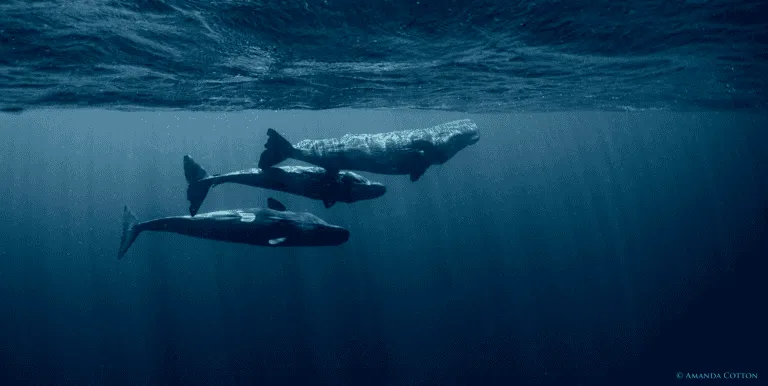
Consider the ocean. Sperm whales, for instance, dive deep, bringing nutrient-rich water to the surface which fuels phytoplankton growth. Phytoplankton, in turn, are tiny photosynthetic powerhouses that suck up CO2. When a whale eventually dies, it takes all that accumulated carbon down to the deep ocean, often for centuries. It's a natural carbon sequestration system with a very large, blubbery, and surprisingly efficient operator.
A 2023 study in Nature Climate Change laid it out: protecting and restoring wild animal populations could significantly boost the planet's CO2 storage capacity. Which, if you think about it, is both incredibly elegant and a little embarrassing for us, given how much we've focused on everything but the animals.
So next time climate policy comes up, maybe let’s not just ask what we can do for the animals, but what the animals are already doing for us. And perhaps, how we can stop getting in their way.