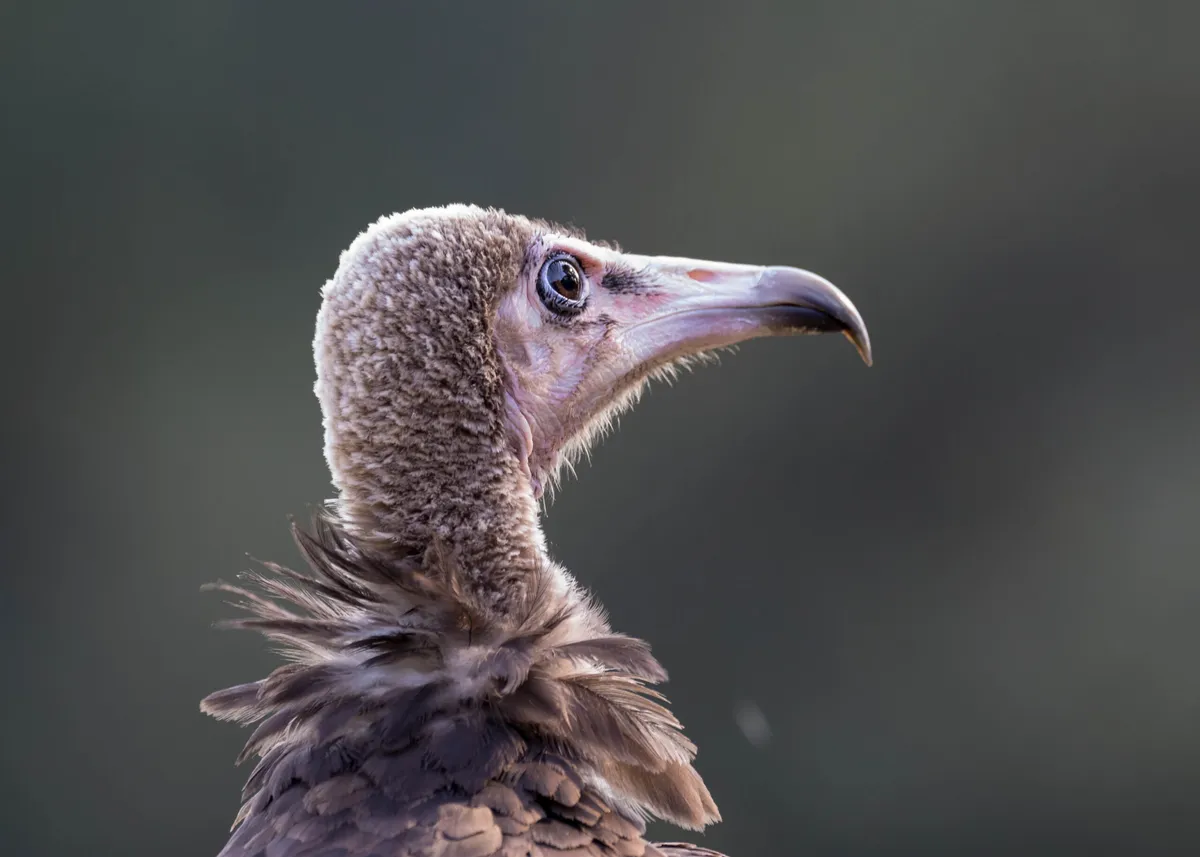
Nigeria's vultures, once a common sight, have been in a bit of a pickle. A really big, critically endangered pickle. Their numbers have plummeted so dramatically that out of seven species, only two are still hanging on: the critically endangered hooded vulture and the palm-nut vulture.
Turns out, a major reason for their vanishing act wasn't just habitat loss or accidental poisoning. It was a centuries-old tradition where vulture parts were used for belief-based practices – everything from traditional medicine to good luck charms. Because, apparently, nothing says 'good fortune' like a piece of a scavenging bird.

But here's where things get interesting: some traditional practitioners are now swapping out those feathered talismans for something a little more rooted in the earth. Literally. They're using plants.
We're a new kind of news feed.
Regular news is designed to drain you. We're a non-profit built to restore you. Every story we publish is scored for impact, progress, and hope.
Start Your News DetoxConservation groups, like the Nigerian Conservation Foundation (NCF), have been quietly working with these practitioners, not to scold, but to educate and offer alternatives. And it's working. Stella Egbe, a species conservation manager at NCF, notes a clear shift, likely spurred by more awareness, stricter law enforcement, and, rather ironically, the rising cost of vulture parts as they become scarcer.
Chief Samson Ola Soyoye, a bigwig in the National Association of Nigerian Traditional Medicine Practitioners, put it plainly: "That's when the vultures were many but now [they are] rapidly going into extinction. My view is to look for alternative plants instead of vultures."
Which, if you think about it, is a pretty pragmatic approach to conservation. Over 20 different plants are now stepping in to fill the void, with the African mahogany tree (or oganwo) leading the charge. The NCF is now keeping an eye on the conservation status of these plant alternatives too, because we wouldn't want to save one species just to endanger another.
It's a rare win, a testament to collaboration, and a reminder that sometimes, the best way forward is to look to the past... and then pivot to a plant.