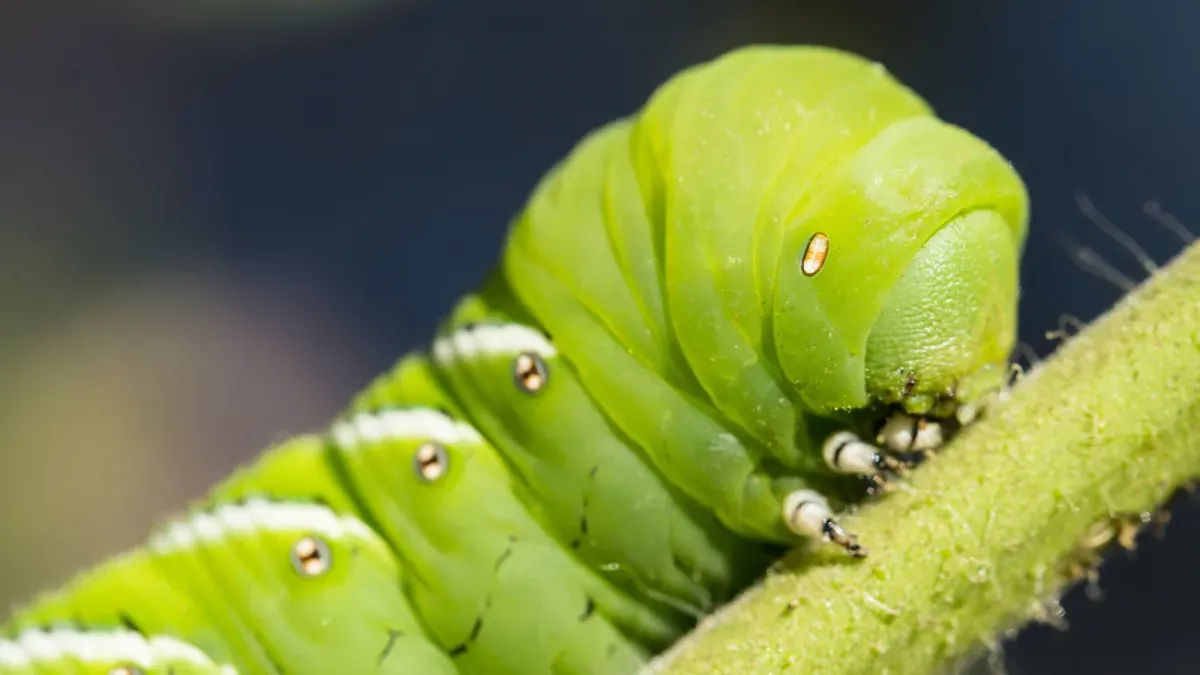
A tobacco hornworm caterpillar doesn't have ears. It doesn't have a brain the size of a pinhead. Yet when Carol Miles, a biologist at Binghamton University, leaned close and said "boo," the caterpillar jumped.
That simple observation sent Miles and her team down an unexpected path. They wanted to know: how was this creature hearing anything at all?
To find out, they took the caterpillars to an anechoic chamber — essentially the quietest room on Earth. Here, sound waves don't bounce off walls; they're absorbed entirely. It's the kind of space where you can hear your own heartbeat, where silence becomes almost disorienting. Inside this controlled void, the researchers could test exactly how caterpillars respond to different frequencies of airborne sounds and vibrations traveling through solid surfaces.
We're a new kind of news feed.
Regular news is designed to drain you. We're a non-profit built to restore you. Every story we publish is scored for impact, progress, and hope.
Start Your News DetoxWhat they discovered was elegant: caterpillars can detect both types of sound, but they're dramatically more sensitive to airborne sounds — between 10 and 100 times more sensitive than to vibrations they feel through their feet. The mechanism, it turned out, is surprisingly simple. The tiny hairs covering a caterpillar's abdomen and thorax act as acoustic sensors. When the researchers carefully removed some of these hairs, the caterpillars' sound sensitivity dropped noticeably.
Image: Greg Schuter
This ability likely evolved for a very practical reason: survival. Predatory wasps produce distinctive wing beats as they hunt. A caterpillar that could sense those vibrations in the air — and react quickly — had a better chance of escaping. Evolution, in other words, had already solved this problem millions of years ago.
Now that humans understand the solution, we're paying attention. Ronald Miles, a mechanical engineer on the research team, sees immediate applications. "We need to learn better ways to create [microphones]," he said, "and the way it's always been done is to look at what animals do and learn how animals detect sound." The findings, presented at a joint meeting of the Acoustical Society of America and the Acoustical Society of Japan in December 2025, could reshape how we design acoustic sensors — from hearing aids to industrial microphones.
It's a reminder that some of nature's most effective designs come wrapped in the smallest packages. Sometimes you just have to listen.