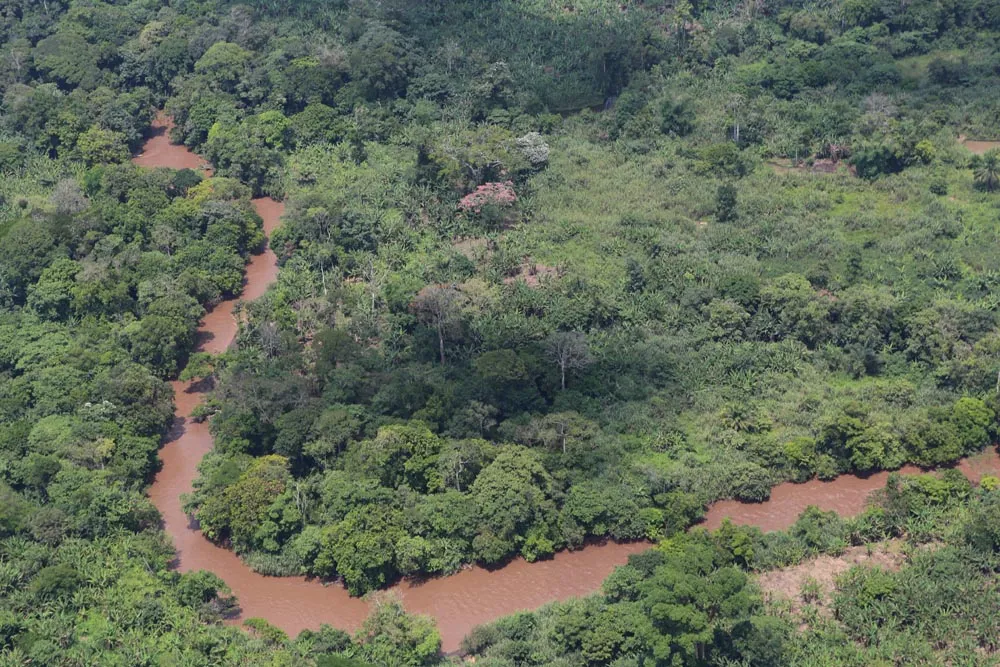
Imagine being told to pack up your life because a national park needs your land. Now imagine, decades later, you're the one leading the charge to save that very forest. That's exactly what's happening in the Democratic Republic of Congo.
Families who were displaced in the 1970s for Maiko National Park are now at the forefront of conservation efforts, proving that sometimes, the best guardians are the ones who know the land intimately — even if it once evicted them. It's a comeback story for the record books.
Gangala Yafali Mangusa Jr. leads the Bamasobha Local Community Forest Concession (CFCL), a sprawling 29,000 hectares (that's about 71,700 acres, or roughly the size of 54,000 football fields, for those keeping score). His team isn't just patrolling; they're actively stopping illegal hunting, logging, and mining, while also helping local communities figure out how to live with the forest, not just from it.
We're a new kind of news feed.
Regular news is designed to drain you. We're a non-profit built to restore you. Every story we publish is scored for impact, progress, and hope.
Start Your News DetoxMangusa Jr.'s own family was among those displaced when Maiko National Park was established, a place vital for eastern lowland gorillas, forest elephants, and chimpanzees. He recalls a time when park rangers essentially locked out local people who had relied on the forest for generations. Unsurprisingly, this led to plenty of conflict and forced relocation. Because apparently, that's where we were then.
A Forest For Everyone
Fast forward to today, and the Bamasobha CFCL represents a radical shift. This new approach brings local communities into the fold, rather than pushing them out. With a little help from the Peasants’ Association for the Rehabilitation and Protection of Pygmies (PREPPYG), the Bamasobha communities crafted a management plan in 2023. It's a delicate balancing act: protecting the incredible biodiversity while also meeting human needs, with specific zones for both conservation and sustainable production.

And it's working. Satellite data from Global Forest Watch shows a noticeable reduction in forest loss in the area. It turns out, giving people a stake in the outcome is a remarkably effective conservation strategy. Who knew?