For decades, scientists have puzzled over one of life's biggest transitions: how did simple microbes become the plants, animals, and fungi we know today. The leading theory holds that two wildly different organisms merged — one that needed oxygen, one that didn't. But how would they ever meet in the first place?
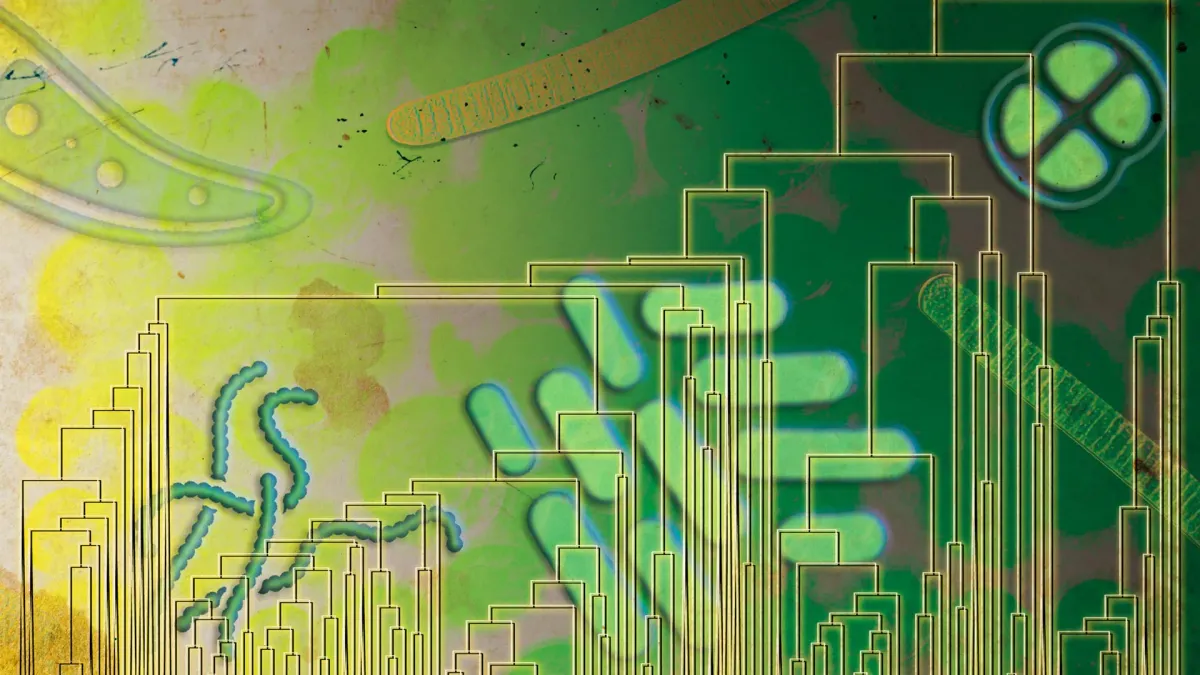
A new study from the University of Texas at Austin, published in Nature this week, offers a concrete answer by examining some of Earth's oldest living relatives. Researchers studied Asgard archaea, microbes thought to be ancestors of complex life. While most known Asgard archaea live in deep-sea, oxygen-free zones, the team discovered something unexpected: some of these microbes can actually tolerate or even use oxygen.
The timing fits perfectly
More than 1.7 billion years ago, Earth's atmosphere was nearly oxygen-free. Then something dramatic happened — the Great Oxidation Event flooded the air with oxygen, pushing levels toward what we breathe today. Shortly after, the earliest fossils of complex cells appear in the geological record. The connection isn't coincidental.
We're a new kind of news feed.
Regular news is designed to drain you. We're a non-profit built to restore you. Every story we publish is scored for impact, progress, and hope.
Start Your News Detox"The fact that some of the Asgards, which are our ancestors, were able to use oxygen fits in with this very well," said researcher Chris Baker. "Oxygen appeared in the environment, and Asgards adapted to that. They found an energetic advantage to using oxygen, and then they evolved into eukaryotes."
The theory goes like this: an Asgard archaeon engulfed an alphaproteobacterium, a bacterium that thrived on oxygen. Rather than destroying each other, the two merged into a permanent partnership. Over millions of years, the bacterium transformed into the mitochondria — the energy-producing structure that still powers every cell in your body.
A massive genetic archaeology project
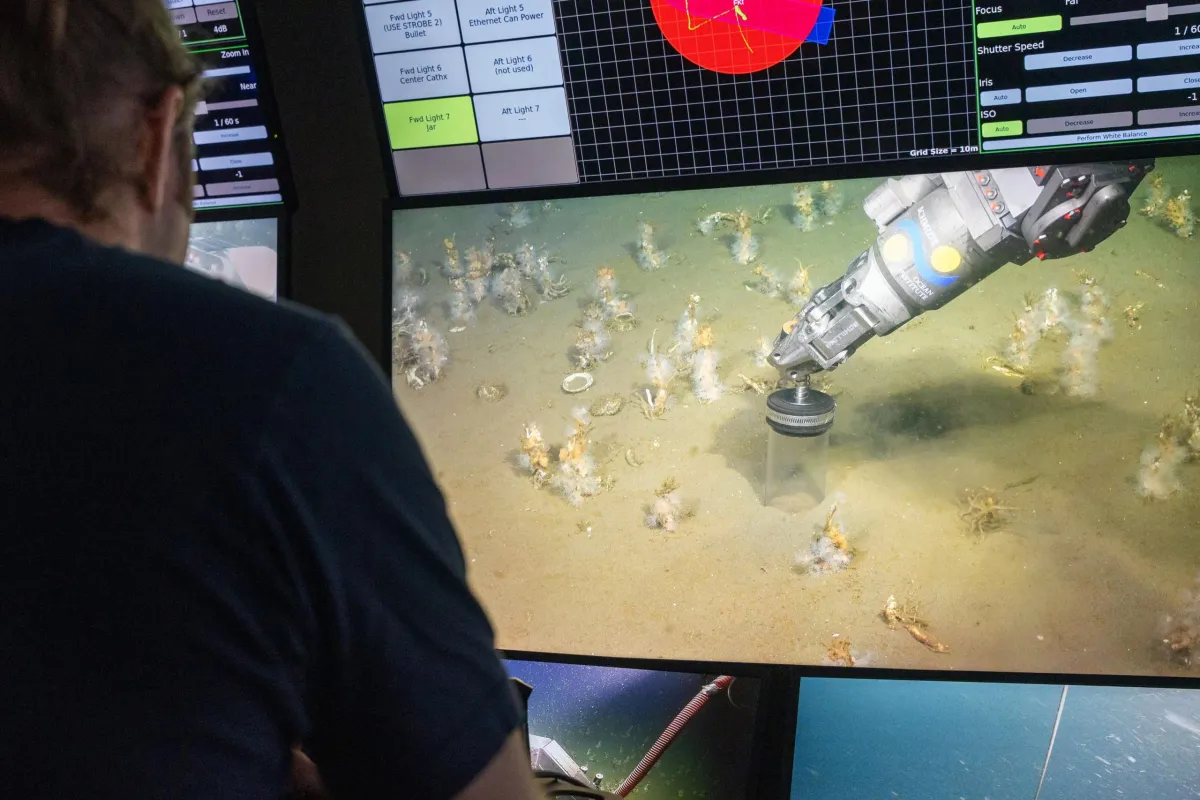
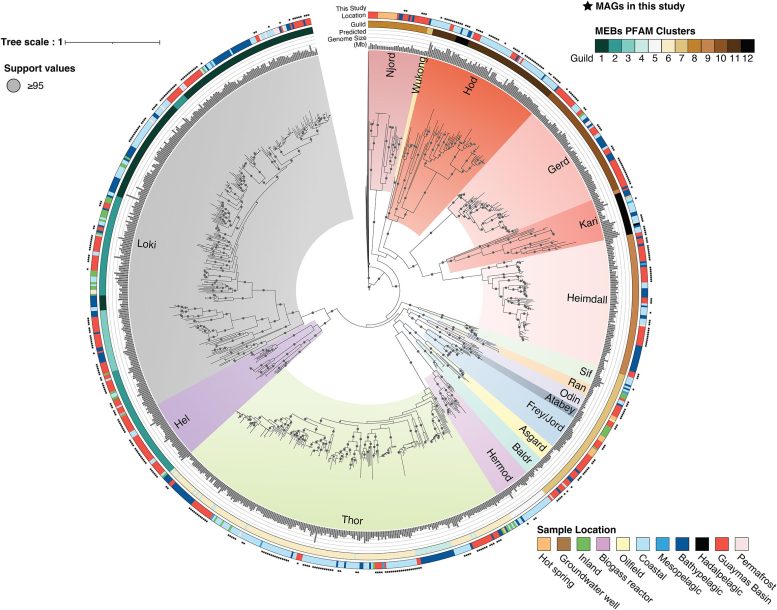
To build this picture, researchers didn't just study a handful of microbes. The project, which began in 2019 with DNA extracted from marine sediments, eventually assembled more than 13,000 new microbial genomes. The team combined data from multiple ocean expeditions and analyzed roughly 15 terabytes of environmental DNA — enough data to fill about 3,000 laptops.
From this enormous dataset, they recovered hundreds of new Asgard genomes, nearly doubling the known genetic diversity of the entire group. They also identified a whole new category of proteins within these microbes, effectively doubling the number of recognized enzymatic classes. One particularly promising lineage, Heimdallarchaeia, appears especially close to eukaryotic ancestors.
AI predicted what ancient proteins could do
The researchers then used artificial intelligence to predict how Heimdallarchaeia proteins fold into three-dimensional shapes — a critical detail, since a protein's shape determines its function. When they compared these predicted structures to proteins in eukaryotic cells involved in oxygen metabolism, they found striking similarities. Several Heimdallarchaeia proteins closely mirrored the oxygen-handling machinery in modern cells.
"These Asgard archaea are often missed by low-coverage sequencing," explained Kathryn Appler, a postdoctoral researcher at the Institut Pasteur in Paris. "The massive sequencing effort and layering of sequence and structural methods enabled us to see patterns that were not visible prior to this genomic expansion."
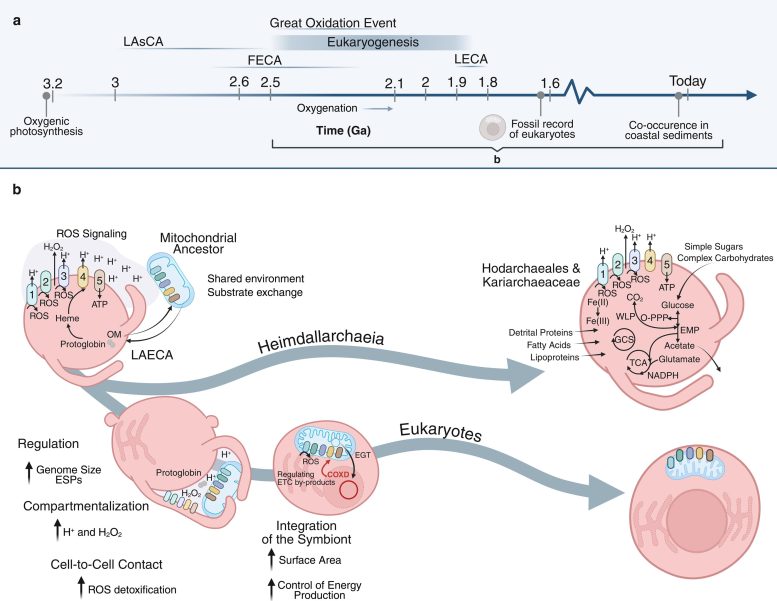
The findings connect three separate lines of evidence — geological records, genetic data, and protein structures — into a coherent narrative. It's a reminder that the biggest transformations in life's history often hinge on chance encounters and the ability to adapt. The next phase will likely focus on understanding exactly how and when this ancient merger happened, and what it can tell us about how life might emerge elsewhere in the universe.