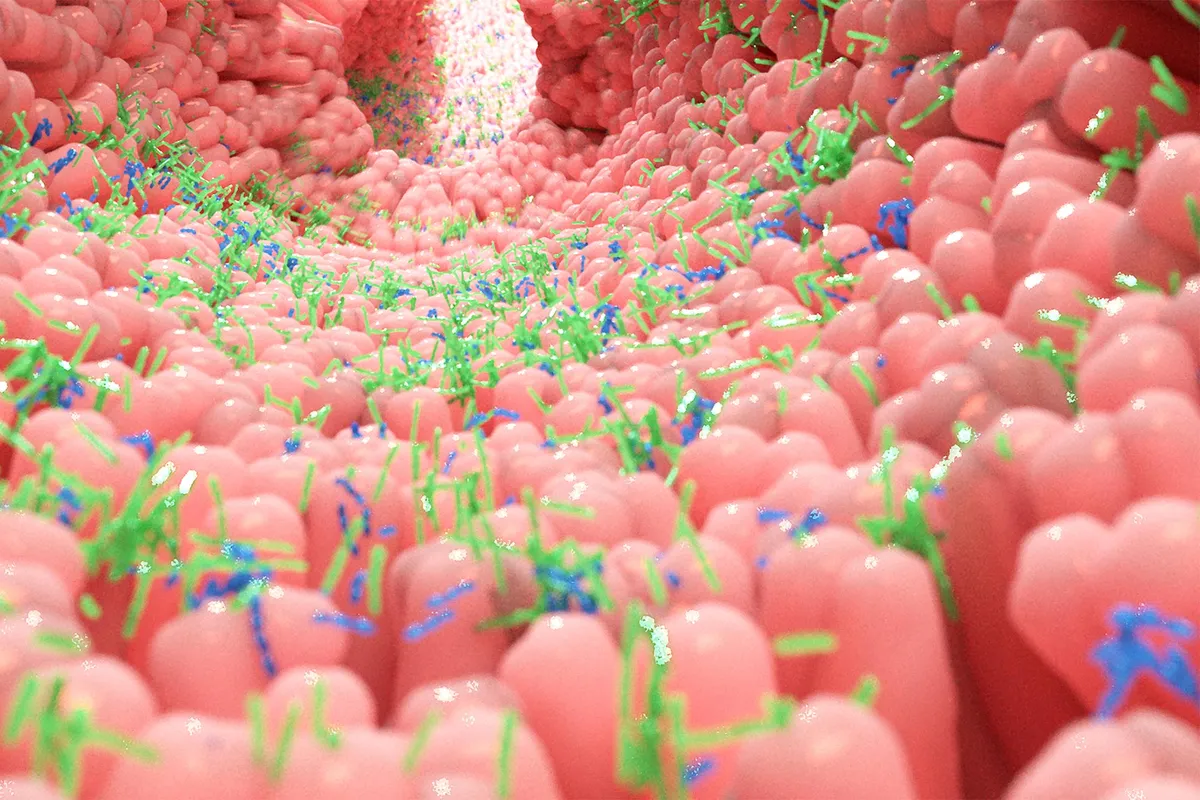
Your gut bacteria aren't just passive passengers waiting for nutrients to drift by. They're actively searching for specific foods, guided by chemical sensors that detect a surprisingly sophisticated menu of compounds.
Scientists have long understood that the trillions of microbes living in your intestines depend on detecting nutrients and chemical signals to survive. But until now, most research focused on disease-causing bacteria. The beneficial bacteria that actually keep you healthy—the ones doing the real work—remained largely mysterious. What signals do they respond to? How do they know where to go?
An international team led by Victor Sourjik at the Max Planck Institute decided to find out. They focused on Clostridia, motile bacteria abundant in human guts that play a major role in keeping us healthy. What they discovered was elegant: these bacteria have sensory receptors tuned to detect breakdown products from carbohydrates, fats, proteins, DNA, and other compounds. But they're not reacting randomly to everything around them. Different bacterial sensors show clear preferences for specific chemicals—they're selectively tuned, like a radio dial locked onto particular frequencies.
We're a new kind of news feed.
Regular news is designed to drain you. We're a non-profit built to restore you. Every story we publish is scored for impact, progress, and hope.
Start Your News DetoxThe Bacteria Know What They're Looking For
Among all the substances tested, two stood out: lactate and formate (the acidic byproducts of fermentation). These appeared most often as chemical signals that trigger bacterial movement. The implication is straightforward: your gut bacteria are actively moving toward food sources, driven by hunger.
What makes this even more interesting is that some gut bacteria actually produce lactate and formate themselves. This creates what researchers call "cross-feeding"—one bacterial species releases metabolites that become nutrients for another. It's a cooperative system, a microbial economy where waste from one organism becomes food for another. That exchange helps maintain the balanced, healthy community living in your intestines.
The researchers also identified several previously unknown sensory domains—new types of bacterial sensors specific for lactate, short-chain fatty acids, uracil (a building block of RNA), and other compounds. They even mapped the crystal structure of a newly discovered dual sensor that binds both uracil and acetate, revealing how these molecules physically attach to the receptor.
Perhaps most importantly, the team found that bacterial sensory receptors can adapt relatively easily over evolutionary time. This flexibility means gut bacteria can adjust their chemical preferences as their environment changes—a capacity that likely helps them thrive through different diets and life stages.
This isn't just academic detail. Understanding how beneficial bacteria sense their world opens new possibilities for supporting gut health through targeted nutrition. It also provides a blueprint for studying sensory preferences in other microbial ecosystems, from soil to ocean to fermenting food. The research suggests that the microbiomes we depend on are far more sophisticated than we realized—not random collections of organisms, but coordinated communities with their own ways of finding what they need.