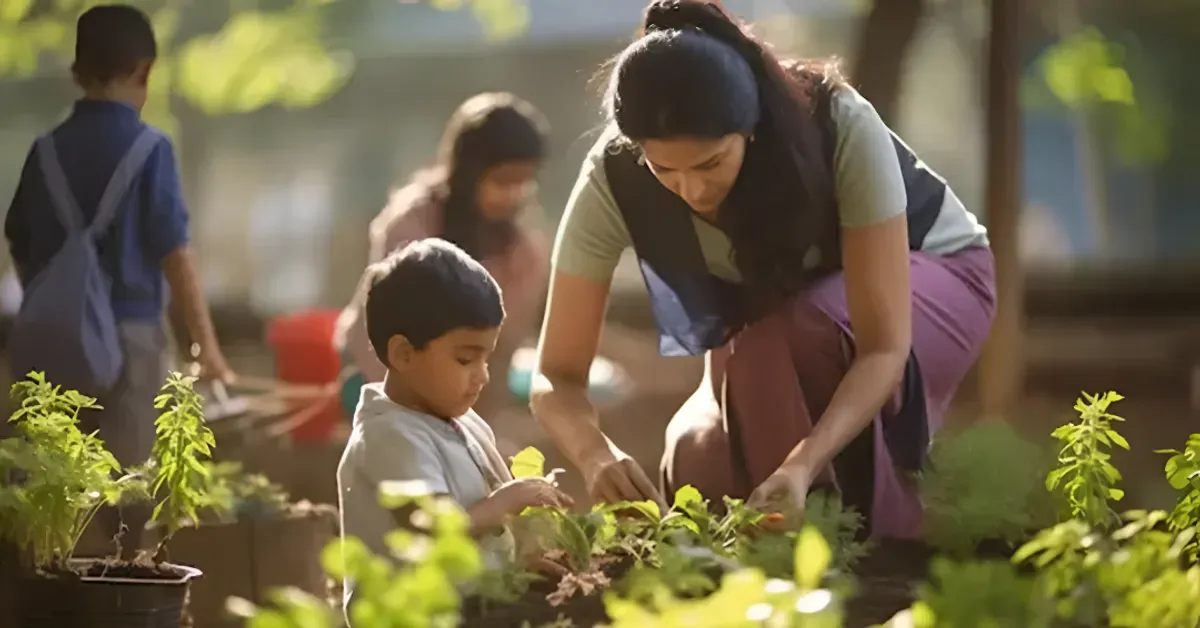
On a quiet Sunday morning, a child crouches beside a pot of soil, fingers digging curiously into the earth. This scene is slowly returning to Indian homes — from Mumbai's terraces to Kolkata's courtyards, parents are rediscovering gardening as a way to connect their kids with something real and growing.
But there's a gap between the idea of it and the doing of it. The difference between a child who plants a seed and a child who owns the whole messy, unpredictable process.

The Common Stumbles
The first mistake is treating gardening like homework. When it becomes structured, pressured, graded — when you're correcting the depth of every hole — you've already lost the thing that makes it work. Kids learn by exploring. They learn by getting soil under their fingernails and pouring water without measuring it first. The mess isn't a problem. It's the point.
We're a new kind of news feed.
Regular news is designed to drain you. We're a non-profit built to restore you. Every story we publish is scored for impact, progress, and hope.
Start Your News DetoxStarting too ambitiously is another one. A sprawling vegetable bed or a complex planting project doesn't inspire a five-year-old — it overwhelms them both. A small pot of quick-growing basil or mint works better. Early wins matter. They keep the interest alive.
Then there's the parent who does all the work while the child watches. That's spectating, not learning. When kids make actual choices — what to grow, what to name the plant, where it should sit — they develop ownership. They care because it's theirs.
Mistakes are where real learning happens, but many parents jump in to fix them immediately. The shallow hole, the overwatered soil, the seed planted upside down. Instead, ask: "What do you think will happen if we water this too much?" or "How could we do this differently next time?" These questions build the thinking part, not just the doing part.
Safety matters, but it doesn't have to mean sterile. Store sharp tools where they can't reach them. Choose non-toxic plants. Teach proper tool use early. Supervise without hovering. A child who learns to handle a trowel with respect gains confidence, not just caution.
Gardening teaches patience in a world that doesn't reward it much anymore. It teaches responsibility — something alive depends on what you do. It teaches that failure is information, not shame. A single pot of mint might seem small, but it's often the first step toward a kid who understands how things grow, including themselves.