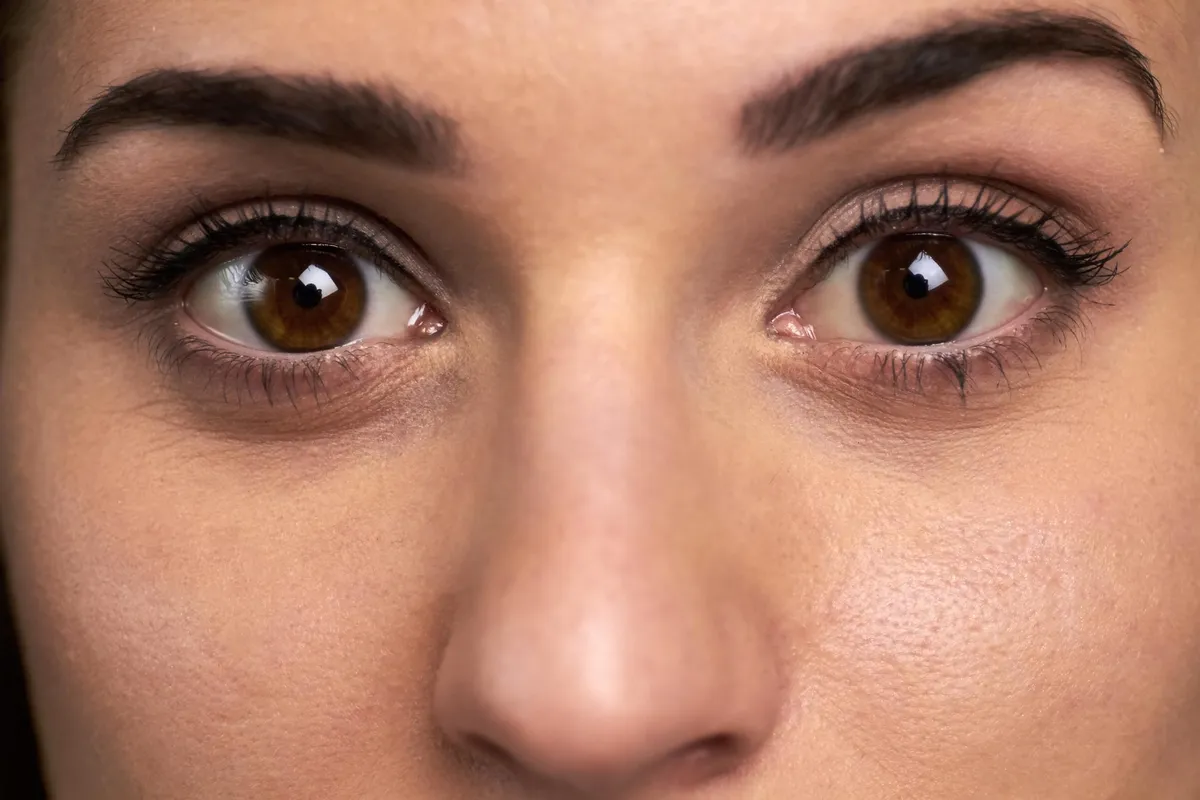
You probably don't think about blinking. It just happens—dozens of times a minute, mostly invisible to you and everyone around you. But researchers at the Laboratory for Hearing and Cognition have discovered that your blink rate is actually a window into your concentration. When you're really trying to understand someone speaking in a noisy room, you blink less. And that's not random. It's your brain deliberately pausing one sense to protect another.
The finding emerged from a deceptively simple experiment. Nearly 50 participants sat in a soundproof room wearing eye-tracking glasses while listening to short sentences through headphones. Background noise levels varied—sometimes quiet, sometimes loud enough to make understanding difficult. The eye-tracking glasses recorded every single blink and its exact timing.
The pattern was unmistakable. When participants were actively listening to speech, their blink rate dropped compared to the moments just before and after. The effect intensified when background noise was loudest—precisely when understanding required the most mental effort. "We don't just blink randomly," says lead author Pénélope Coupal, an Honours student at the lab. "In fact, we blink systematically less when salient information is presented."
We're a new kind of news feed.
Regular news is designed to drain you. We're a non-profit built to restore you. Every story we publish is scored for impact, progress, and hope.
Start Your News DetoxWhy Your Eyes Go Still
Why would your brain do this? Think about what happens when you blink. For a fraction of a second, you're blind. You're also, briefly, not receiving auditory input with full attention. When something important is coming—a crucial word in a noisy conversation, a name you need to catch—your brain essentially pauses the blink reflex to keep both channels open. It's a micro-level prioritization happening without your awareness.
To rule out a simpler explanation—that lighting conditions might be affecting the blink rate—the researchers ran a second experiment. Participants completed the same listening tasks in dark, dimly lit, and brightly lit rooms. The blink suppression pattern remained consistent across all lighting conditions. This confirmed the effect was driven by cognitive demand, not by how much light was hitting the eye.
"Our study suggests that blinking is associated with losing information, both visual and auditory," explains co-author Mickael Deroche, an associate professor in the Department of Psychology. "That is presumably why we suppress blinking when important information is coming."
The practical implication is striking: blink rate could become a simple, non-invasive measure of cognitive load. In a classroom, a clinical setting, or anywhere else where understanding attention matters, tracking how often someone blinks might reveal how hard they're actually working to process information. It's a biological signal that's been there all along, waiting to be read.
The research was published in Trends in Hearing in 2025.