Building a quantum computer is a bit like trying to keep a snowflake intact in a blast furnace. These machines, which promise to solve problems our current supercomputers can only dream of, need to operate in environments colder than deep space. Seriously. We're talking about temperatures that make Antarctica feel like a beach vacation.
That's where dilution refrigerators come in, chilling things down to the necessary extremes. But getting data in and out of those icy depths has been, well, a chilling challenge.
The Ribbon That Changes Everything
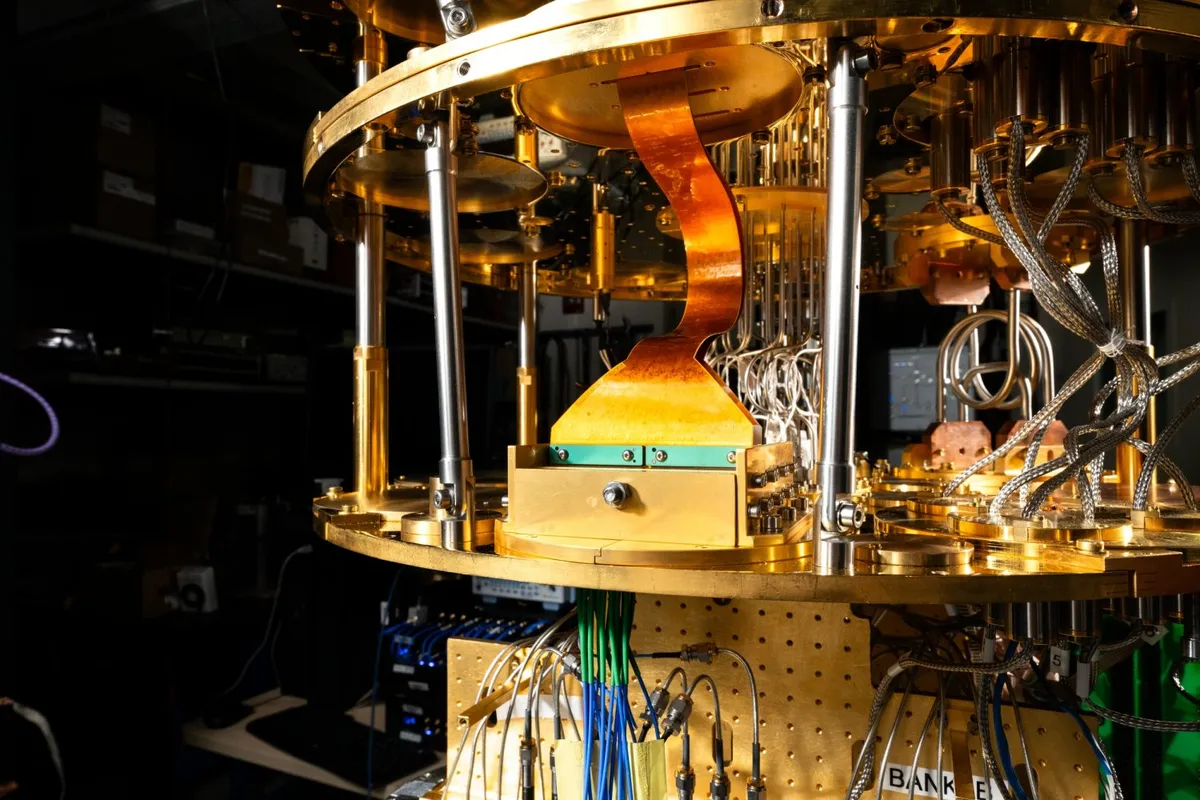
Enter the clever folks at MIT Lincoln Laboratory, who've whipped up flexible, ribbon-like cables designed specifically for these cryogenic conditions. They're power-efficient, data-quick, and — here's the kicker — can be mass-produced using standard circuit-board manufacturing. Because apparently that's where we are now: making sci-fi tech on a production line.
We're a new kind of news feed.
Regular news is designed to drain you. We're a non-profit built to restore you. Every story we publish is scored for impact, progress, and hope.
Start Your News DetoxMaybell Quantum, a company specializing in quantum hardware, was smart enough to license this design. They're already planning to integrate these new "LF CryoTrace" cables into their dilution refrigerators for everything from temperature sensors to heaters. Which, if you think about it, is both impressive and slightly terrifying.
Why This Is a Really Big Deal
Traditional coaxial cables, bless their copper hearts, just don't cut it. They generate too much heat for super-cold environments and are bulky. Imagine trying to cram hundreds of stiff, fragile wires into a space already colder than your ex's heart. Not ideal.
The new cables use a "stripline" design. Essentially, conductive layers are sandwiched between flexible polymer layers. This clever setup acts like a tiny bouncer, blocking electromagnetic interference (also known as crosstalk) and keeping signals consistent. They can handle many signals at once, don't heat up the cold, and are far easier to install than their finicky predecessors.
John Cummings, a lead researcher, points out that the real magic is their manufacturability. Cheaper to make, easier to put in place. Maybell Quantum is thrilled, noting that the ribbon shape is surprisingly durable, meaning fewer breakages. Tasks that once took days can now be knocked out in hours. Let that satisfying number sink in.
From Lab Bench to Boardroom
Maybell's ultimate goal is to drag quantum computing out of specialized labs and into the commercial world. There's a Grand Canyon-sized gap between today's bespoke lab setups and the robust infrastructure needed for industrial-scale quantum computing. Tools that help develop functional chips are key to bridging that chasm.
These new cables are a big step. They promise faster, more consistent builds, simpler repairs, and easier upgrades. Kyle Thompson, Maybell's founder and CTO, put it best: to scale up to hundreds of chips, you need connections that can reliably handle more signals. These MIT cables, he believes, offer true scalability, strengthening the U.S. quantum industry by bringing federally funded innovation straight into American manufacturing. Which sounds like a win-win, even for those of us who still struggle to set the clock on the microwave.