A bouquet from your grocery store shelf has traveled thousands of miles before it reaches your kitchen table. Most cut flowers sold in the U.S. are grown in Colombia or Ecuador, flown across the continent within days, kept cold the whole way, and wrapped in plastic. The carbon cost of that single arrangement rivals the emissions of a private jet flight.
The global flower industry moves $36 billion worth of blooms annually, but that speed and scale comes with real environmental weight. Getting fresh flowers from a tropical farm to a supermarket in five days requires constant refrigeration, chemical preservation, fuel for transport, and water-intensive growing practices in countries where water is increasingly scarce. A typical grocery store bouquet can generate as much carbon as driving a car for several miles.
The Slow Flowers Alternative
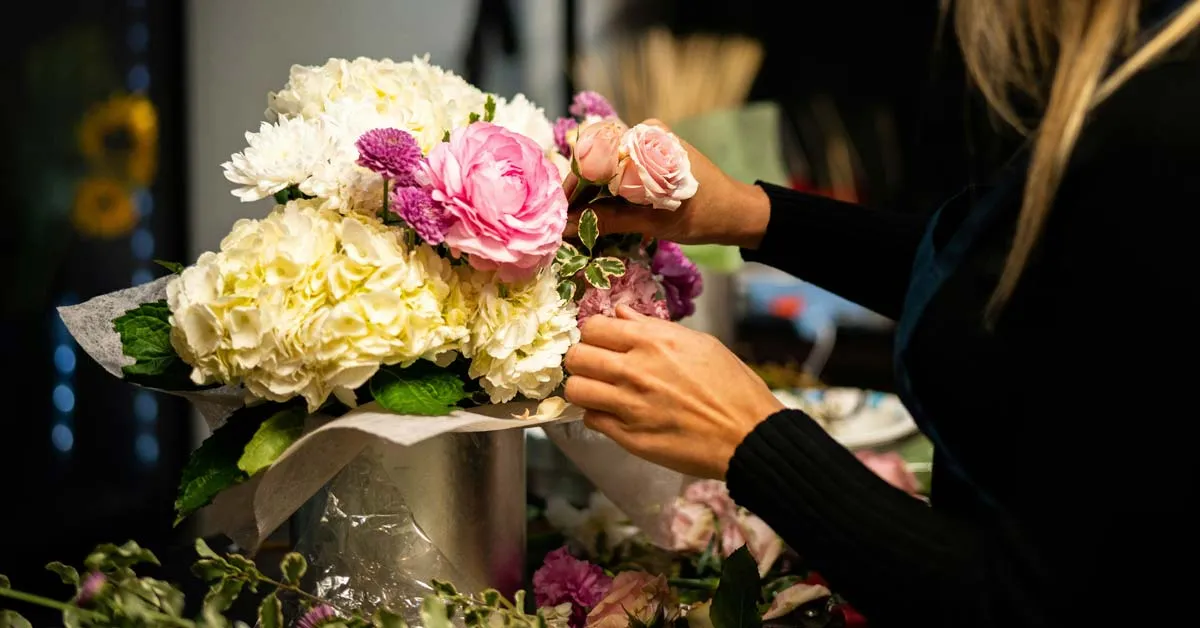
A growing network of florists and growers is building a different model. The Slow Flowers movement, anchored by the Slow Flowers Society, connects people with blooms grown locally and arranged by florists who know exactly where their flowers come from. Instead of year-round roses shipped from across the world, slow flowers florists work with what's in season—tulips in spring, dahlias in summer, chrysanthemums in fall. This isn't about scarcity; it's about timing.
We're a new kind of news feed.
Regular news is designed to drain you. We're a non-profit built to restore you. Every story we publish is scored for impact, progress, and hope.
Start Your News DetoxThese florists source from small regional growers, many of them BIPOC farmers who've been building agricultural businesses in their own communities. The flowers travel hours instead of days, often by car instead of plane. There's no need for heavy chemical preservation when blooms are fresh from a field an hour away. And because seasonal flowers are abundant when they're in season, they're often cheaper than the imported alternative.
What started as an environmental response has become something quieter but perhaps more important: a way to know the person who grew your flowers. Slow Flowers florists are transparent about their sources. You might learn that your wedding bouquet came from a family farm in upstate New York, or that the arrangement on your table was made by someone who walked the field that morning and chose the best blooms.
The movement is still small compared to the industrial flower trade, but it's growing. Consumers looking to shift their spending can find Slow Flowers members through the organization's directory—most cities now have at least one florist committed to this practice. Some grocery stores and farmers markets are beginning to stock local flowers too, though the selection won't match the year-round abundance of imports.
As more people discover that flowers can be both beautiful and locally grown, the economics of the flower industry slowly shift. Farms that might have closed or transitioned to other crops now have a market. Communities get to see their own agriculture as valuable. And a simple bouquet becomes a small choice with roots.