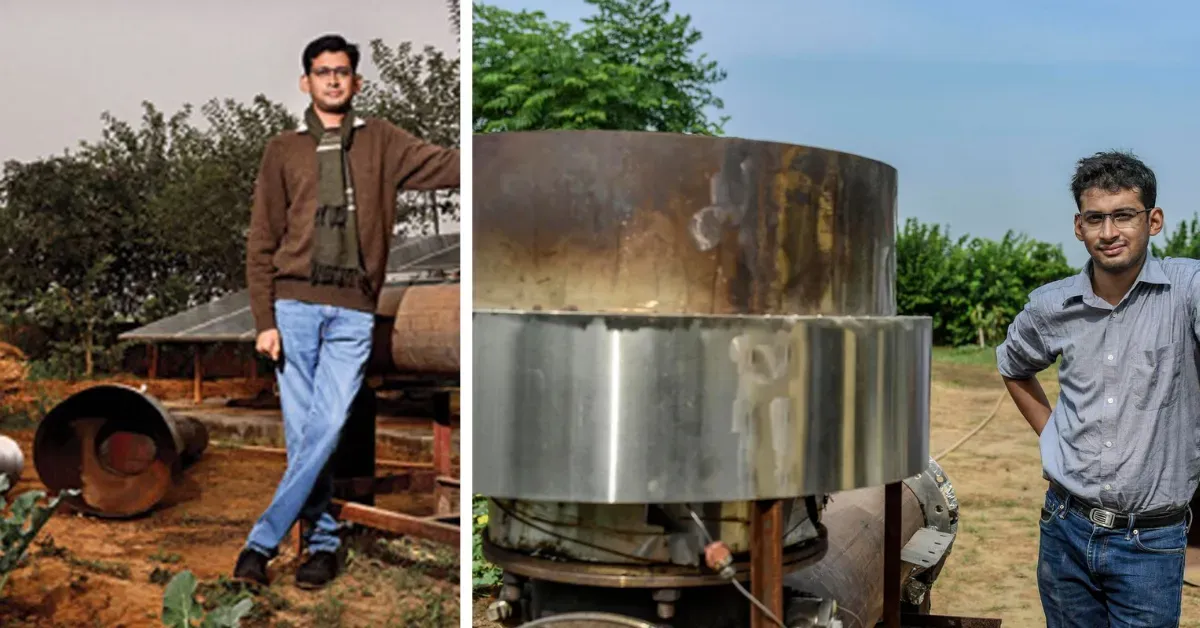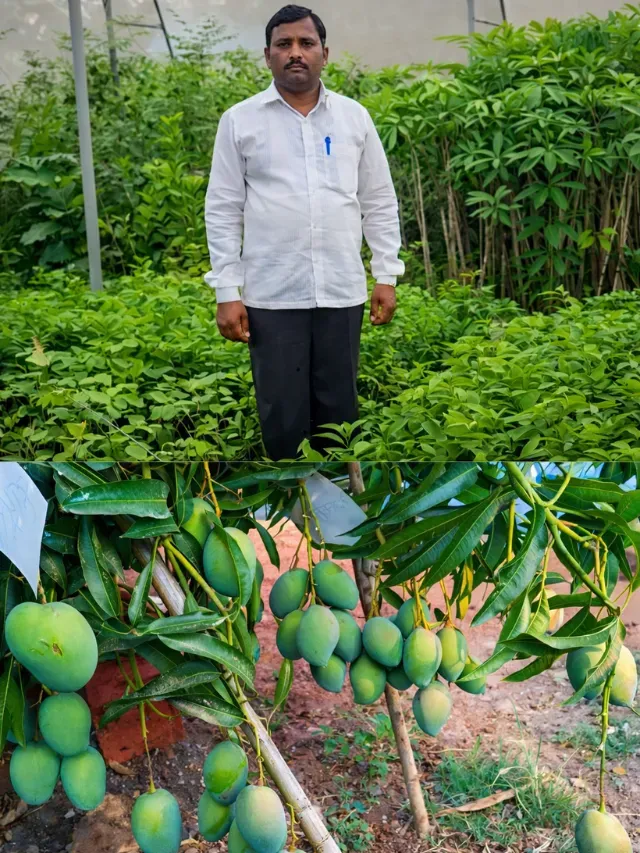
Kakasaheb Sawant returned to his family's land in Antral village with a conviction that seemed absurd to everyone around him: mangoes could grow in drought-prone Maharashtra.
It was 2010. The region had spent decades perfecting grapes, pomegranates, and pulses. Mango farming belonged to the Konkan coast, people said. Not here. Not in Sangli district, where water was scarce and summers unforgiving.
Sawant had spent nearly a decade working in Pune's automobile workshops and teaching technical courses. When he came back to manage the family's 20 acres, he wasn't interested in following the established playbook. He'd watched how farming worked — the patterns, the constraints, the assumptions. He decided to test one.
We're a new kind of news feed.
Regular news is designed to drain you. We're a non-profit built to restore you. Every story we publish is scored for impact, progress, and hope.
Start Your News DetoxBuilding Something From Scratch
He planted Kesar mangoes on half his land. The other half he kept diverse: chikoos, pomegranates, custard apples, guava, tamarind. The Kesar trees needed water he didn't have lying around. He solved it the way farmers do — by thinking in infrastructure. Water from the Krishna river reached his farm through pipelines stretching nearly four kilometres. A holding pond caught what fell during the monsoon and held it through the dry months.
Within a decade, the orchard was generating Rs 50 lakhs annually — roughly $6,000 USD. More than that, it was generating proof.
But Sawant did something else that mattered more than his own success. Around 2010, he started Shri Banshankari Rop Vatika, a nursery that produced thousands of mango saplings each year. He hired skilled grafters from Dapoli, 225 kilometres away, bringing them to his farm for the grafting season (June to August) and housing them with his family. The nursery meant other farmers didn't have to travel long distances to start their own orchards. It meant the knowledge stayed local.
The Showcase Effect
On his farm grows a single mango tree grafted with 22 varieties — Alphonso, Sindhu, Amrapali, Baramashi, and others. It's not productivity. It's a living experiment, a visual argument for what's possible.
Farmers from surrounding villages now visit regularly. They watch the grafting. They ask questions. They see that mango farming isn't mystical — it's technique, water management, and the willingness to be wrong in front of your neighbours. Slowly, the region's farming changed. What began as one man's stubborn bet became a quiet shift in what people believed their land could do.
The scepticism Sawant faced in 2010 hasn't entirely vanished. But in Antral village, it's harder to dismiss now. He's still there, still grafting, still hosting visitors who arrive convinced that their dry land has only one future, and leave wondering if it might have another.