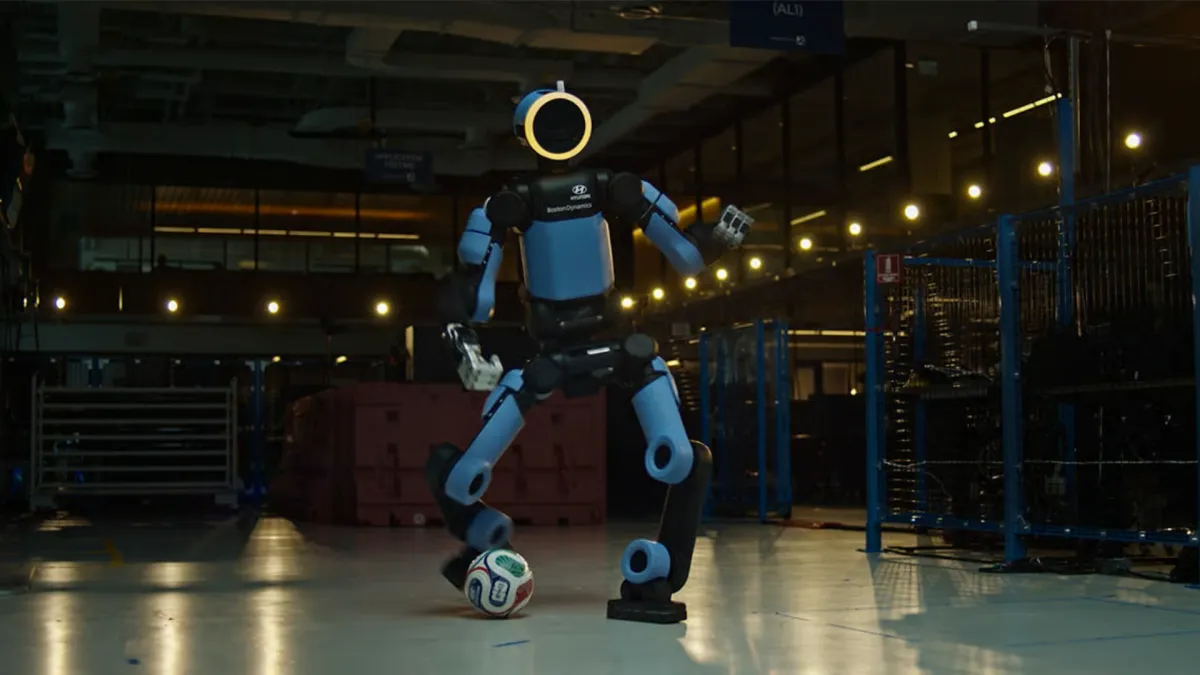
Hyundai Motor has launched a new global campaign called "School of Football." It features Boston Dynamics' humanoid robot, Atlas. This campaign is part of Hyundai's "Next Starts Now" platform for the FIFA World Cup 2026.
The campaign uses football to show off the latest in human-centered robotics and artificial intelligence. Instead of just showing technical details, the series follows Atlas as it learns about the sport. It explores the emotions, creativity, and passion involved in football.
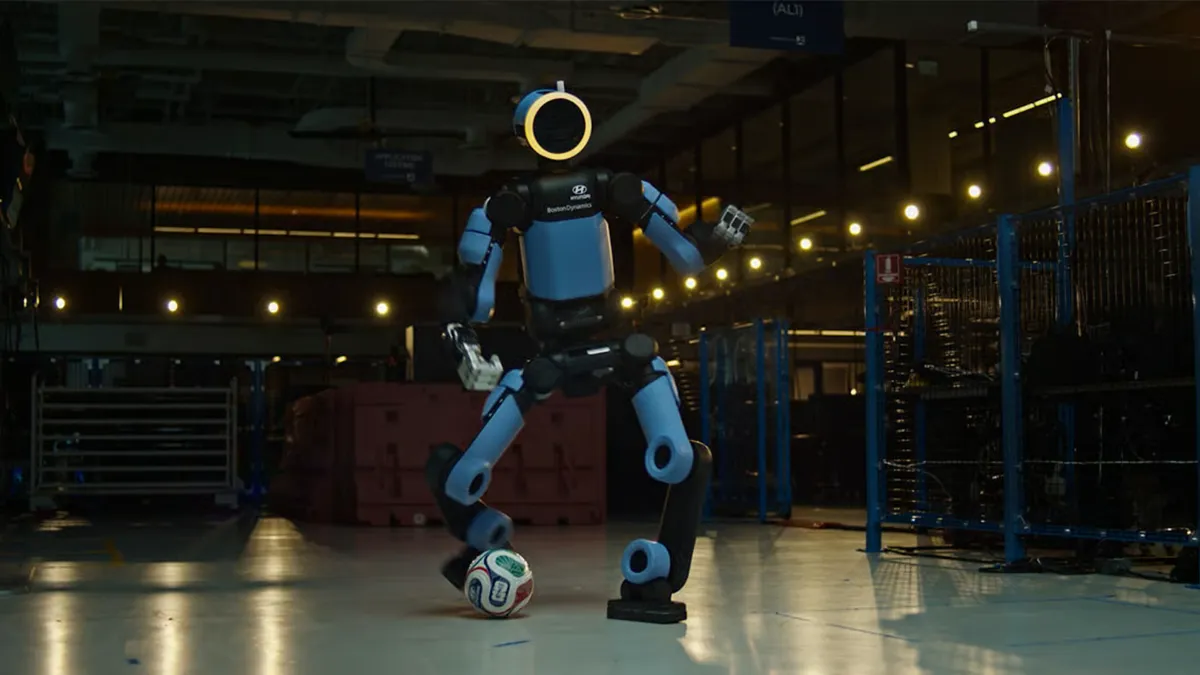
Atlas Learns from Humans
Through a series of films, Atlas learns from human players and fans. This shows how advanced robots can do more than just simple tasks. Hyundai says the project highlights how robots can become more adaptable and responsive. They can also develop ways of expressing themselves, inspired by human behavior.
We're a new kind of news feed.
Regular news is designed to drain you. We're a non-profit built to restore you. Every story we publish is scored for impact, progress, and hope.
Start Your News DetoxSungwon Jee, a marketing executive at Hyundai, said the campaign uses football's global appeal to show a more human side of robotics. Atlas's journey explores how future robots can be shaped by human qualities like creativity and passion, not just technical skills.
The campaign starts with Atlas watching football fans and their emotions. This sparks the robot's interest in the game. Then, Atlas begins training, learning basic skills like footwork, passing, and shooting. Each episode builds on the last, showing a step-by-step learning process, much like humans learn.
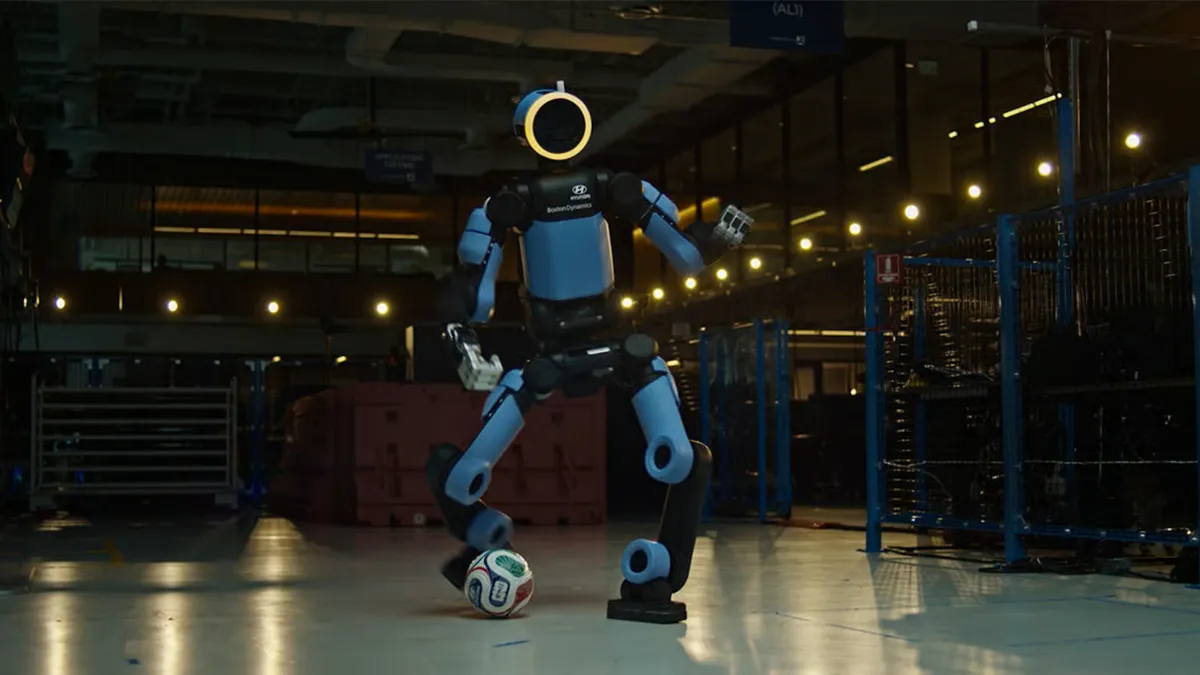
The series focuses on gradual growth rather than instant ability. It shows that robotics evolve through interaction and experience.
Real-World Robot Skills
The campaign also shows the new electric Atlas robot working in real-world conditions. The film highlights "Physical AI" through the robot's movements. Atlas performs complex actions in dynamic, sport-like settings.
All the scenes were done without computer-generated imagery (CGI). This proves the authenticity of the robot's performance and the engineering behind it.
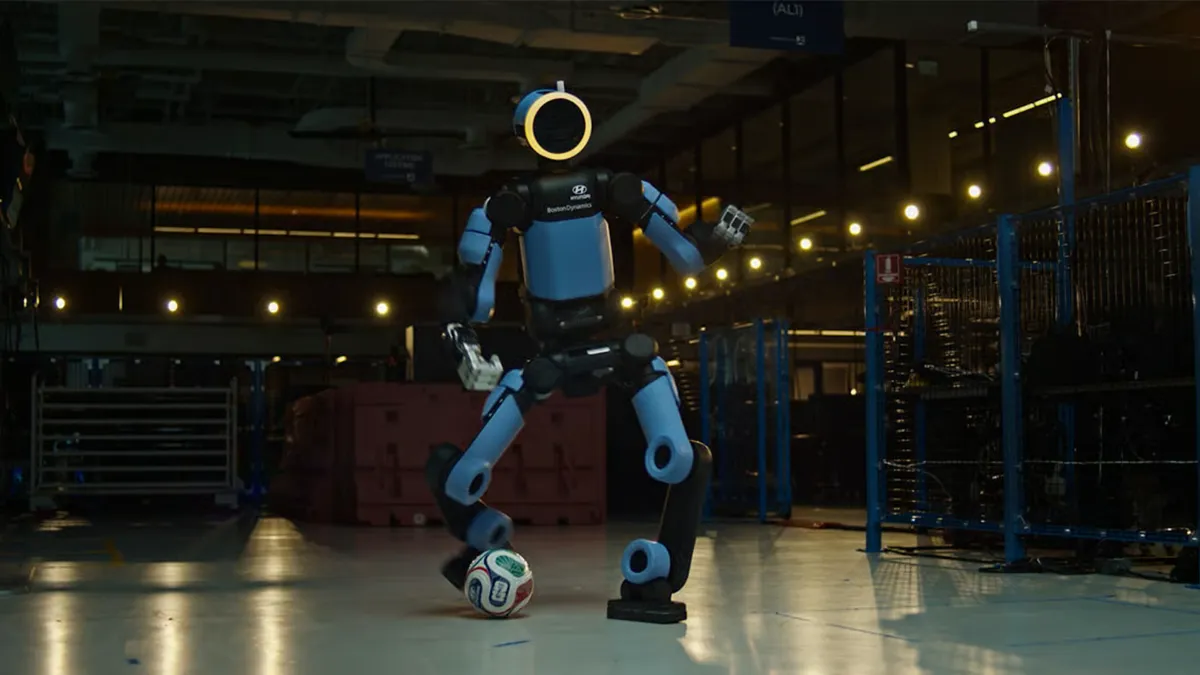
One impressive move is the "Ghost Rabona," a cross-leg kick. This move needs precise timing, balance, and deceptive motion, making it very complex. To do this, Atlas studies human football movements and translates them into a simulation. The robot then trains through reinforcement learning, refining its performance through trial and error.
Performing the Rabona requires advanced skills. These include dynamic balance control, full-body coordination, adapting to shifting weight in real-time, and precise motor control.
Hyundai will release more behind-the-scenes content. This will show how Atlas's movements were developed and trained. It will also offer technical insights into robotic learning and motion design.