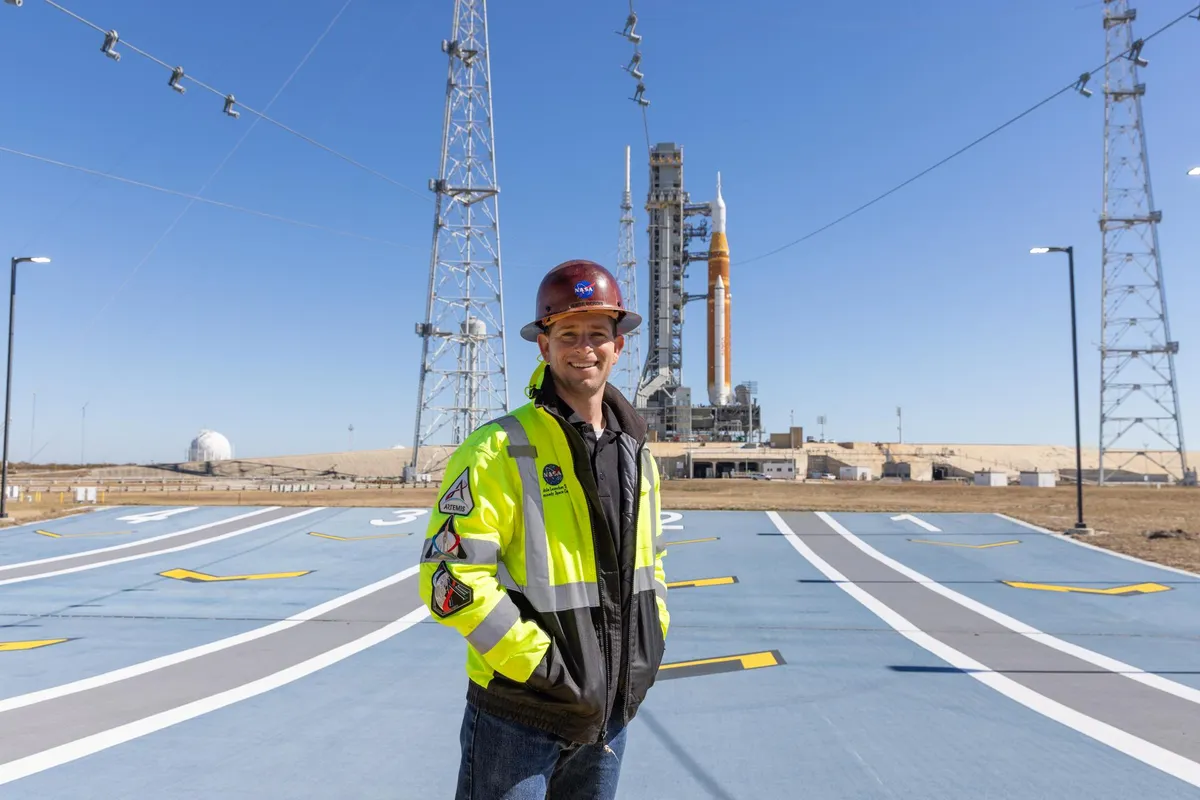
Jesse Berdis wanted to build skyscrapers. Instead, he's building the infrastructure to send humans back to the Moon.
It started with a resume left on a table. Berdis was at an engineering leadership conference in Orlando when he handed a copy to NASA recruiters—a casual move he didn't expect to lead anywhere. Four weeks later, NASA called. They had a role at Kennedy Space Center: launch infrastructure engineer for Artemis I, the uncrewed test flight that would prove the Space Launch System and Orion spacecraft could work together.
That was the beginning. Today, Berdis is deputy project manager for mobile launcher 1, the 400-foot-tall structure that serves as the backbone of every Artemis launch. If you've ever wondered what holds a rocket steady before liftoff, what feeds it power and fuel and coolant, what lets astronauts safely board their spacecraft—that's his domain.
We're a new kind of news feed.
Regular news is designed to drain you. We're a non-profit built to restore you. Every story we publish is scored for impact, progress, and hope.
Start Your News Detox"Anyone I talk to, that's what's on my mind," Berdis says. "Getting ready for the Artemis campaign. It can go from technical issues we're solving to the passion we have for launching the crew and taking the next step in humanity of going back to the Moon."
When Berdis first arrived at Kennedy, the sight of these massive ground systems hit him differently than he expected. They weren't just industrial equipment. They were skyscrapers for space exploration—the same childhood dream, just pointing upward instead of across a city skyline.
What it takes to launch a crew
After Artemis I proved the concept, the focus shifted to something far higher stakes: Artemis II, NASA's first crewed Moon mission in more than 50 years. That means everything has to work perfectly, which means rethinking the details.
One critical addition is the emergency egress system—a rapid escape route for personnel in case something goes wrong at the launch pad. Located 274 feet up on the mobile launcher, four baskets equipped with electromagnetic braking technology will let people descend to safety in seconds if needed. It's the kind of system you hope never to use, but Berdis treats it with the same rigor as every other component.
"That is a true feat of humanity," he says. "Someone putting all of their passion into these systems to make it all come together at T-0."
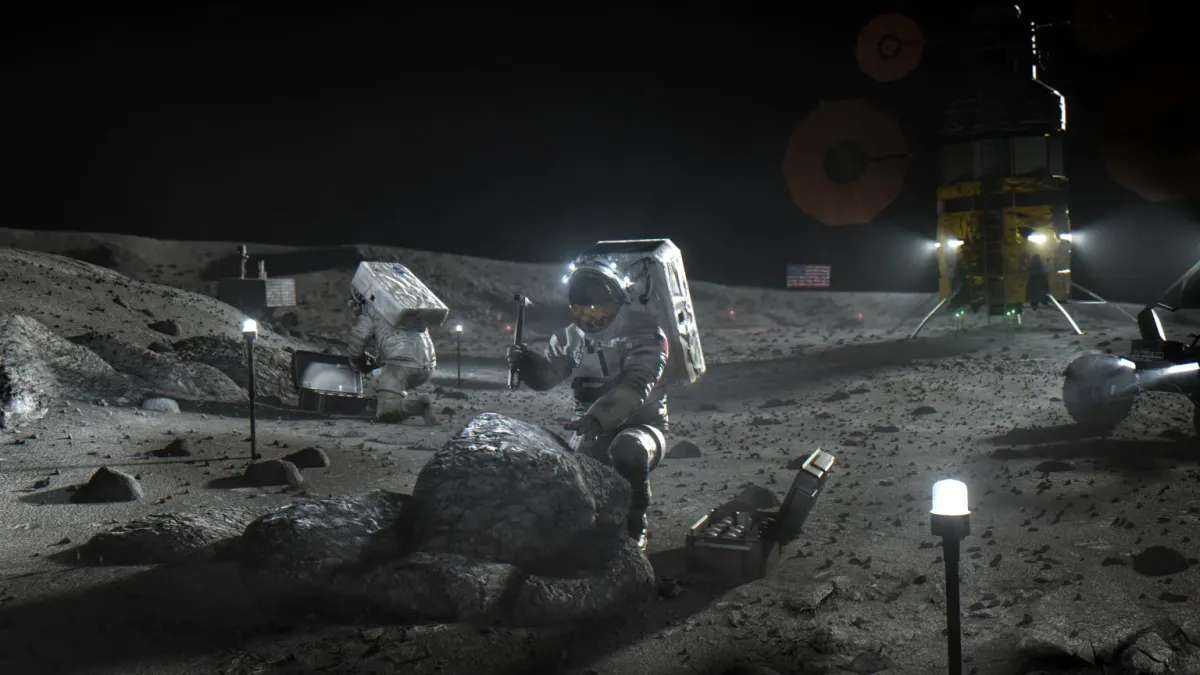
Beyond the launcher itself, Berdis recently took on another challenge: coordinating the ground operations schedule for the Artemis human landing system lander. It's the kind of work that doesn't make headlines—integrating schedules, managing risks, keeping development teams and ground operations in sync. But it's essential. The lander has to be ready when the crew arrives at the Moon, and that means every timeline, every test, every checkpoint has to align.
The path from Dallas to this moment wasn't planned. But Berdis has learned that the best opportunities sometimes arrive quietly, on the back of a resume handed to the right person at the right time.