Turns out, the bad guys of the animal kingdom are leaving behind some rather incriminating clues. And forensic scientists, bless their brilliantly methodical hearts, are finding them.
Take, for instance, a green sea turtle. Looks like it's gracefully gliding through bioluminescent waters, right? Absolutely stunning. Until you notice the faint, glowing human handprint on its shell. That's not a magical embrace; that's forensic powder and UV light, revealing the literal fingerprints of illegal wildlife trade. It's the kind of image that makes you both gasp at the beauty and wince at the implications.
This award-winning photo by Britta Jaschinski isn't just art; it's a stark reminder of the human touch on nature — and how science is fighting back. Because if you're going to leave your grubby mitts on protected species, investigators are now making sure those mitts glow under the spotlight.
We're a new kind of news feed.
Regular news is designed to drain you. We're a non-profit built to restore you. Every story we publish is scored for impact, progress, and hope.
Start Your News DetoxThe CSI: Wildlife Edition
This isn't just about glowing turtles. Forensic techniques are quietly revolutionizing the fight against poaching, turning crime scenes in the wild into evidence lockers. We're talking fingerprints, blood, and gunpowder residue, all pointing fingers (pun intended) at the culprits.
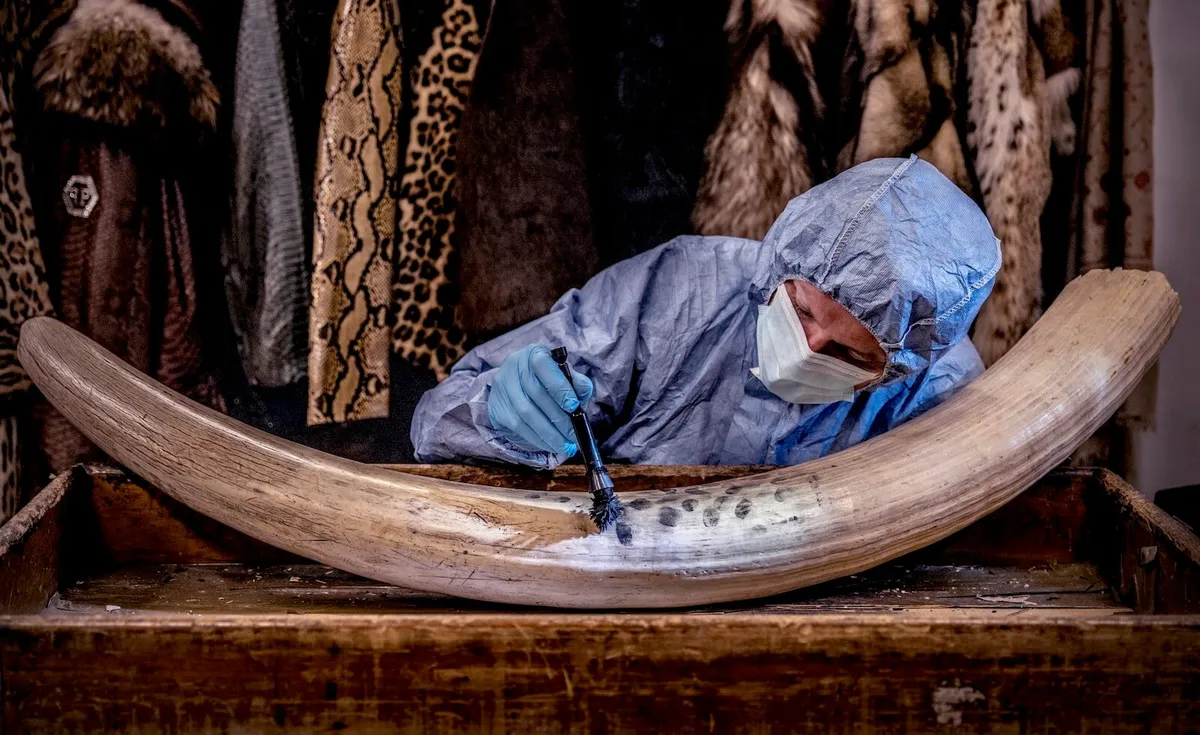
Mark Moseley, a forensic investigator, has been leading the charge, using magnetic powders to lift prints from elephant tusks. He once nabbed prints from a tusk seized right at Heathrow. Think about that: a tusk, fresh off a poaching operation, telling its own story of who touched it last. Because apparently, even criminals aren't always wearing gloves.
These clever, low-cost fingerprinting kits have spread to border forces in 40 countries across Africa and Asia. And they're not just gathering dust; in Kenya, one kit alone led to 15 arrests, including five police officers, and the seizure of 11 tusks. For the first time, the ivory wasn't just evidence of a crime, but a witness pointing directly to the criminals.
Now, a white version of the powder is being deployed to find prints on rhino horn and pangolin scales. Because why stop at elephants when there are other endangered species needing a little forensic protection? These methods are cheap, easy to use in the field, and work even where DNA testing is a distant dream. Which, if you think about it, is both impressive and slightly terrifying for anyone planning to get away with wildlife crime. Good.
Jaschinski’s powerful photo, by the way, won big at the Earth Photo 2026 competition and is currently on display in London before touring the UK. Because sometimes, the most striking images are also the most revealing.