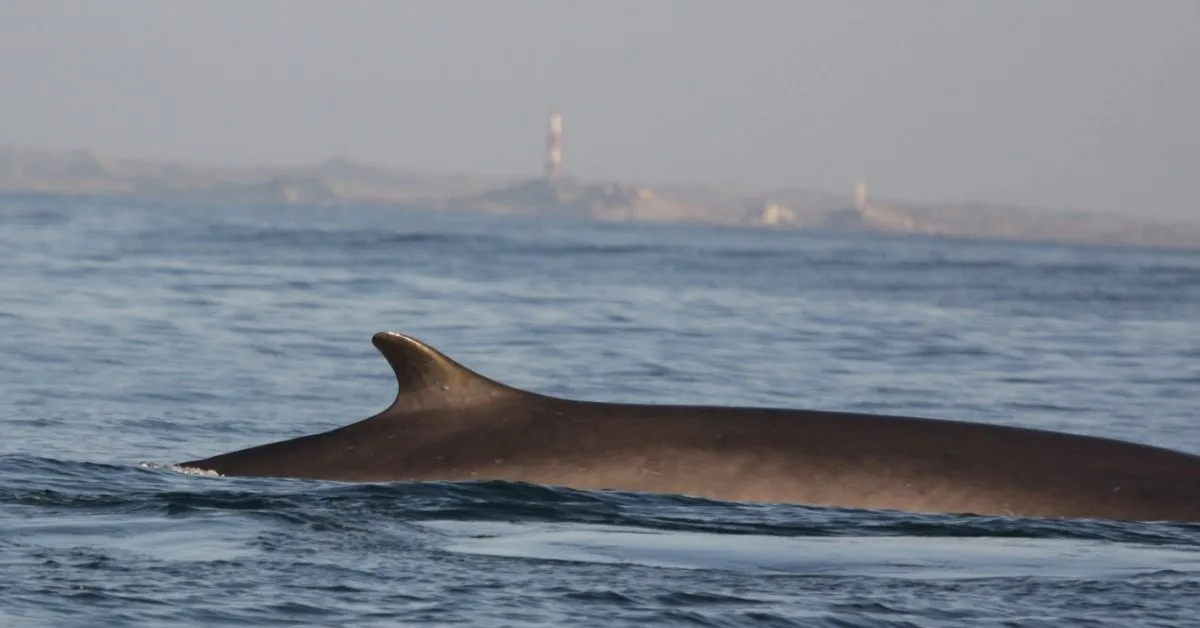
Good news, everyone: it appears a significant portion of the ocean's largest residents might be staging a comeback. After decades of being hunted to near oblivion, blue whales and fin whales are showing promising signs of recovery off Southern Africa's Atlantic coast.
Because, apparently, when you stop actively trying to eradicate a species, it sometimes bounces back. Who knew?
The Great Whale Nearly-Wipeout
Let's set the scene: from 1913 to 1978, the industrial whaling industry went… well, industrial. They managed to take out roughly 350,000 Antarctic blue whales and a cool 725,000 fin whales in the Atlantic alone. This wasn't just a bad season; it was an existential threat, pushing both species to the very edge of the abyss.
We're a new kind of news feed.
Regular news is designed to drain you. We're a non-profit built to restore you. Every story we publish is scored for impact, progress, and hope.
Start Your News DetoxFast forward to today, and researchers led by Bridget James from the University of Cape Town decided to check if these giants were actually making a return in the krill-rich Benguela ecosystem. This stretch of ocean along Angola, Namibia, and South Africa is basically a superhighway for whales, connecting their breeding and feeding grounds.
And the results? Between 1964 and March 2023, the team logged 17 blue whale sightings (plus one unfortunate stranding) and a much more robust 76 fin whale sightings (with six strandings). Here's the kicker: 95% of all these sightings happened after 2012. That's not just a blip; that's a trend you can set your watch to.
James points out that more sightings along this migratory path are a pretty clear indication that populations are, in fact, beginning their slow, majestic climb back.
A Slow, Majestic Climb
Now, let's manage expectations. Antarctic blue whales are currently hovering at about 3% of their pre-whaling numbers. Fin whales are doing a bit better, cracking the 30% mark. James suggests that hitting at least 50% would signal a truly successful recovery. Whales, bless their hearts, aren't exactly prolific breeders – few offspring, long gestation periods. It's a marathon, not a sprint.
And the ocean they're returning to isn't quite the same as the one they left. Today's waters come with new challenges: more massive ships, more industrial noise, more general human hubbub. One blue whale, sadly, might have met its end off Namibia thanks to a ship strike. Because apparently that's where we are now.
Asha de Vos, a blue whale expert not involved in the study, notes that this kind of gradual recovery and return to old stomping grounds is a pattern seen elsewhere after commercial whaling bans. It's not a full-blown party just yet, and more sightings could just mean more whales passing through rather than a complete population boom.
But still, it's a good sign. A really good sign, in fact. Proof that sometimes, if you just stop doing the worst things, nature finds a way to remind you just how magnificent it can be.