Last winter was tough for marmots in the Colorado mountains. Researchers say two-thirds of one population died during hibernation. This was due to not enough snow cover.
The marmots that survived are now getting fat. They are preparing for fall and hibernation. They are also ready for the very first Fat Marmot Week.
Fat Marmot Week starts Monday. It is like Fat Bear Week, an online contest for plump Alaskan brown bears. This event is mostly for fun. But it also has a serious goal. Scientists need donations for their long-running research on these rodents. This research is facing federal funding cuts.
We're a new kind of news feed.
Regular news is designed to drain you. We're a non-profit built to restore you. Every story we publish is scored for impact, progress, and hope.
Start Your News DetoxDan Blumstein leads the project. It started decades ago at the Rocky Mountain Biological Laboratory in Gothic, Colorado. He said, "In some sense, we’re going to be laughing our way down as the Titanic sinks. Because what else are you going to do?"
What is a Marmot?
A marmot is a furry ground squirrel about the size of a cat. They live in burrows in North America, Europe, and Asia. There are about 15 species worldwide. These include groundhogs, which have their own special day on February 2nd in the U.S. and Canada.
Yellow-bellied marmots are common in the Rocky Mountains. Hikers often see these animals on boulders or moving through wildflowers.
Marmots are not shy around popular trails. Some bold ones might even try to take your snack.
Marmots have personalities, much like people. They are "flexibly social." This means some live in colonies of up to 30 animals. Others prefer to be alone. Emily Renkey, a master’s student at UCLA, shared this.
Katie Adler, a UCLA doctoral student, noted that researchers can often understand marmots just by watching them. They can tell who is who by their behavior and interactions.
Some marmots are hard to study. They are wary of traps, which are wire boxes baited with oats and peanut butter. Renkey said others can be trapped multiple times in one morning.
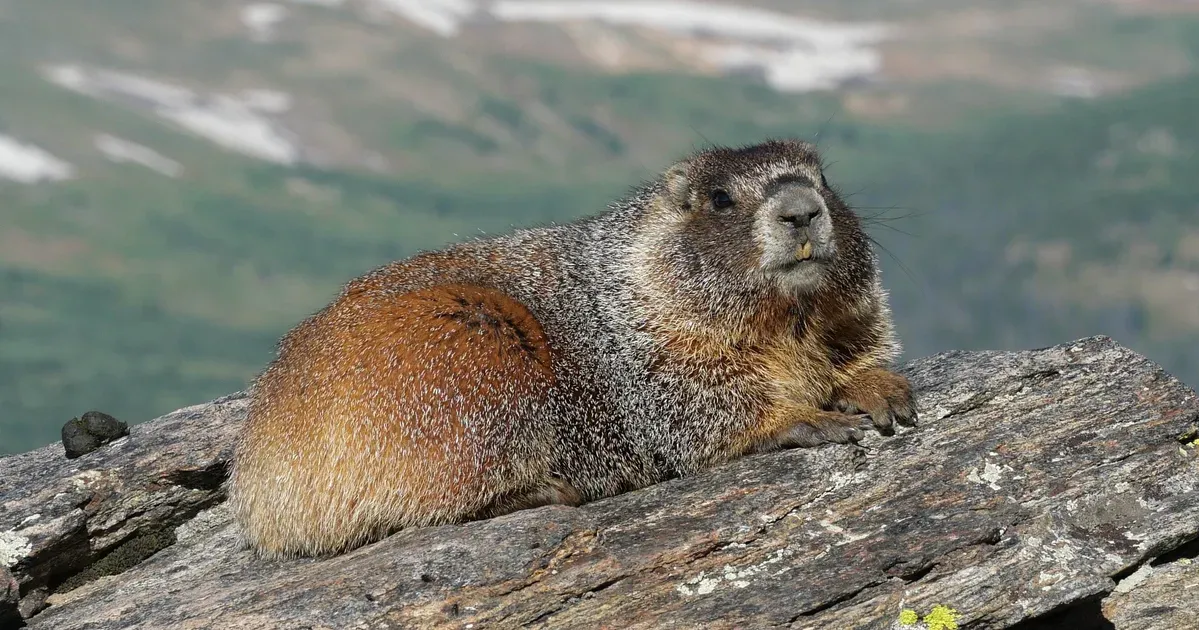
Marmota flaviventris*) rests on a rocky outcrop near Rock Cut in Rocky Mountain National Park, Colorado, USA. Image: Ted Iwabuchi via Getty Images*
Marmots are Deep Sleepers
Bears hibernate in a state called torpor. This allows them to wake up occasionally. Marmots, however, go into a much deeper hibernation. Their body temperature drops from near human levels to as low as 41 degrees Fahrenheit (5 degrees Celsius). This is only slightly warmer than their burrows in winter.
Blumstein described picking up a hibernating marmot. He said it feels like a cold, fuzzy rock. They breathe only once every minute or two.
To get ready for winter, marmots eat a lot. They double their weight, reaching up to 13 pounds (6 kilograms). They then lose all of this weight during six months or more of hibernation.
Adler noted that marmots emerge from the ground very skinny compared to how they look now.
How Poor Snowpack Affects Marmots and Beyond
Last winter, low snowfall and warm temperatures, linked to global warming, meant many Colorado marmots lacked an insulating blanket of snow over their burrows. Researchers believe their hibernation spots became too cold, causing many to die.
Blumstein reported that they started the season with over 160 animals but ended with only 60. Most died because there wasn't enough snow cover.
This year's snowpack was the worst on record in the Upper Colorado River Basin. This area includes Wyoming, Colorado, Utah, and New Mexico. A new study confirms that human-caused climate change made this snow drought about 14 times more likely.
Hundreds of researchers at the Rocky Mountain Biological Laboratory have seen other changes. These include fewer bees and other pollinators. Sagebrush is also growing in valleys once full of wildflowers.
Changes in precipitation also affect areas downstream. Farmers and communities rely on this water to survive.
Renkey explained that snowmelt from these mountains impacts the Colorado River. This river provides drinking water for many. She emphasized that what happens in these mountains affects everyone.
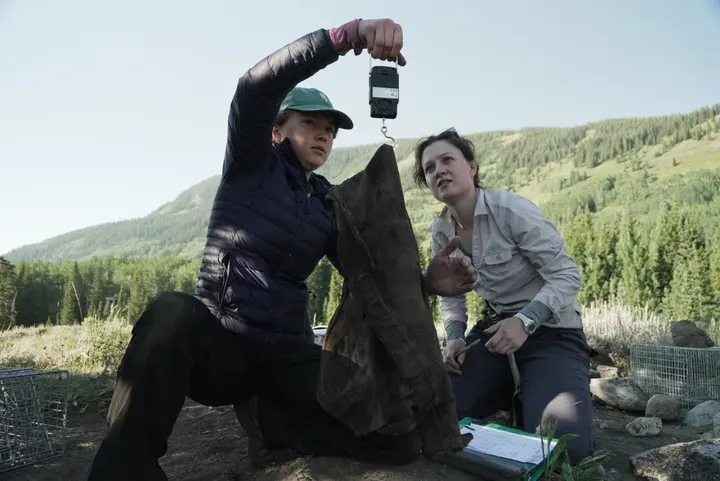 Columbia University undergraduate student Isabel Norman, left, learns how to weigh a marmot under the supervision of Katie Adler, a doctoral student at the University of California, Los Angeles, Thursday, Aug. 6, 2026, in Gothic, Colo. (AP Photo/Brittany Peterson) Image: Associated Press
Marmoteers and Creative Funding
The marmot study in Gothic is about 20 miles (32 kilometers) south of Aspen. Researchers from UCLA and the University of Ottawa in Ontario run it. The study began in 1962, making it one of the longest-running studies of individual mammals worldwide.
The marmot researchers call themselves "marmoteers."
Blumstein noted that this long-term data allows graduate students and others to ask new questions without doing all the initial hard work.
Funding cuts have led Blumstein’s UCLA department to lose one-third of its graduate students. Fat Marmot Week is one way to attract interest and donations to keep the research going. Some marmots featured include Stonehenge, who chirps at mountain bikers, and Citroen, whose mate leads a matriarchal marmot group. Voting opens Monday.
The researchers have also posted marmot videos on OnlyFans. A "super fan" created a cryptocurrency called $OnlyMarms to build on this attention. Transaction fees from this coin are donated to the research program. This effort has already raised about $100,000.
The team needs to secure three years of funding, over $200,000, to ensure the research continues next summer.
Adler said people need to find funding in new ways. This includes reaching out to the broader community to get people involved.
Deep Dive & References
Human-caused climate change made 2022-2023 western U.S. snow drought 14 times more likely - PNAS, 2023