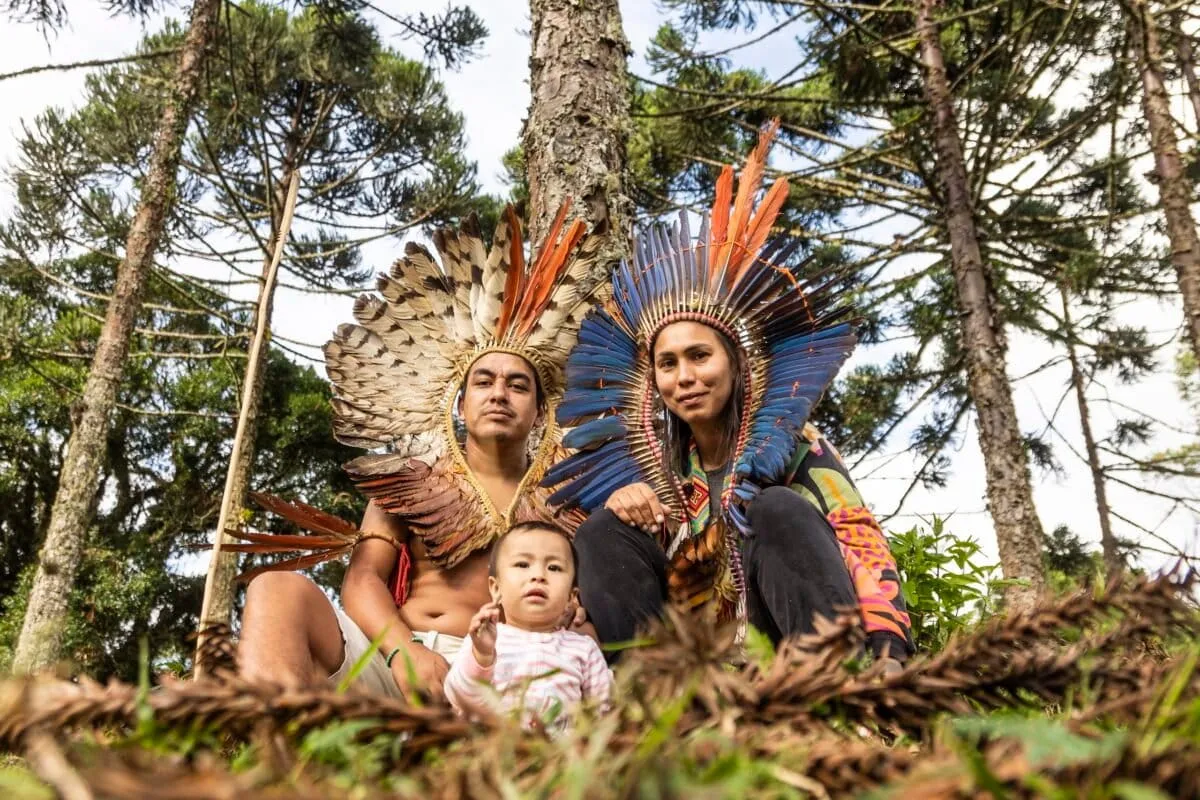
The Xokleng Indigenous people in southern Brazil are doing something rather extraordinary: they've planted almost 100,000 seedlings of a critically endangered native tree. This isn't just any tree; it's the majestic Brazilian pine, or araucária, which can tower over 164 feet into the sky.
Once, these magnificent pine forests dominated southern Brazil. Now? Their numbers have plummeted by a staggering 97% in the last century. Carl Gakran, executive director of the Zág Institute, put it starkly: his people, language, and culture face the same precarious future as the araucária. He and his wife, Isabel Gakran, founded the institute to help turn the tide.
A Forest, Reborn
Gakran kicked off this ambitious restoration project in 2016. He'd learned the Brazilian pine was critically endangered via the IUCN Red List—basically, the global 'uh-oh' list for species. His initial plan was modest: just ten trees on his own land. But, as often happens with truly good ideas, the community got wind of it, and the project blossomed the very next year.
We're a new kind of news feed.
Regular news is designed to drain you. We're a non-profit built to restore you. Every story we publish is scored for impact, progress, and hope.
Start Your News DetoxThese araucária pines aren't just pretty; they produce edible nuts called pinhão. These aren't just a snack; they're a dietary staple in southern Brazil and a crucial food source for at least 22 animal species. The project's workers and volunteers collect the seeds, but with a critical rule: at least 40% are always left for the local wildlife. Gakran noted they honor their elders' wisdom, speaking to the seeds and performing harvest rituals, ensuring they never take more than 60%. Because, apparently, even reforestation has its own sacred etiquette.