For years, scientists knew that breathing bad air could stunt a child's lung development. A less certain question, however, was whether cleaning up that air could actually reverse the damage. Turns out, it can. And London just proved it.
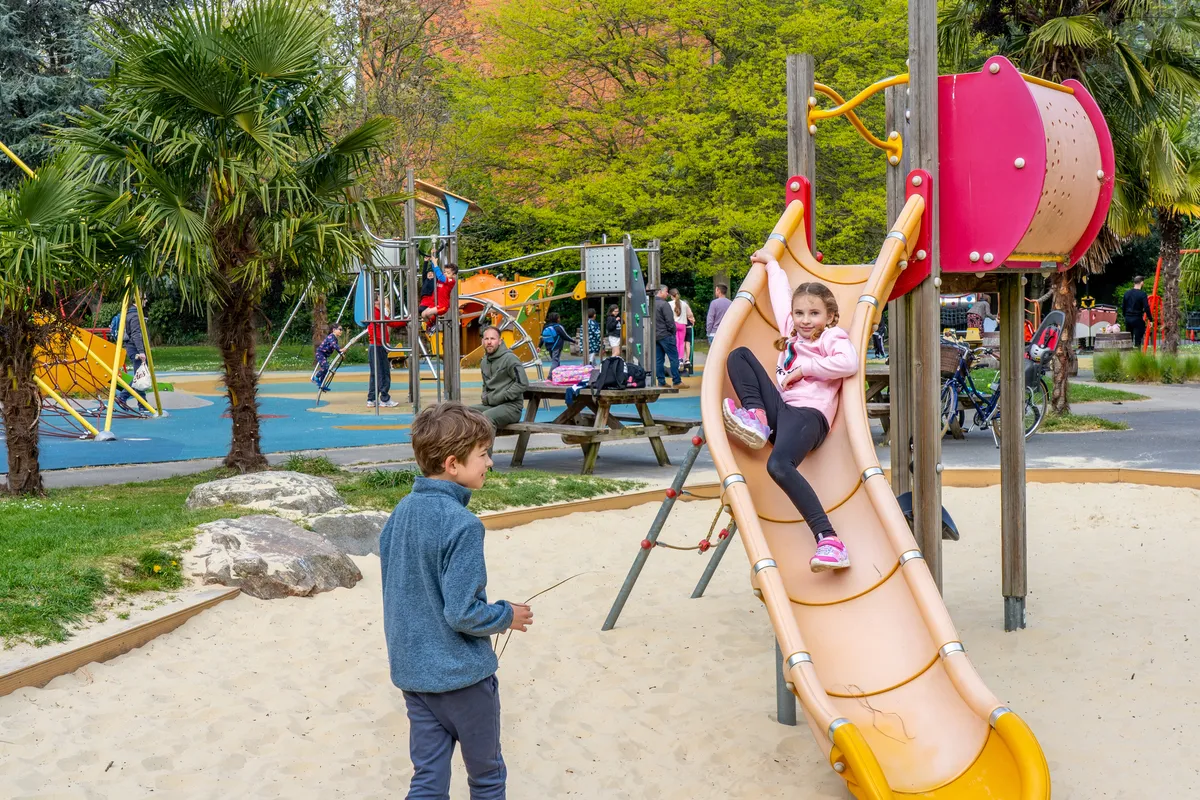
Researchers at Queen Mary University of London tracked over 3,400 children, ages six to nine, as the city rolled out its Ultra Low Emission Zone (ULEZ). This isn't just some polite suggestion for drivers; it charges older, more polluting vehicles to enter central London. The idea is to encourage cleaner transport. The happy side effect? A real-world experiment on children's developing lungs.
How Cleaner Air Became a Growth Catalyst
To figure out if the ULEZ was actually doing anything, researchers compared children in central London to a similar group in Luton, a nearby town without such a zone. It's the scientific equivalent of a control group, but with more exhaust fumes.
We're a new kind of news feed.
Regular news is designed to drain you. We're a non-profit built to restore you. Every story we publish is scored for impact, progress, and hope.
Start Your News DetoxNitrogen dioxide levels, mostly from vehicle tailpipes, plummeted in central London — twice as fast as in Luton. London saw a drop of about 3.8 micrograms per cubic meter each year, while Luton's air improved by 1.8. Both are good, but London's clean-up was clearly on fast-forward.
And the kids' lungs followed suit. Before the ULEZ, children in central London had slower lung growth than their Luton counterparts. But as the air cleared, something remarkable happened: London's children's lung function grew by an average of 233 milliliters per year, compared to 223 milliliters in Luton.
After four years, the difference vanished. The London kids had completely caught up. Even better, the number of central London children with poor lung function dropped from 14% to a much more breathable 9%. Let that satisfying number sink in.
Lungs aren't just born fully formed. They grow throughout childhood, and what happens during those formative years impacts a person's breathing health for life. Children whose lungs don't develop properly face higher risks of asthma and other respiratory issues. This study is the first to directly link a clean-air zone to faster lung growth, showing a measurable change inside children's bodies, not just on a pollution sensor.
The ULEZ has certainly had its share of headlines, from vandalism to legal battles. But this new scientific evidence offers a pretty compelling argument for keeping the air clean. Apparently, it's not just about what you can't see; it's about what you can help grow.