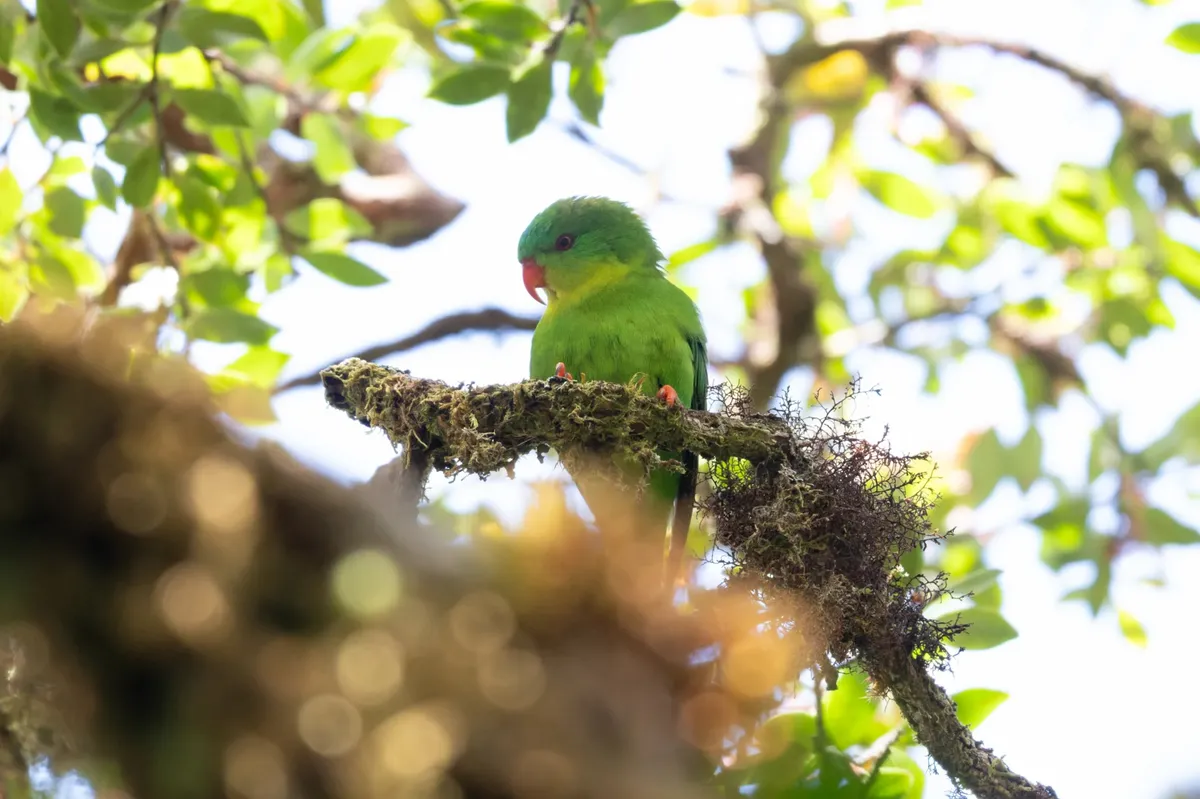
Imagine being a scientist, looking for a bird that basically vanished after the 1920s. You've got seven dusty museum specimens and a whole lot of hope. That's the story of the blue-fronted lorikeet, a tiny, lime-green parrot with an orange beak that lives exclusively on Indonesia's Buru Island. It was, for all intents and purposes, a ghost.
Then, in a plot twist worthy of a nature documentary, a team of mountaineers and conservationists just snapped its picture. This isn't just a cute bird photo; it's only the second time this elusive parrot has been photographed in over a century.

The Unofficial World Champion of Hide-and-Seek
For decades, this little lorikeet was a legend. Scientists knew it existed from those original 1920s specimens, but finding it in the wild? Forget about it. Surveys came up empty. It was like the bird decided to take a permanent vacation from human observation.
We're a new kind of news feed.
Regular news is designed to drain you. We're a non-profit built to restore you. Every story we publish is scored for impact, progress, and hope.
Start Your News DetoxThen, in 2014, a birder named Craig Robson caught a fleeting glimpse and managed a photo. It was a miracle, reported by the aptly named Search for Lost Birds project (a partnership of American Bird Conservancy, Re:wild, and BirdLife International). But one photo in nearly a century? Still pretty rare.
Fast forward to April 2026 (yes, the future is now, apparently), when an Indonesian mountaineering group, Kanal Buru, teamed up with researchers from ABC, Birdtour Asia, and Yayasan Planet Indonesia. They embarked on a grueling 14-day trek up Mount Kapalatmada on Buru Island. Their destination: a cloud forest 2,700 meters (that's nearly 9,000 feet) high. Because apparently that's where you go to find things that don't want to be found.
And find it they did. Not only did they get more photos, but for the very first time, they recorded its distinctive high-pitched calls. John C. Mittermeier, director of the Search for Lost Birds at ABC, described the moment: two small birds zipped into a tree. He raised his binoculars, and just like that, a century of mystery started to unravel. Which, if you think about it, is both impressive and slightly terrifying for a bird that just wanted some peace and quiet.