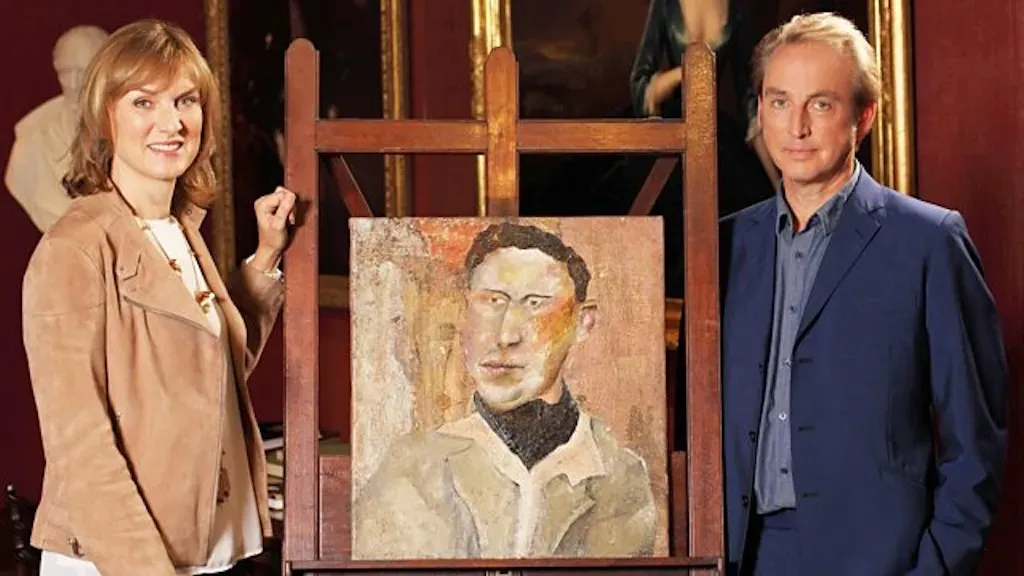
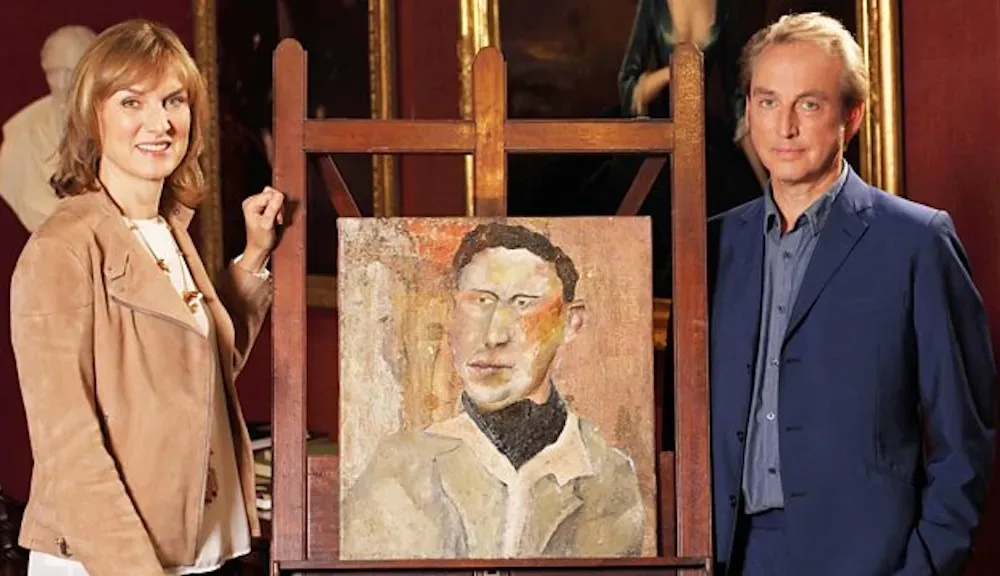
For nearly 40 years, a portrait called Man in a Black Scarf was the art world's equivalent of a ghost story. Lucian Freud, one of Britain's most celebrated painters, flat-out denied it was his. Repeatedly. Until his dying day in 2011. And yet, here we are: the painting is about to go on public display at London's Garden Museum.
Turns out, sometimes the evidence just stubbornly refuses to get with the program, no matter what the artist says. This particular saga began in 1985 when Christie's briefly listed the painting as a Freud, only to retract it after the man himself issued a firm "Nope." The portrait, believed to depict John Jameson (yes, that Jameson whiskey family), was painted in 1939 when Freud was a student.
The Grudge Match on Canvas
The real tea, however, seems to be less about artistic memory and more about a good old-fashioned grudge. Jon Lys Turner, who inherited the painting, claims it was given to him by Denis Wirth-Miller, a fellow art student and the painting's original owner. Wirth-Miller's instruction? "Prove it's a Freud and sell it to infuriate Lucian." Because apparently that's where we are now.
We're a new kind of news feed.
Regular news is designed to drain you. We're a non-profit built to restore you. Every story we publish is scored for impact, progress, and hope.
Start Your News DetoxFor years, proving it was a challenge. Experts are understandably hesitant to contradict a living legend about his own work. The painting got a moment in the spotlight on the BBC's Fake or Fortune? in 2016, with art historian Philip Mould leaning towards its authenticity. But the real breakthrough came two years later.
Researchers digging through the Tate Britain archives stumbled upon old school records from the East Anglian School of Painting and Drawing. These daily logs confirmed Freud was indeed working on a portrait of John Jameson in 1939—precisely when Man in a Black Scarf was created. Let that satisfying number sink in.
It’s not the first time an artist has played the denial game. Pablo Picasso famously dismissed Erotic Scene (La Douceur) as a "bad joke by friends." The Metropolitan Museum of Art, after much research, decided otherwise and included it in a major exhibition. On the flip side, Gerhard Richter has removed early works from his official record, and Cady Noland has disowned pieces she felt were altered without her consent, leading to a legal battle over a $1.4 million sculpture.
Sometimes, the artist is proven right, as Peter Doig was in a 2016 court case where a collector tried to claim a painting was his. But in Freud's case, the evidence just kept piling up, even after his death. So, a painting he denied for decades, a painting meant to "infuriate Lucian," will now hang for all to see. The art world, it seems, has a long memory—and a penchant for posthumous vindication.