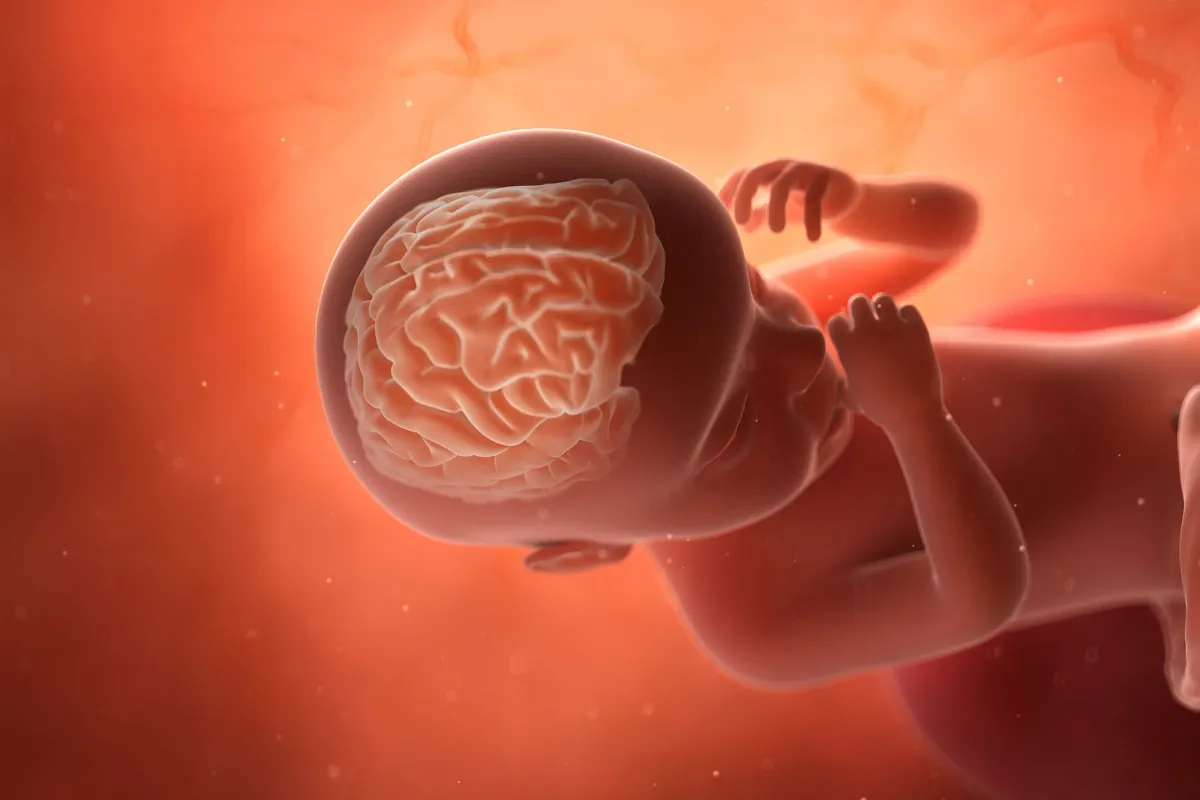
By mid-pregnancy, the developing brain is already showing measurable differences between males and females. Researchers at the University of Cambridge tracked brain growth from the middle of pregnancy through the first month after birth and found these sex-based patterns emerge far earlier than previously understood.
The study, published in Scientific Reports, reveals that male brains show larger increases in overall volume during early development compared to females at the same stage. But the real story isn't just about size — it's about how different parts of the brain grow at different times.
"The human brain undergoes its most rapid and complex development before and shortly after birth," explains Yumnah Khan, the PhD student who led the research. "But until now, very little was known about exactly how the brain grows during this formative period, and how males and females might differ in this process."
We're a new kind of news feed.
Regular news is designed to drain you. We're a non-profit built to restore you. Every story we publish is scored for impact, progress, and hope.
Start Your News DetoxThe researchers discovered that white matter — the tissue that connects different brain regions — drives most growth during mid-pregnancy. Then the focus shifts. By late pregnancy and after birth, grey matter takes over, handling the heavier cognitive lifting. This isn't just a sequential swap; it's a carefully timed choreography that appears to follow different rhythms in male and female brains.
Why this matters for neurodevelopment
These growth patterns matter because they may help explain why neurodevelopmental conditions like autism show different rates between males and females. "Establishing these brain growth trajectories early in life is critical," says Dr. Richard Bethlehem, an assistant professor in neuroinformatics on the team. "These may help us understand how differences in early brain development contribute to diverse outcomes, including psychiatric and neurodevelopmental conditions."
Professor Simon Baron-Cohen, who directed the Autism Research Centre where this work was conducted, points to a specific mechanism: prenatal sex hormones. "These early sex differences in the brain may be due to prenatal sex steroids, and autistic people are exposed to elevated levels of these hormones," he notes. Understanding when and how these hormonal influences shape brain structure could eventually help researchers understand why autism presents differently across sexes.
The team used data from the Developing Human Connectome Project, which tracked actual brain development in real pregnancies. This isn't theoretical — it's grounded in detailed scans and measurements from actual developing brains.
The findings don't suggest that one developmental pattern is better or worse. Rather, they map the natural variation in how human brains build themselves. As neuroscience moves toward understanding brain diversity — not just brain disorder — this kind of foundational mapping becomes essential. The next phase will likely involve asking what these growth differences mean for how different brains process information, learn, and develop across childhood and beyond.