More than 320 million Chinese adults live with cardiovascular disease or high blood pressure. That's roughly the population of the United States, and it's largely traceable to one shift: the rapid move toward ultra-processed foods and meat-heavy diets over the past few decades.
Jian Yi, founder of the Good Food Fund, watched this happen in real time. "We've been favoring ultra-processed products over whole foods," he says. "The sheer size of China means that overconsumption of meat has a huge environmental and public health impact." But instead of treating this as a crisis to manage, Yi's team—particularly through a project called Mama's Kitchen—decided to treat it as a design problem. What if you could remake how an entire nation eats, starting with reconnecting people to where their food actually comes from.
The Farm-to-Table Reckoning
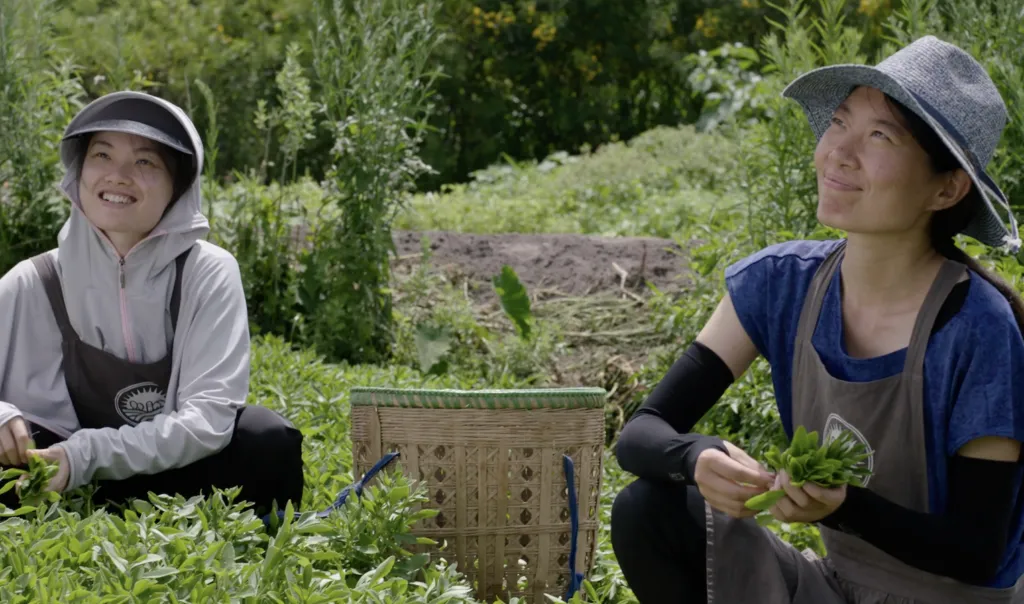
Mama's Kitchen brings groups to ecological farms in places like Dali, Yunnan. Visitors walk through fields, meet the farmers, learn how vegetables are grown, then sit down to a chef-prepared meal made entirely from what they just saw harvested. It sounds simple. It's not. What happens in that meal—the taste, the conversation, the sudden awareness of the hands that grew your food—shifts something.
We're a new kind of news feed.
Regular news is designed to drain you. We're a non-profit built to restore you. Every story we publish is scored for impact, progress, and hope.
Start Your News DetoxWu Hongping runs Veggie Ark Farm, one of the partner sites. "People start from the source," he says. They learn from farmers and nutritionists about both the human and environmental health impacts of their food. Melinda Hou, executive director of the Good Food Fund, has watched this play out dozens of times: "By the end of the event, people usually walk away with a much deeper understanding of healthy and sustainable eating."
The point isn't to eliminate meat. Yi is clear about this: "We don't want people thinking we are promoting vegetarianism. There might still be meat on your plate, but it is playing a secondary role." This matters. It means the project isn't asking people to overturn their entire food culture. It's asking them to rebalance it.
Chefs as the Connective Tissue
Restaurants became the next lever. Chef Lee runs Xiao Lou, a plant-forward restaurant in Dali, and he started working directly with local producers at the market. Early in his career, he cared only about flavor. Working with Mama's Kitchen changed his lens entirely. "As a chef, we must find a way to cook plant-based ingredients deliciously," he says. "This journey has completed me as a person."
That's the insight: chefs aren't just cooks. They're translators between farms and tables, educators who can make health feel like pleasure instead of sacrifice.
The Shift Is Already Happening
Over the past two years, Mama's Kitchen has documented real behavior change. Hou recalls the early days: "At the beginning, acceptance of plant-forward diets was usually quite low." But through tasting experiences and hands-on learning, something loosened. Communities began experimenting with practices like Meatless Monday. Attitudes shifted. People started asking questions about what they were eating and why.
Yi thinks about this at scale. China's food system influences global markets. If a nation of 1.4 billion people begins to eat differently—vegetables as staple, meat as seasoning—the ripples are enormous. "If we can bring even some small changes in the food system in China, it will be translated into really meaningful changes, globally," he says.
The kitchen, he argues, is where this starts. Not in policy documents or nutrition guidelines, but in the everyday act of cooking and eating together. That's where culture lives. That's where change actually takes root.