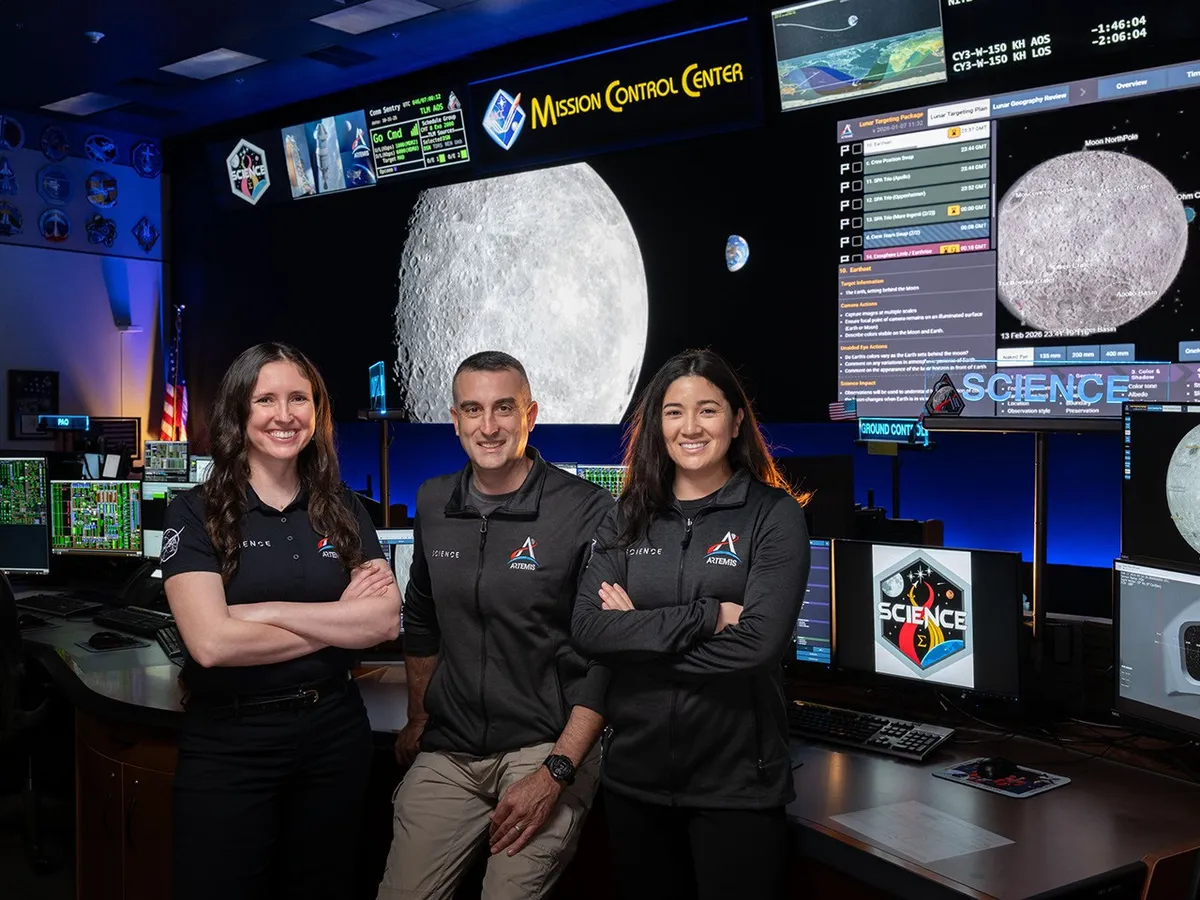
Kelsey Young, Trevor Graff, and Angela Garcia are NASA's first certified Artemis II science officers. They are comfortable both in a control room and in the field. Young works at NASA's Goddard Space Flight Center. Graff and Garcia are from NASA's Johnson Space Center.
Science operations have been part of human spaceflight since the Apollo missions. But Artemis adds a new role in NASA's Mission Control. This shows how science is now a key part of mission operations.
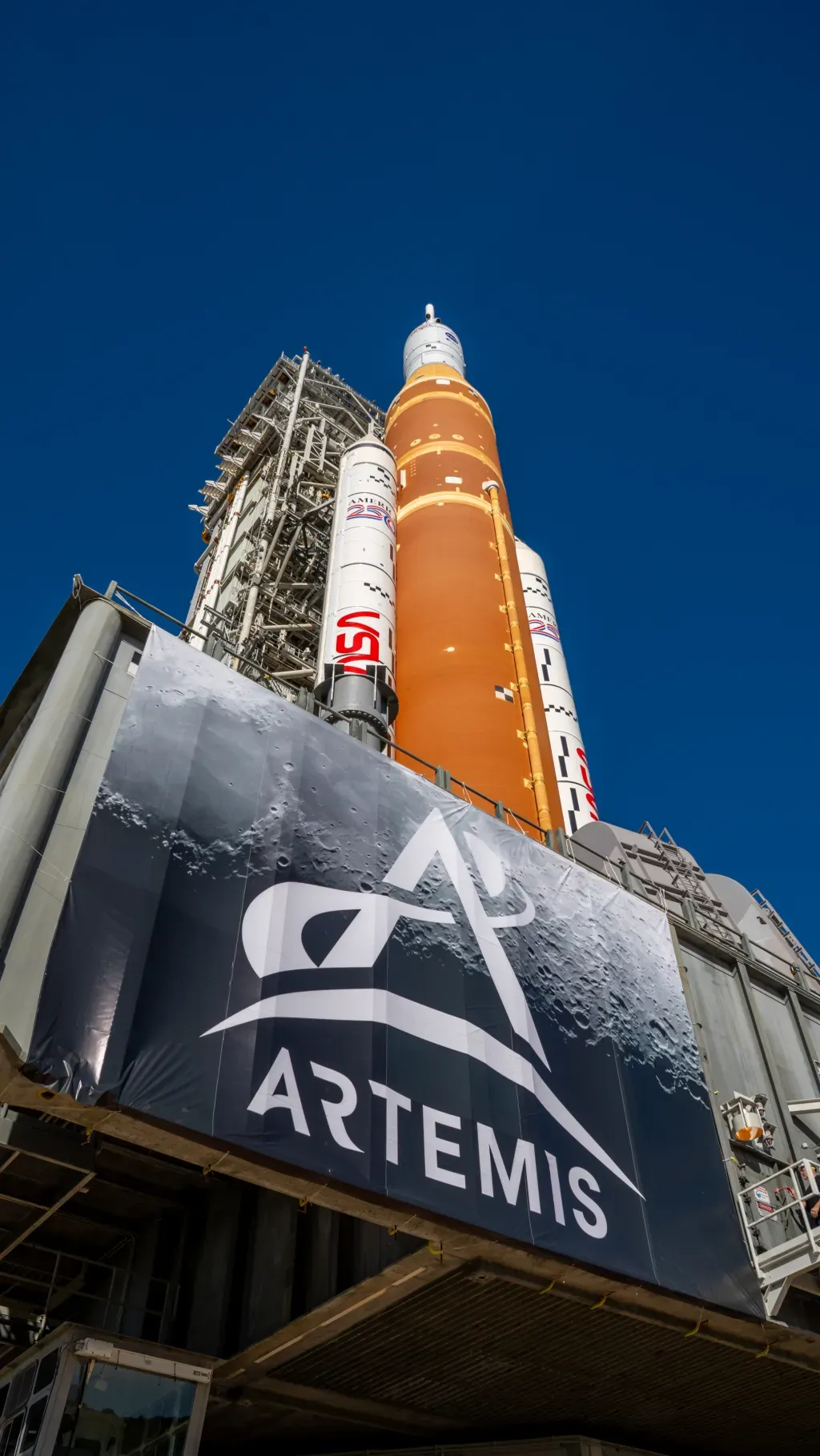
Young, who is also NASA's Artemis II lunar science lead, explained the role. "The science officer is the senior flight controller responsible for lunar science and geology objectives during Artemis missions," she said. They will work with other flight controllers to make sure science goals are met during the mission.
We're a new kind of news feed.
Regular news is designed to drain you. We're a non-profit built to restore you. Every story we publish is scored for impact, progress, and hope.
Start Your News DetoxMission Control has many workstations. Each one handles a specific part of the mission, like communications or life support. Now, there's a station for science. Larger teams of experts support these stations from other rooms at Johnson Space Center or other locations.
Young, Garcia, and Graff spent months training. They completed flight controller training, testing, and simulations in Mission Control. They also did geology and lunar observation training with the astronauts.
Trevor Graff: Artemis Science Officer
Graff found the simulations exciting and challenging. "We tested our skills and knowledge while immersed in very realistic mission scenarios," he said.
These simulations often included the Artemis II astronauts. They covered the lunar flyby part of the mission, planned for April 6. During this time, the crew will photograph the Moon and record their observations. They will act as the eyes for lunar scientists on Earth. The astronauts have had geology training in classrooms and in the field. This prepares them to gather as much information as possible when they pass the far side of the Moon.
Young noted the astronauts have worked hard to prepare. They studied lunar geography and explored moon-like landscapes in Iceland. They also learned how to describe the Moon in a way that is scientifically useful.
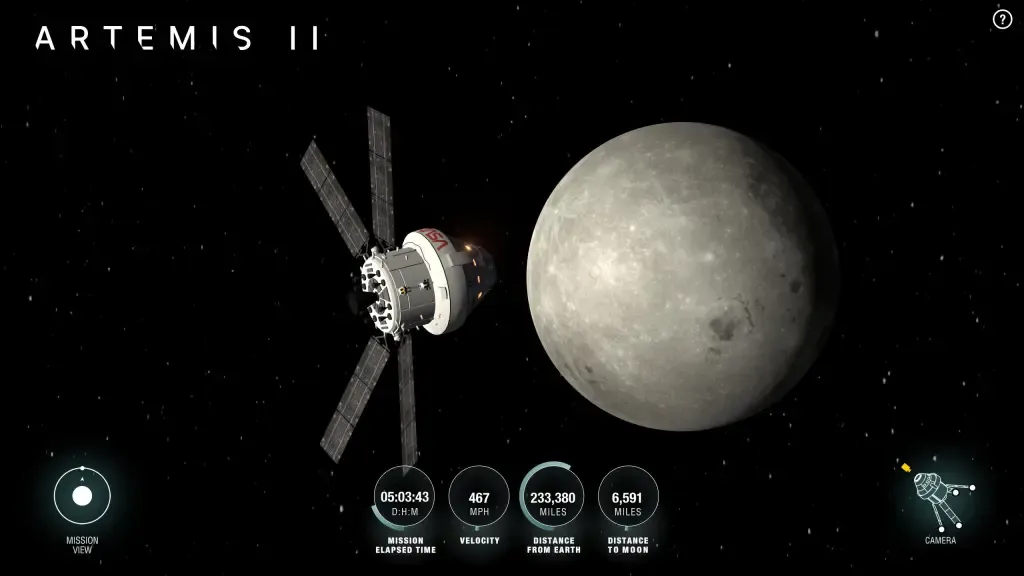
Young is excited to hear the astronauts describe the actual Moon from the Orion windows. "Hearing the excitement and scientific meaning behind their descriptions will be an incredible moment," she said.
Human eyes and brains are good at noticing small changes in color and texture. Astronauts observing the Moon directly, combined with decades of scientific advances, could lead to new discoveries. It could also help us understand the Moon's features better.
Artemis II will not land on the Moon, but it will still contribute a lot to lunar science. "The crew will be exploring through observation—a foundational scientific tool," Garcia said.
As the astronauts make observations, their photos and audio will go to two science rooms at NASA Johnson. These are the Science Evaluation Room and the Science Mission Operations Room. Experts there will analyze data and give real-time guidance to the science officer in Mission Control. This process is a key part of Artemis II as a test flight. It will help refine how science missions are run.
This mission will test the lunar science team's methods and technical needs. It will also test how they fit into Mission Control. What they learn from Artemis II will help plan lunar science operations for future Artemis missions. Young explained that science has a long history in human spaceflight. During Apollo, there was no science representative in the main Mission Control room. But there was a geology back room at Johnson.
As Apollo missions continued, how science teams worked with flight control evolved. Their role grew as each mission's science capabilities expanded.
Garcia feels honored to be part of the flight control team and to have trained the astronauts. Young believes everyone can connect with the Moon.
"I hope people all over the world can be inspired by this push away from our planet," Young said. "I also hope they remember the Moon, how much we still have to learn about our nearest neighbor but also the special place it holds to people everywhere."