Scientists tracking Antarctica's ice loss just discovered something counterintuitive: melting ice doesn't automatically help the ocean absorb more carbon dioxide, which means one of our planet's natural climate brakes might be weaker than we assumed.
For decades, researchers expected a straightforward equation. West Antarctic ice melts, it delivers iron-rich sediment to the Southern Ocean, algae blooms, algae pulls carbon from the atmosphere, problem partially solved. But a new study in Nature Geoscience found the mechanism doesn't work that way.
The iron that icebergs deliver has undergone so much chemical weathering over time that marine algae can't actually use it efficiently. "What matters here is not just how much iron enters the ocean, but the chemical form it takes," says Torben Struve, the lead researcher at the University of Oldenburg. More iron doesn't equal more growth. It's like having a pantry full of food you can't digest.
We're a new kind of news feed.
Regular news is designed to drain you. We're a non-profit built to restore you. Every story we publish is scored for impact, progress, and hope.
Start Your News DetoxThe Evidence from 130,000 Years Ago
Struve's team pieced this together by studying the last interglacial period, around 130,000 years ago, when Earth's temperatures roughly matched what we're experiencing now. Back then, the West Antarctic Ice Sheet was already retreating significantly. Icebergs calved off in large numbers, dumping weathered sediment into the Southern Ocean. Yet algae growth didn't spike the way climate models would predict.
The researchers traced this mismatch to the sediment's chemistry. After centuries of exposure to ice and water, the iron had transformed into forms that algae struggle to metabolize. The ocean received the delivery, but couldn't use the goods.
What This Means Going Forward
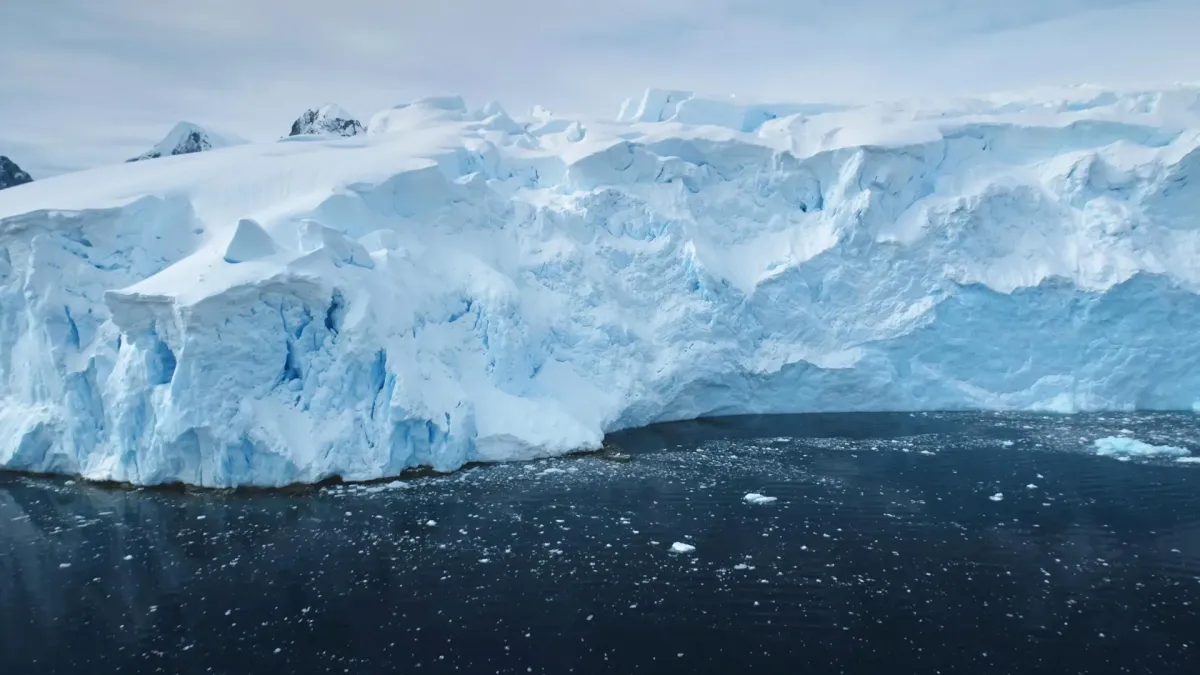
If Antarctica continues warming as expected, the West Antarctic Ice Sheet will keep thinning—it's already visibly retreating. That means more weathered sediment entering the ocean, but potentially less carbon absorption, not more. It's a feedback loop that works backward from what we'd hoped.
Struve emphasizes the ice sheet isn't likely to collapse imminently. But the trajectory is clear. As glaciers erode deeper into older rock layers, they'll release increasingly weathered material. The Pacific sector of the Southern Ocean could see measurable declines in its carbon-absorbing capacity compared to today.
This doesn't rewrite climate physics overnight—the Southern Ocean still absorbs roughly a quarter of the carbon dioxide humans emit. But it narrows one of the escape hatches we thought we had. It's a reminder that nature's feedback loops are rarely simple, and the ones we depend on are more fragile than a headline about melting ice might suggest.