NASA has confirmed that four astronauts will launch to the International Space Station next Wednesday morning, marking the first crewed flight since an emergency medical evacuation forced the previous crew home a month early in January.
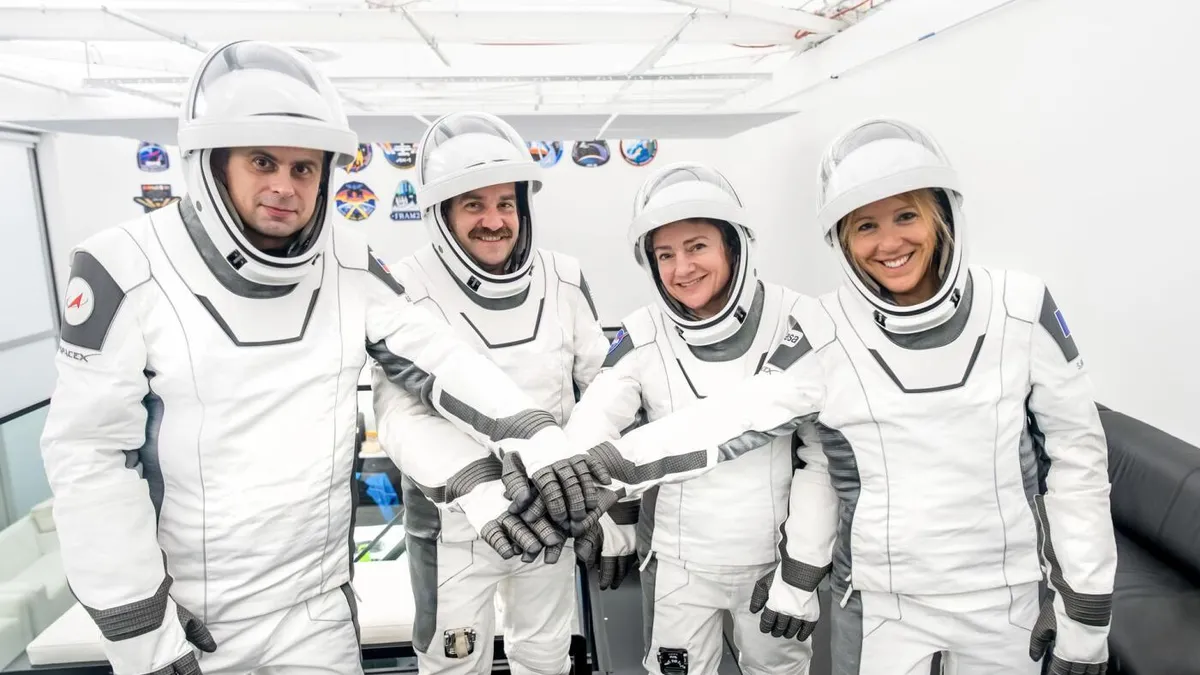
The Crew-12 mission will lift off on a SpaceX Falcon 9 rocket at 6:01 am local time from Florida's Space Coast. The team includes Americans Jessica Meir and Jack Hathaway, French astronaut Sophie Adenot, and Russian cosmonaut Andrey Fedyaev. Their arrival will bring the station's skeleton crew of three back up to full capacity.
The path to this launch has been unusually rocky. The Crew-11 mission cut short by a medical issue left the 250-mile-high laboratory understaffed for months. Then in November, the original Crew-12 lineup shifted when Fedyaev replaced Russian cosmonaut Oleg Artemyev just weeks before launch. NASA has kept the details of both situations private, though independent Russian media reported concerns about Artemyev's conduct.
We're a new kind of news feed.
Regular news is designed to drain you. We're a non-profit built to restore you. Every story we publish is scored for impact, progress, and hope.
Start Your News DetoxEven this week brought fresh obstacles. SpaceX had to ground its Falcon 9 fleet after a stage 2 engine failed to ignite during a test, prompting the Federal Aviation Administration to halt flights while investigating. But the FAA has now cleared the rocket to return to flight, and the launch window is set.
The final chapter of an era
Once Crew-12 arrives, they'll join a station that's entering its final years of operation. NASA and its international partners have scheduled the ISS to be deorbited and guided into the Pacific Ocean in 2030—a deliberate end to three decades of continuous human presence in low Earth orbit. The crews launching now are among the last to live and work on the football field-sized laboratory that has hosted 270 people from 20 countries.
The confirmation of this launch, despite the complications, signals that the station's operations continue even as its timeline winds down. The next crew will carry out experiments, maintain systems, and keep the orbital research hub running until the transition to commercial space stations begins in earnest over the next few years.